Concrete rooms need thicker treatment than drywall rooms: concrete absorbs less bass, and thicker panels absorb more of it.
Best acoustic treatment for concrete room setups requires a different approach than standard drywall rooms.
Products in this guide
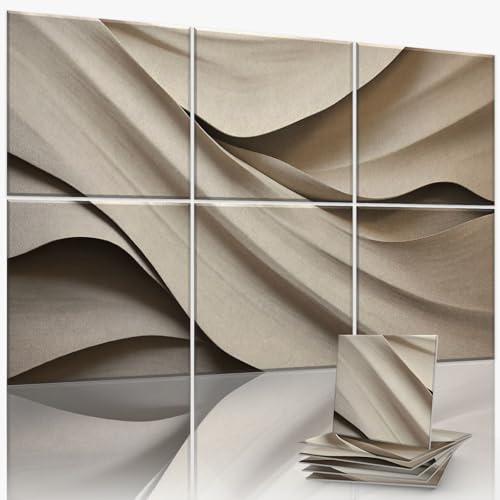
JaneTech Sound Absorbing Panels (6 Pack)
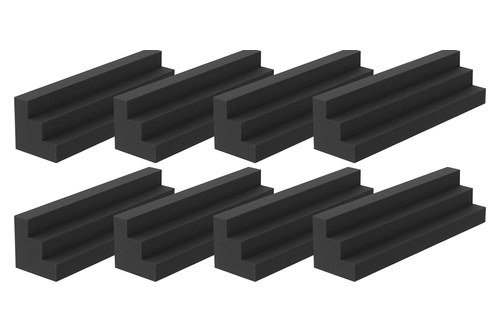
JBER Column Acoustic Wedge (16 Pack)
The problem is that concrete absorbs little sound at any frequency, and less bass than drywall on studs does.
The result is reverb, flutter echo and bass buildup in an untreated concrete room.
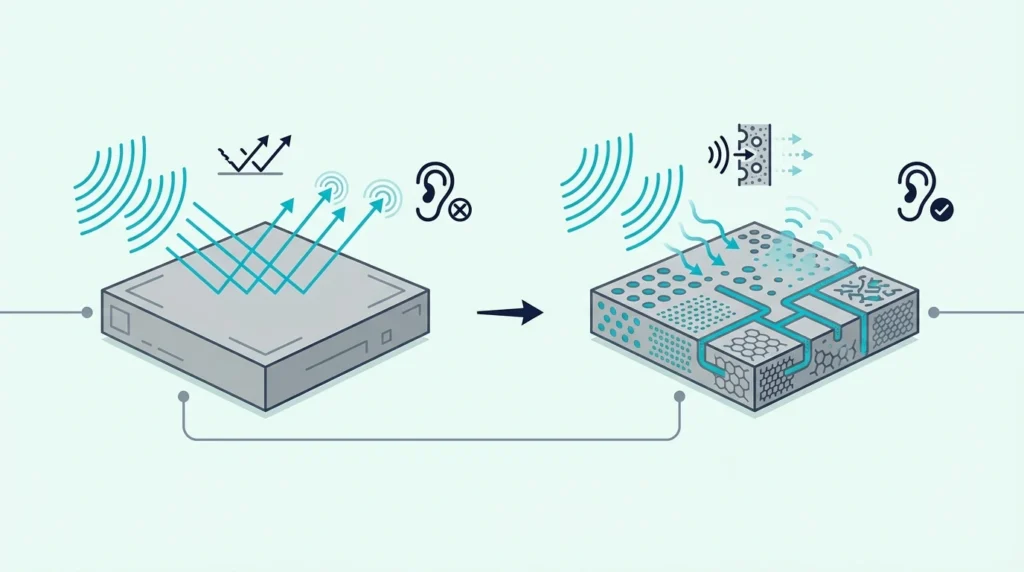
Thick panels, dedicated corner bass traps, and air gaps behind the panels are the treatment for those problems.
The sections below cover which panels to use, how thick they need to be and where to mount them. Start with bass traps in all of the corners, the first step Auralex’s home-studio guide gives for any small room.
Use thick bass traps in all corners, wall panels mounted with air gaps at first reflection points, and a ceiling cloud above the listening position.
The descriptions come from the makers’ manuals and spec pages.
Every pick met Burton Acoustix’s rating, review and stock checks on 9 November 2026.
Why Concrete Rooms Are So Challenging
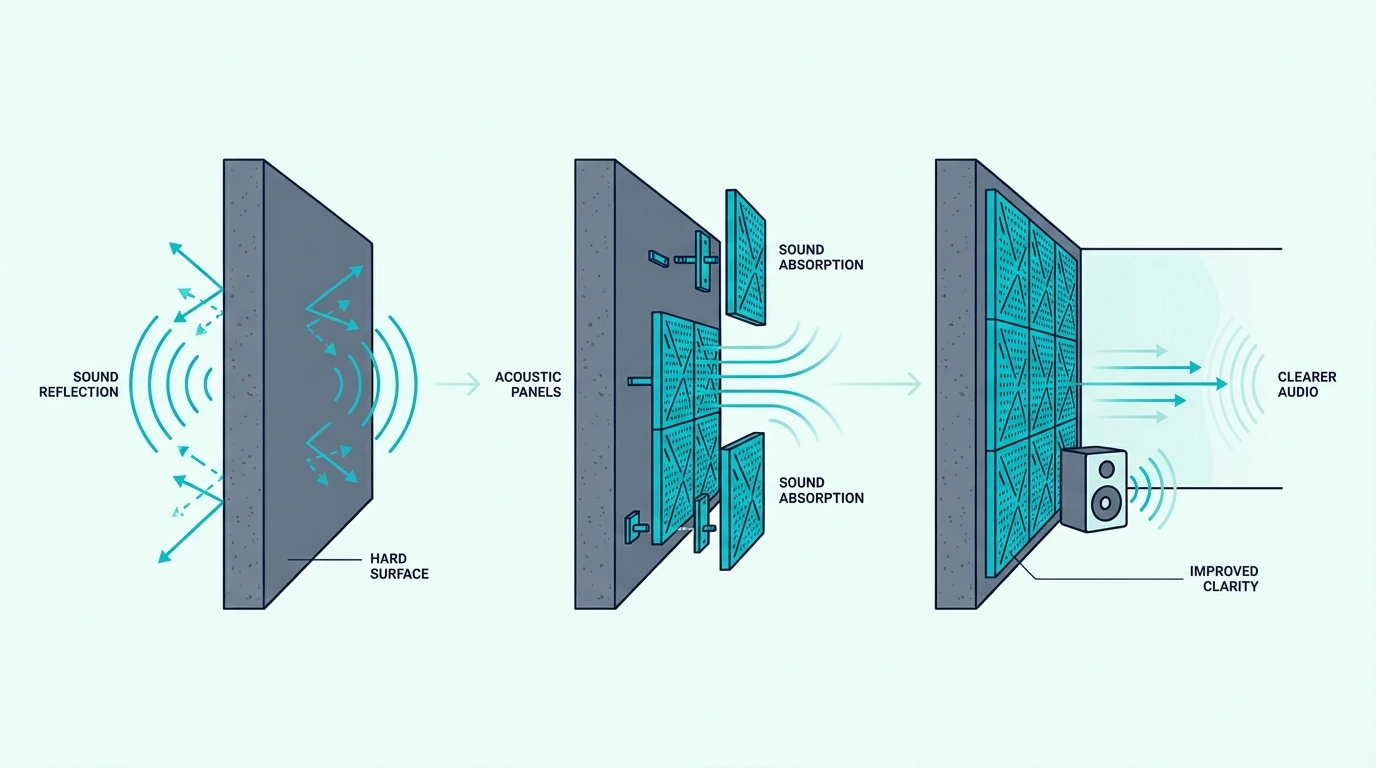
Concrete is dense, rigid, and non-porous — all properties that cause it to reflect sound rather than absorb it.
Extreme Reflectivity
Auralex’s absorption table gives painted concrete block coefficients of 0.05 to 0.10 from 125 to 4,000 Hz and an NRC of 0.05, figures Auralex notes are not percentages. Half-inch gypsum board on studs has the same NRC of 0.05.
The result in an untreated concrete room is long reverb times and flutter echo between parallel walls.
Between parallel concrete walls, the sound bounces back and forth and loses little energy at each reflection.
Soft furnishings absorb some mid and high frequency energy, but the concrete walls absorb little of the bass.
Bass Buildup In Concrete Rooms
Drywall absorbs more of the bass than concrete does: Auralex’s table gives ½-inch gypsum board on studs 0.29 at 125 Hz, against 0.10 for painted concrete block.
In a concrete room, low-frequency energy bounces between surfaces that absorb little of it. Room modes, which Auralex describes as low frequency standing waves that put bumps and dips in a room’s frequency response, follow from the room’s dimensions.
The mixing room guide explains how room modes affect mix decisions and why bass traps are the highest-priority treatment for any mixing space.
How To Treat A Concrete Room For Audio
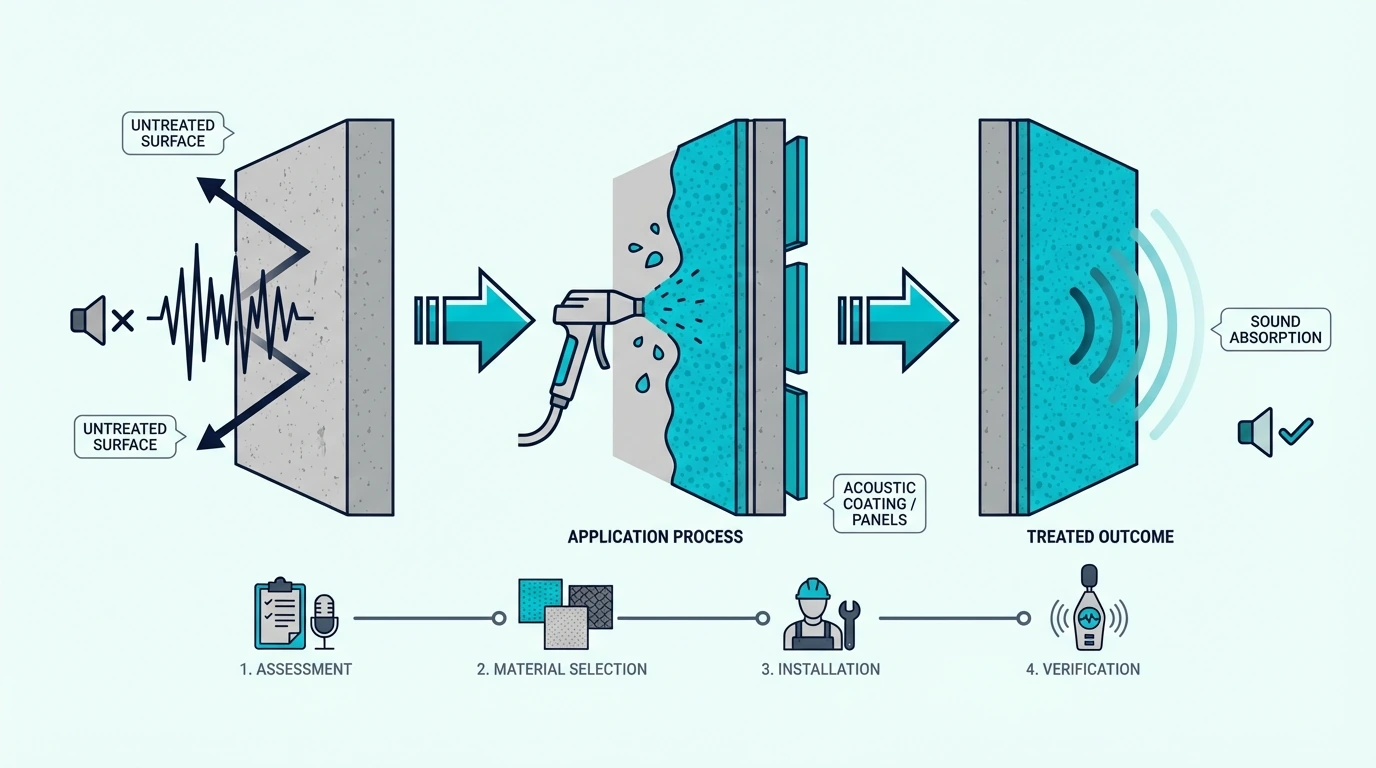
The treatment order for concrete rooms is the one Auralex’s home-studio guide gives for any small room: bass traps in all of the corners first, then the wall behind the speakers, the first reflection points and the ceiling above the listening position.
Thick Corner Bass Traps First
Corner bass traps come first because, as Auralex’s home-studio guide puts it, one of the most common problems in small rooms is the buildup of low frequencies, especially in the corners, where two or three surfaces meet.
Build or buy thick bass traps for the vertical corners, or stack layers of 2-inch rigid insulation.
Owens Corning 703 fiberglass boards come 2 inches thick, so stack two to reach 4 inches. Owens Corning’s own table puts 2-inch board at 0.15 at 125 Hz and 4-inch at 0.56, so the extra thickness is what reaches the low end.
Mount bass traps across corners at a 45-degree angle with an air gap behind them. Auralex’s Acoustics 101 gives one way to control low frequency sound in particular: force the sound waves to fight their way through multiple layers of different materials and dead air before they strike the room boundary.
The corner treatment guide covers bass trap sizing and positioning in detail.
Treat all four vertical wall corners plus the wall-ceiling corners above the listening position.
Wall Panels With Air Gaps
Wall panels in concrete rooms go up with an air gap behind them rather than flush against the wall. A panel mounted with an air gap puts a layer of dead air between the panel and the concrete.
Use L-brackets or spacer blocks to create the air gap. Attach the bracket to the concrete wall with concrete anchors or tapcon screws, then mount the panel to the bracket.
If you want wood on the wall instead of fiberglass, slat panels can go on battens over concrete too, and mounting slat panels on a concrete wall covers the batten method and the moisture limits.
Place panels at first reflection points on both side walls, the wall behind the speakers, and the rear wall behind the listening position.
For rooms where drilling into concrete is not an option, the temporary treatment guide covers freestanding panel options that lean against walls or stand on floor bases without any wall mounting.
The fiberglass treatment guide covers panel thickness recommendations and NRC data for different air gap configurations.
Ceiling And Floor Treatment
A ceiling cloud above the listening position absorbs the ceiling reflection: Auralex’s home-studio guide says reflections from the ceiling to the floor and work surface can cause a problem for critical listening, and highly recommends panels or clouds above the listening position.
Suspend a panel from the ceiling using wire or chains attached to concrete anchors. Position it directly above the equilateral triangle formed by your speakers and listening position.
For concrete floors, a thick rug or carpet reduces the flutter echo between the floor and the ceiling. The rugs as treatment guide explains which rug types provide the most acoustic benefit.
If carpet installation is not an option, carpet tiles laid without adhesive are another way to cover the floor: Auralex’s Acoustics 101 counts carpeting among the soft materials with high NRCs.
Working Out Wall Coverage
A 12×10 foot room with 8-foot ceilings has 352 square feet of wall: 44 feet around, 8 feet high. A 6-pack of 23.6 x 23.6-inch acoustic panels covers about 23 square feet of it.
JaneTech Sound Absorbing Panels (6 Pack)
The cost breakdown guide sets DIY and commercial treatment side by side. For DIY builders, building your own panels and bass traps is the alternative to buying them.
The Bottom Line
The key differences from drywall rooms are thicker bass traps and air gaps behind the wall panels.
Start with corner bass traps in all four vertical corners. Add wall panels at first reflection points with an air gap behind them.
Finish with a ceiling cloud and floor treatment.
For other rooms, the explainer on where acoustic treatment is used covers home studios, home theaters, offices and worship spaces. For basement studios with concrete walls and floors, the garage treatment guide addresses the specific combination of concrete surfaces, large volumes, and mounting strategies that apply to basement studios as well.
Frequently Asked Questions
How to make a concrete room less echoey?
Add absorption panels to the walls at first reflection points with an air gap behind them. Install thick bass traps in all corners.
Add a ceiling cloud above the listening position.
Thicker panels reach lower: Owens Corning’s table puts 2-inch 703 board at 0.15 at 125 Hz and 4-inch at 0.56.
Can you soundproof a concrete room?
A concrete wall blocks more sound the heavier it is, so solid walls rate higher than hollow ones: the Concrete Masonry & Hardscapes Association’s table puts 8-inch hollow block at STC 44 to 49, against 52 to 57 for solid units, and how soundproof concrete walls are depends on which you have. Sound can also flank any concrete wall, through openings around doors and windows, outlets and pipe penetrations, or the floors and ceilings both rooms share.
For echo inside the room, what concrete rooms need is acoustic treatment (absorption panels and bass traps to control reflections inside the room), a different job from soundproofing (additional mass to block sound from entering or leaving). The home studio guide explains the difference between treatment and soundproofing.
How much treatment does a concrete room need?
A concrete room starts with less bass absorption than a drywall room: Auralex’s table gives painted concrete block 0.10 at 125 Hz, against 0.29 for ½-inch gypsum board on studs.
Treat it in the order Auralex’s home-studio guide gives for any small room: bass traps in all of the corners first, then the wall behind the speakers, the first reflection points and the ceiling above the listening position. A first layer for the corners is the JBER 16-pack of foam corner columns — sixteen pieces give each corner four columns while you plan thicker fiberglass builds for deeper bass control.
The small room guide covers additional treatment considerations for compact concrete spaces where room modes are especially severe at shorter wall distances.