Bass Traps vs Foam: Why Most Acoustic Foam Can’t Trap Bass
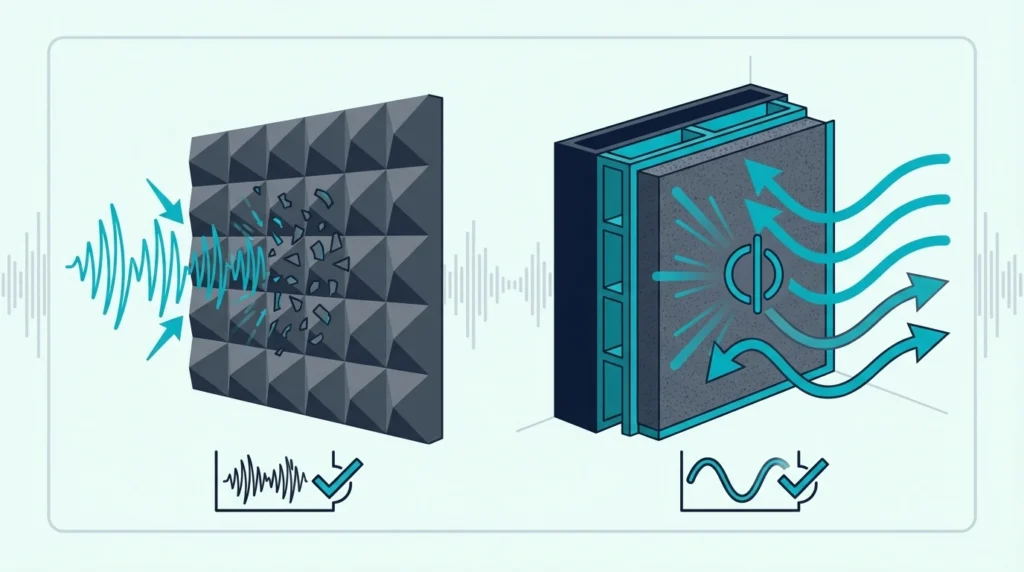
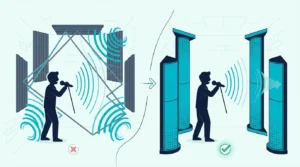
Bass traps vs foam is a comparison that confuses most people because the terms overlap — some foam products are marketed as “bass traps,” but the foam itself rarely absorbs bass frequencies effectively. The distinction matters because choosing wrong means spending money on treatment that looks like it’s solving your bass problems while the actual low-frequency issues remain completely untreated.
The core issue is physics, not marketing — bass wavelengths are 4-56 feet long, and absorbing them requires either thick, dense material or a tuned resonant design. Standard acoustic foam is 1-2 inches thick and low-density, which makes it excellent for taming mid and high frequency reflections above 500 Hz but nearly transparent to bass below 200 Hz.
Understanding the real difference between bass traps and foam saves you from the most common acoustic treatment mistake: covering your walls in foam panels and wondering why the room still sounds boomy and uneven in the low end.
Below, you’ll find exactly what separates bass traps from foam, why foam fails at low frequencies with real absorption data, how Auralex foam compares to Rockwool, when foam is actually good enough, and whether bass traps can remove too much bass.
Bass traps are any device designed to absorb low frequencies (typically below 300 Hz), while foam is a specific material that primarily absorbs mid and high frequencies. Effective bass trapping requires 4-inch minimum thickness dense material like mineral wool or fiberglass — standard 1-2 inch acoustic foam absorbs less than 20% of energy below 200 Hz compared to 80%+ for properly thick mineral wool panels.
Bass Traps Vs Foam — What Is The Difference?
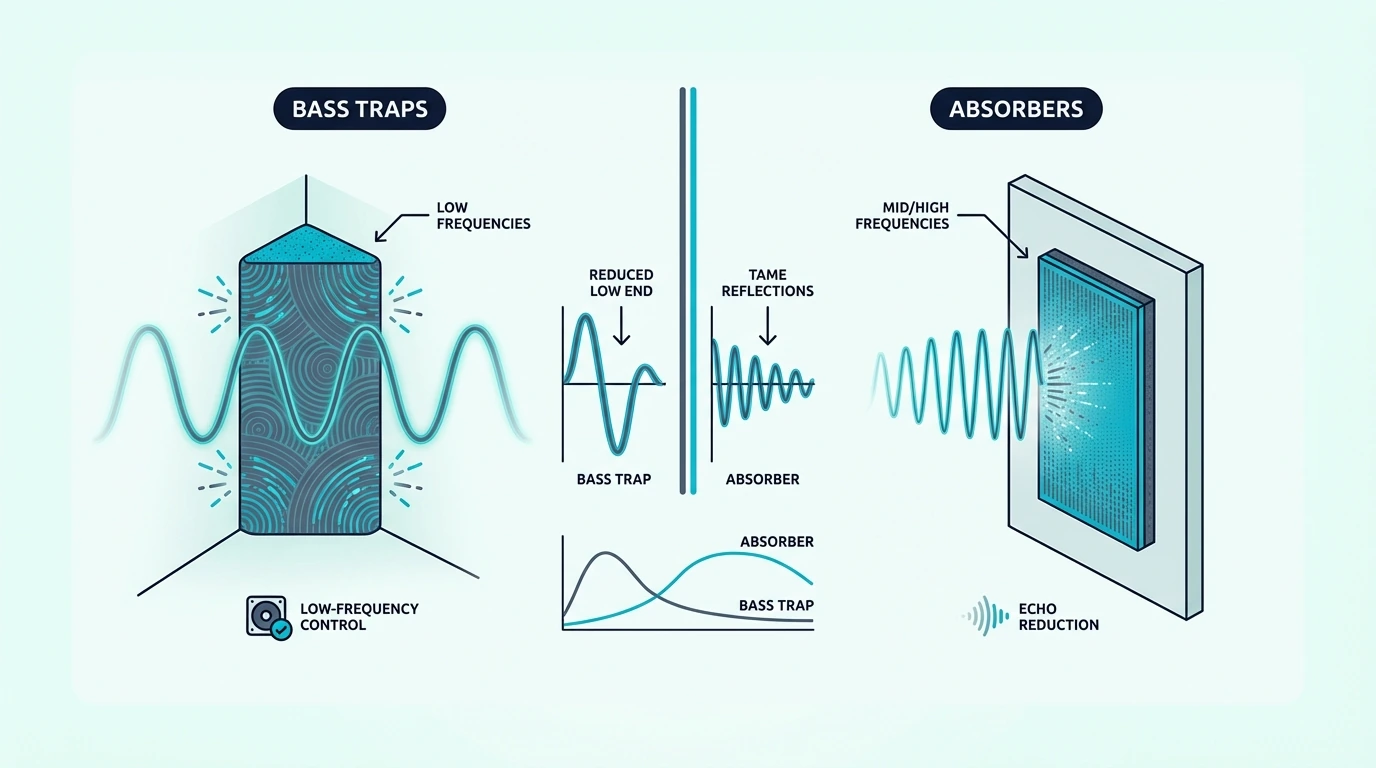
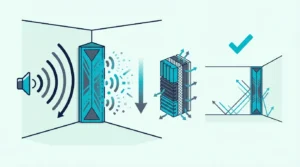
“Bass traps” is a broad category describing any acoustic device that absorbs low-frequency sound energy. This includes porous absorbers (mineral wool panels, fiberglass panels), Helmholtz resonators, membrane absorbers, and yes — even foam panels designed for corner mounting.
“Foam” refers specifically to open-cell acoustic foam, a lightweight material manufactured in wedge, pyramid, egg-crate, or flat panel shapes. Foam is the most recognizable acoustic treatment product because it’s affordable, widely available, and easy to install.
The confusion happens because some foam products are shaped and marketed as “bass traps” — triangular foam wedges designed for corner mounting, for example. The shape helps somewhat (corner mounting creates an air gap that extends effective absorption depth), but the material itself limits how deep into the bass range the absorption reaches.
Not all bass traps are foam, and most foam panels aren’t effective bass traps. A 4-inch mineral wool panel straddled across a corner absorbs meaningfully down to 100-125 Hz, while a foam corner trap of the same dimensions absorbs meaningfully only down to 250-300 Hz due to its lower density and different cellular structure.
Why Foam Struggles With Bass Frequencies
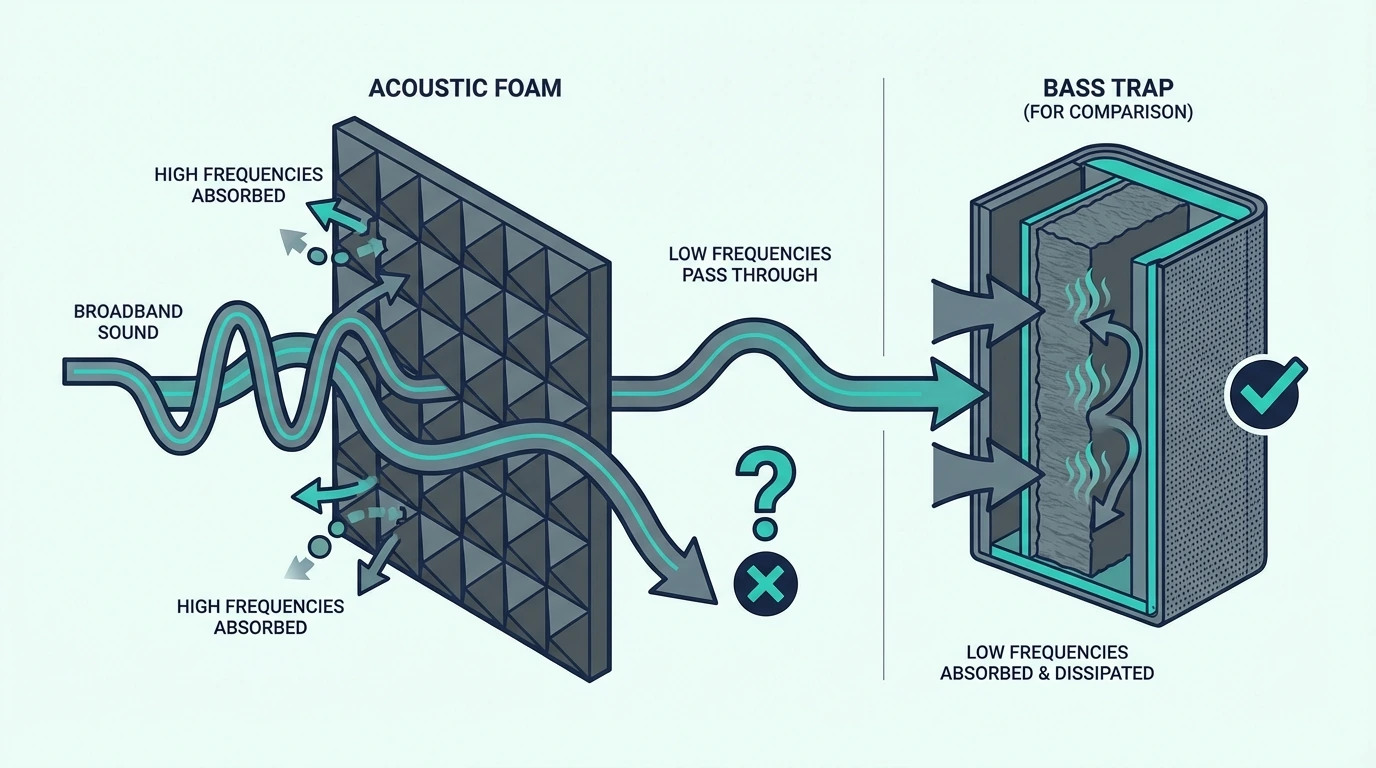
Foam’s limitation with bass comes down to two factors: thickness and density. Bass absorption requires the absorptive material to be positioned at a meaningful fraction of the sound wavelength — roughly one-quarter wavelength for peak absorption.
A 100 Hz sound wave is about 11 feet long, so quarter-wavelength absorption requires roughly 2.8 feet of absorptive depth. A 2-inch foam panel provides about 1.5% of that required depth, which is why its absorption at 100 Hz is negligible.
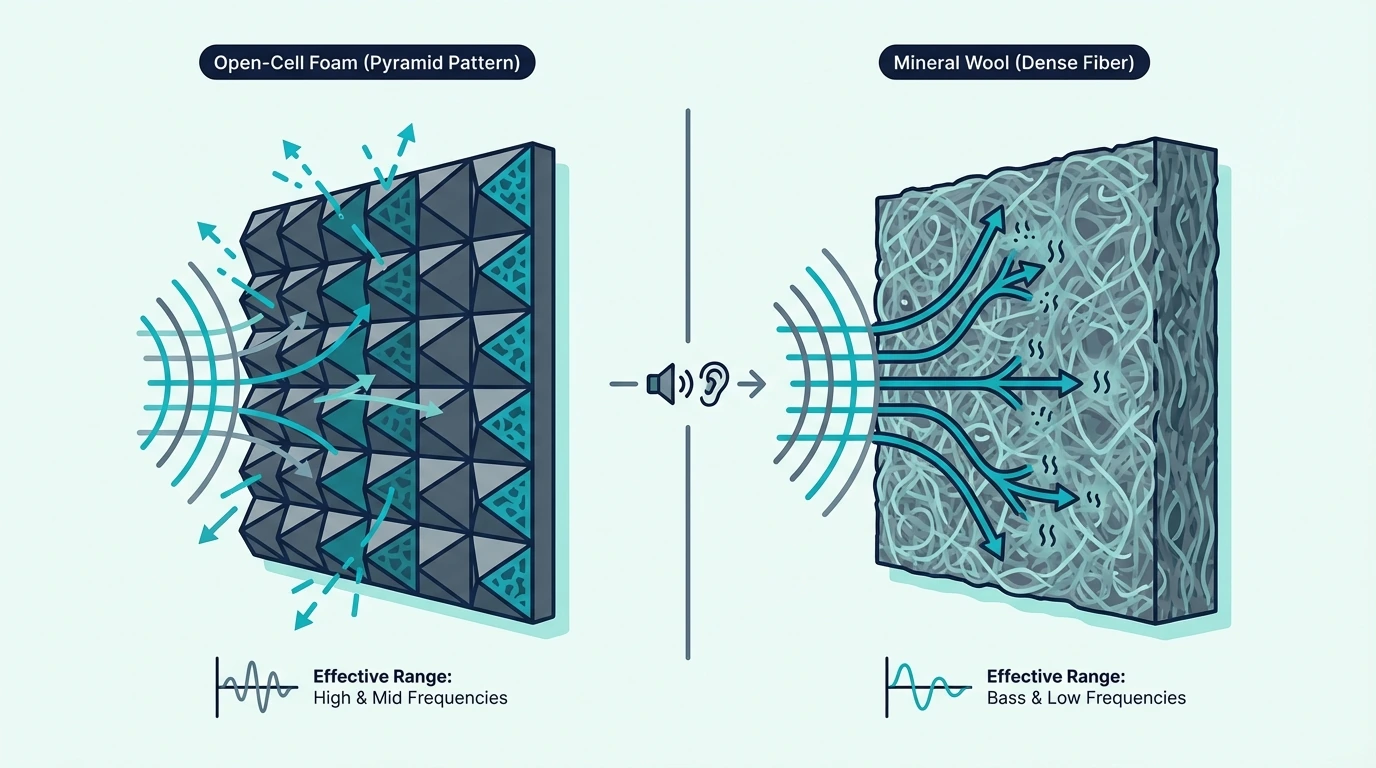
Density compounds the problem — acoustic foam typically weighs 1-2 lbs per cubic foot, while mineral wool and rigid fiberglass used in proper bass traps weigh 3-8 lbs per cubic foot. Denser materials create more friction against air particle movement (converting sound energy to heat), and the higher the density, the more efficient the conversion at any given thickness.
NRC Ratings — Foam vs Mineral Wool At Low Frequencies
NRC (Noise Reduction Coefficient) ratings average absorption across 250-2000 Hz, which hides foam’s bass weakness behind its strong mid/high performance. The real comparison shows up in the absorption coefficients at individual frequencies where bass traps matter.
At 125 Hz, typical 2-inch acoustic foam shows an absorption coefficient of 0.10-0.15 (absorbs 10-15% of energy). A 4-inch mineral wool panel at the same frequency shows 0.65-0.80 (absorbs 65-80% of energy) — roughly five times more effective.
At 250 Hz, foam improves to 0.30-0.45 while mineral wool reaches 0.90-1.00. The gap narrows at higher frequencies — by 1000 Hz, both materials absorb 0.85+ — but the bass range is exactly where the performance gap matters most for home studio and listening room treatment.
Get Studio Tips Weekly
Join 5,000+ creators getting acoustic treatment advice every week.
No spam. Unsubscribe anytime.Auralex Bass Traps Vs Rockwool
Auralex is the most recognized acoustic foam brand, and their LENRD (Low End Node Reduction Device) corner bass trap is the product most people compare against DIY Rockwool panels. Here’s how they stack up.
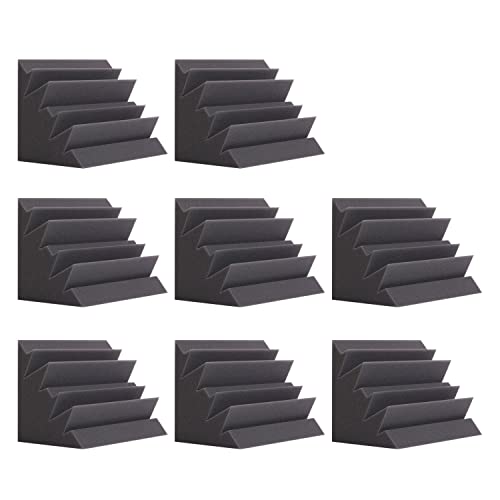
Auralex LENRD bass traps are triangular foam wedges designed for corner mounting — 24 inches tall, about 1.5 lbs each, and they install in minutes with adhesive. Performance-wise, they show meaningful absorption starting around 250 Hz and peak above 500 Hz, making them effective for upper bass and low-mid cleanup but limited below 200 Hz.
Rockwool (mineral wool) panels at 4-inch thickness mounted in corners absorb meaningfully from 125 Hz upward when straddled across the corner with an air gap. They weigh 3-4 lbs per panel and require a frame and fabric covering, but the acoustic performance extends a full octave deeper into the bass range than foam alternatives.
Cost comparison: A set of 4 Auralex LENRDs costs roughly $120-150 retail, while four DIY Rockwool panels using Safe’n’Sound or ComfortBoard cost $60-100 in materials (insulation, lumber, fabric). The DIY option costs less and performs better — the trade-off is the time and effort required to build them.
The practical takeaway: if you need treatment specifically for bass frequencies below 200 Hz, Rockwool panels outperform Auralex foam products at every price point. If you mainly need upper-bass and mid-frequency cleanup (250 Hz and above), Auralex products work and save construction time.
When Foam Bass Traps Are Good Enough
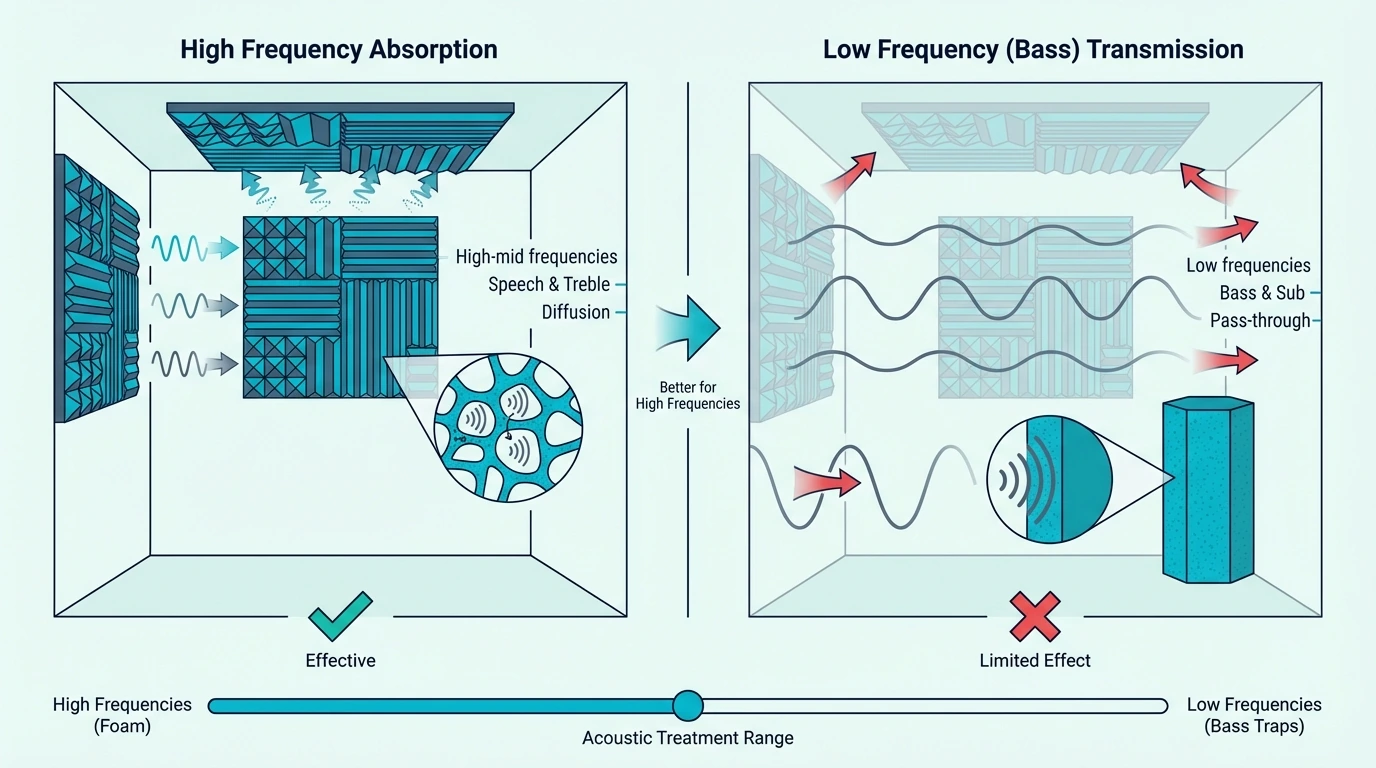
Foam bass traps are genuinely adequate in several scenarios where deep bass absorption isn’t the primary goal.
Voice recording and podcasting: Voice frequencies sit between 80-300 Hz (fundamental) with harmonics extending much higher. Foam panels absorb the mid and high frequency reflections that cause the worst voice recording problems (comb filtering, room coloration), and the bass below 200 Hz is less critical for speech clarity.
Flutter echo treatment: The rapid “boing” sound between parallel walls is a mid/high frequency problem that foam handles perfectly. Even thin foam panels eliminate flutter echo at the frequencies where it’s most audible, and adding foam corner traps provides bonus upper-bass absorption.
Casual music rooms: If you’re practicing guitar, rehearsing with a band, or casually mixing music without professional accuracy requirements, foam treatment improves the room’s overall sound quality without the cost or effort of proper mineral wool treatment.
Installing foam bass traps takes minutes with adhesive spray or command strips, versus the hours required for building and mounting mineral wool panels. For renters who can’t mount heavy panels or drill into walls, foam’s light weight and removable adhesive make it the only practical option.
Can Bass Traps Take Away Too Much Bass?
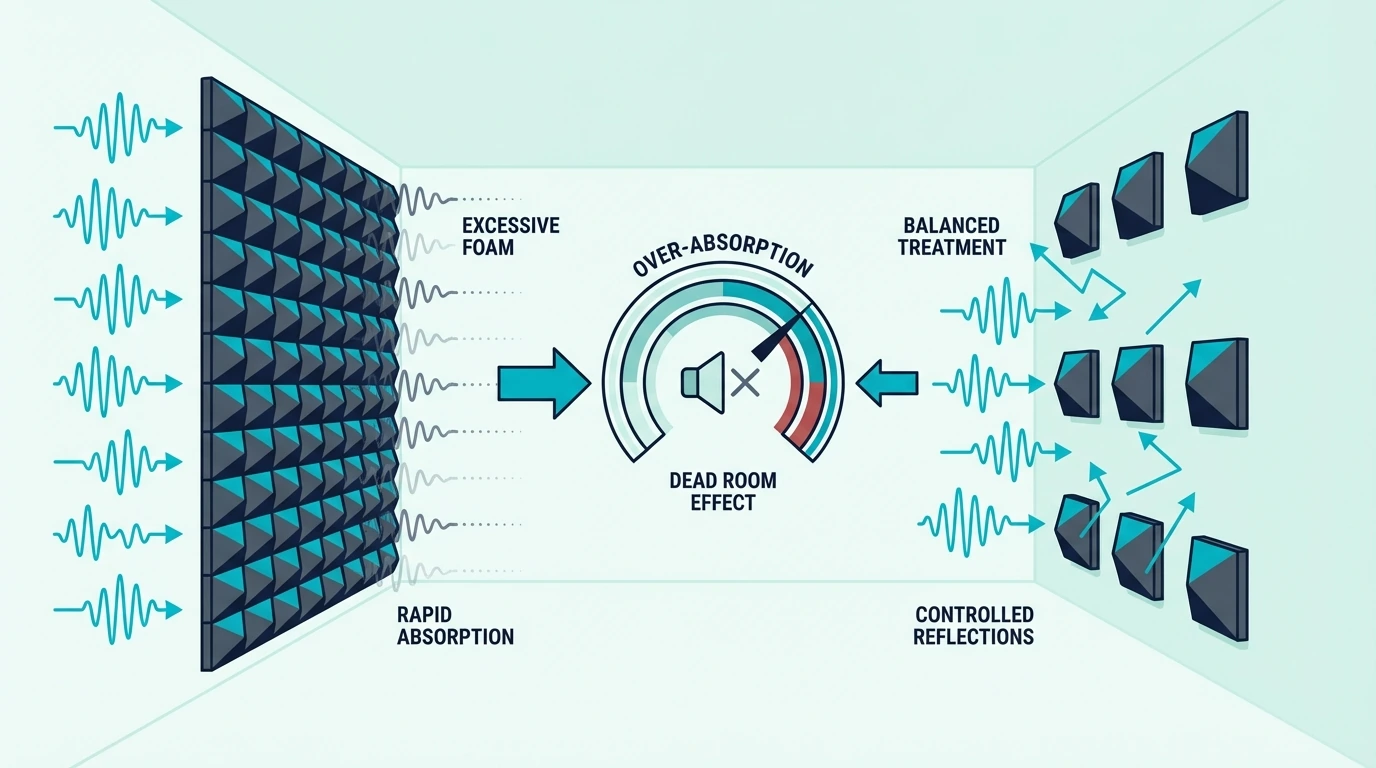
Dense bass traps can absolutely remove too much bass from a room, creating an environment that sounds unnaturally dead and uncomfortably dry in the low end. Foam bass traps almost never cause this problem because they don’t absorb enough bass energy to overdamp the room’s low-frequency response.
Over-absorption typically happens when thick mineral wool or fiberglass panels cover too much of the room’s boundary surfaces — treating more than 50% of walls, corners, and ceiling with dense absorbers can strip the room of its natural warmth and reverb.
The symptoms are easy to identify: speech sounds muffled and lifeless, music feels thin and lacking body, and the room creates an uncomfortable “pressure” sensation during extended listening. Bass traps work by absorbing excess energy at room boundaries, but the goal is controlled bass — not eliminated bass.
The fix is simple: remove flat-wall panels until the room sounds natural again, while keeping corner traps in place (corners are high-pressure zones that benefit from absorption regardless). For most rooms, corner and ceiling-edge treatment is the sweet spot — heavy bass absorption where it matters most, with enough untreated surface area to preserve the room’s acoustic character.
The Bottom Line
Bass traps vs foam comes down to what frequencies you need to control. Foam handles mid and high frequency reflections (250 Hz and above) effectively and affordably, but it’s the wrong tool for bass problems below 200 Hz — the exact range where untreated rooms cause the worst monitoring and listening issues.
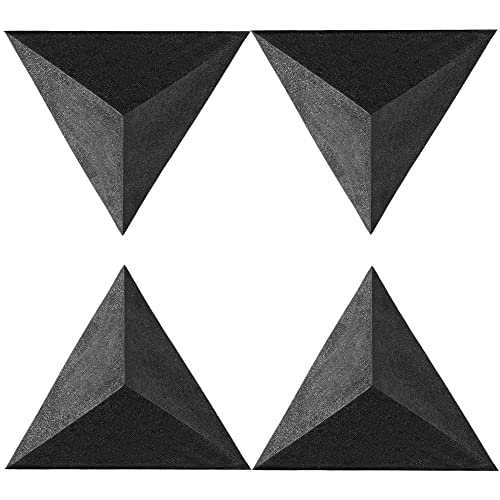
For actual bass control, invest in 4-inch minimum thickness mineral wool or fiberglass panels mounted in room corners and ceiling edges. The 4 Pack Bass Traps for Ceiling Corner works as a budget starting point for upper-bass and mid-frequency treatment.
For deeper bass absorption across more corners, the 8 Pack Bass Traps Acoustic Foam Corner provides the volume needed to cover all four vertical corners at a reasonable price.
Frequently Asked Questions
Do bass traps keep bass in the room?
No — bass traps absorb internal sound reflections within the room, reducing reverb and standing wave buildup. They don’t block bass from leaving the room or prevent bass from entering — that requires mass-loaded barriers, decoupled construction, or other soundproofing measures that are fundamentally different from acoustic treatment.
How to mount foam bass traps?
Foam bass traps mount with adhesive spray (3M Super 77 or equivalent), heavy-duty command strips, or impaling clips screwed into the wall. For corner mounting, apply adhesive to both edges of the triangular foam piece and press it into the corner — the foam is light enough that adhesive alone holds it permanently without mechanical fasteners.
Is foam or fiberglass better for bass?
Fiberglass (and mineral wool) outperform foam for bass absorption by a wide margin — at 125 Hz, a 4-inch fiberglass panel absorbs roughly 5x more energy than a 2-inch foam panel of equal surface area. For frequencies above 500 Hz, the performance gap closes significantly and foam becomes a cost-effective alternative.