Best Drywall for Soundproofing: Sheetrock vs Damped Boards
The best drywall for soundproofing is a 5/8-inch damped Type X board such as QuietRock ES, which raised a plain 2×4 wall from STC 35 to 41 when hung on one side.
| Pick | Best for | Why |
|---|---|---|
| QuietRock ES | Most new walls | STC 41 with one side on 2×4 studs |
| SoundBreak XP | Walls, ceilings and retrofits | STC 42 with one side on 2×4 studs |
| SilentFX QuickCut | Score-and-snap cutting | Cuts and installs like regular drywall |
| QuietRock 510 | Over an existing wall | STC 34 to 41 over old drywall |
| QuietRock 545 | Home theaters | STC 55 on both sides of 2×4 studs |
| Green Glue Noiseproofing Sealant | Every edge and outlet | Resists drying out or cracking |
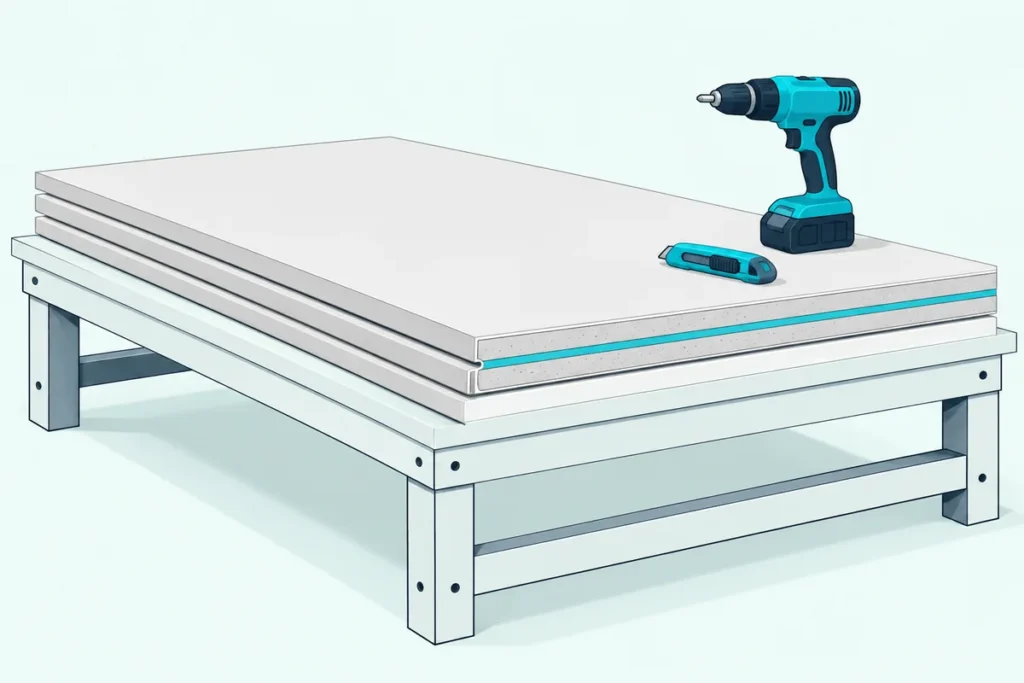
If you’re hunting for the best drywall for soundproofing, look past thickness to damped boards, two layers of gypsum bonded with a sound-damping polymer, which outscored doubled-up 5/8-inch drywall in PABCO’s wall tests.
A plain 2×4 wall with 5/8-inch Type X on each side tested at STC 35 in PABCO’s lab and 36 in National Gypsum’s, and a second layer per side lifted them only to 38 and 41.
Swap one side for a damped board and the same wall reached STC 41 to 42 in both makers’ labs, with no added thickness.
Below, QuietRock, SoundBreak XP and SilentFX QuickCut are set against plain 5/8-inch Type X, with the tested walls behind the numbers and each maker’s cutting notes.
Start with the side-by-side table, pick the board that fits your wall, then add the seals and channel that keep the rating from leaking away.
What Is the Best Drywall for Soundproofing?
That side-by-side starts with one result both makers’ labs agree on. The best drywall for soundproofing is a 5/8-inch damped Type X board, such as QuietRock ES or SoundBreak XP, on one side of the wall, because it lifted a 2×4 wall by six STC points at the same thickness as plain drywall.
The descriptions come from the makers’ manuals and spec pages.
The table lines up the makers’ own tests of the same kind of wall: 2×4 wood studs 16 inches apart, glass fiber insulation in the cavity, and one layer of 5/8-inch Type X per side unless a row says otherwise.
| Wall | PABCO | National Gypsum |
|---|---|---|
| Type X on both sides | STC 35 | STC 36 |
| Two layers of Type X on each side | STC 38 | STC 41 |
| Damped board on one side | STC 41 (QuietRock ES) | STC 42 (SoundBreak XP) |
| Damped board on both sides | STC 45 (QuietRock ES) | STC 45 (SoundBreak XP) |
| One side on resilient channel | STC 48 | STC 51 |
| Damped board, other side on channel | STC 53 (QuietRock ES) | STC 54 (SoundBreak XP) |
Those rows come from two labs, so compare down a column rather than across a row. Both columns tell the same story: one damped side is worth about six points, as much as doubling the plain board on both sides, and resilient channel on one side is worth more than either.
If you’re still weighing room-level priorities, our guide on how to soundproof a room shows where drywall fits in the bigger plan.
The PABCO rows are designs PGD-W-910-16, 824-16, 646-16, 574-16, 545-16 and 535-16 in PABCO’s 2025 Sound Design Guide, and the National Gypsum rows are tests NGC 2008029, 2364, 2009020, 2009019, 2011071 and 2011066 in National Gypsum’s SoundBook.
Which Soundproof Drywall Should You Buy?
Those six rows narrow the choice to a few boards, and each maker documents its own differently. Buy a 5/8-inch damped Type X board for most new walls, a 1/2-inch one for going over an old wall, and the heavy multi-layer panel only for a theater or music room.
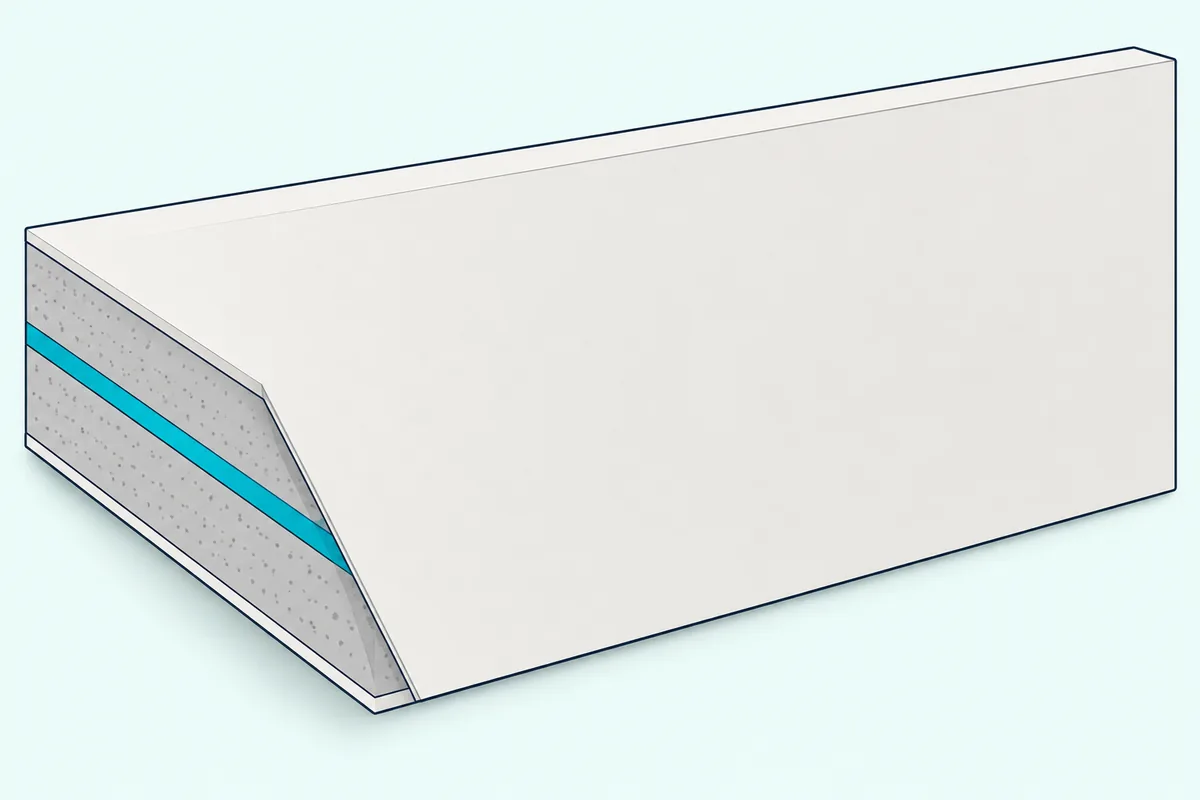
QuietRock ES (Best Overall Damped Board)
QuietRock ES, also called EZ-SNAP, is PABCO’s 5/8-inch Type X board, gypsum laminated with a viscoelastic polymer glue, and it weighs 2.6 pounds per square foot. PABCO’s data sheet says it has no paper and no metal inside the panel, so it scores and snaps with a utility knife like regular 5/8-inch board.
On 2×4 studs 16 inches apart it tested at STC 41 on one side and STC 45 on both, and at 24 inches apart those walls rose to 47 and 51. PABCO’s install instructions add three rules: leave the edge tape on, hang it with screws every 12 inches (or as code requires) rather than structural glue, and seal the perimeter and outlets.
It ties SoundBreak XP in the table, and it scores and snaps like plain board where SoundBreak XP is scored from both sides or sawn, which is why it leads this list.
SoundBreak XP (Best Family for Walls, Ceilings and Retrofits)
National Gypsum’s Gold Bond SoundBreak XP, also sold as PURPLE SoundBreak XP, is two pieces of high-density gypsum board laminated with a viscoelastic polymer. The SoundBreak XP submittal sheet lists a 1/2-inch board at 2.3 pounds per square foot and a 5/8-inch Type X board at 2.7.
It cuts by scoring deeply from both sides before snapping, or with a hand or power saw, and it goes up vertically with no extra clips or channels. Its vertical joints need no acoustical sealant, and the family adds a 3/4-inch ceiling board and a 5/16-inch retrofit board for use over an existing wall.
SilentFX QuickCut (Score and Snap in 1/2 or 5/8 Inch)
CertainTeed describes SilentFX QuickCut as two dense gypsum cores separated by a layer of viscoelastic polymer, sold in 4 x 8 and 4 x 10 foot sheets. It comes 1/2 inch thick, and as 5/8-inch QuickCut Type X, which is classified for spaces that need fire resistance.
CertainTeed’s SilentFX QuickCut page says it cuts and installs like regular drywall, and the maker’s noise reduction page claims an STC of 50 or higher when it’s installed properly. That page doesn’t name the wall the 50 belongs to, so ask the dealer for the tested assembly and its report before you compare it with the rows above.
QuietRock 510 (Best Thin Board Over an Existing Wall)
QuietRock 510 is PABCO’s 1/2-inch damped board at 2.13 pounds per square foot, and PABCO says it installs over existing drywall with no demolition. On 2×4 studs 16 inches apart, one layer on each side tested at STC 45, the same as QuietRock ES on both sides.
Screwed over a 1/2-inch board on one side, it took PABCO’s wall from STC 34 to 41. PABCO approves it in fire-rated walls only as an extra layer, not in place of the rated board, and its data sheet keeps it off the face of a ceiling.
QuietRock 545 (Best for Home Theaters and Low Bass)
QuietRock 545 stacks gypsum panels, a steel sheet and a cement panel with viscoelastic glue into one 1-3/8-inch board weighing 6.3 pounds per square foot. One layer on each side of 2×4 studs 16 inches apart tested at STC 55, and PABCO aims it at home theaters, studios and music rooms where low frequencies are the problem.
That weight changes the job. PABCO says it needs a saw for cutting and extra care in handling, and its install instructions call for 3 to 3-1/2 inch drywall screws.
Plain 5/8-Inch Type X (The Baseline to Beat)
Type X is ordinary gypsum board with a core made for extra fire resistance, and USG’s Sheetrock Firecode X, the original 5/8-inch Type X panel in USG’s words, weighs 2.2 pounds per square foot. On insulated 2×4 studs 16 inches apart, plain Type X is the STC 35 to 36 wall in the table.
It still earns a place: with resilient channel on one side, the same boards reached STC 48 and 51. If you can add only one upgrade, that channel row beat every damped-board row without channel.
Is One Damped Board Better Than Two Layers of Drywall?
That baseline wall is where most people reach for a second sheet. In both makers’ tests one damped board is better: PABCO’s damped board on each side beat two layers of 5/8-inch Type X on each side, STC 45 against 38, on a wall about 1-1/4 inches thinner and 3 pounds per square foot lighter.
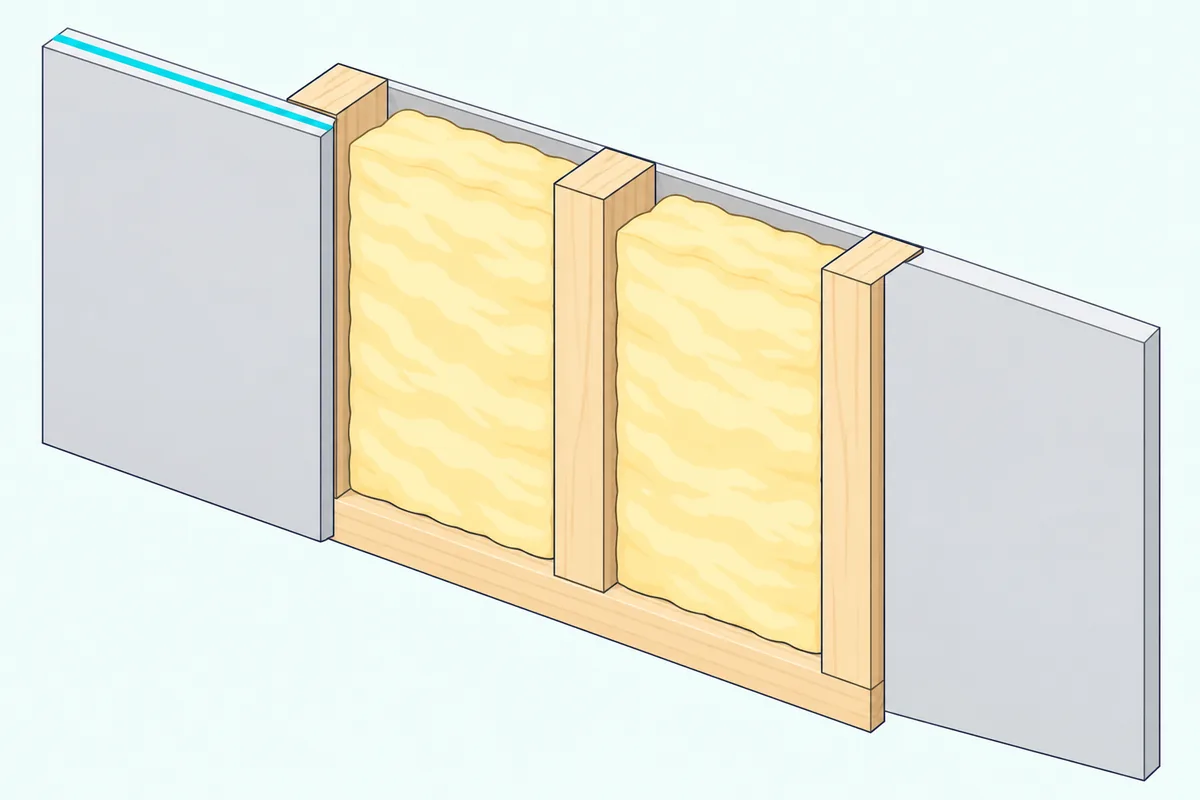
National Gypsum’s SoundBook shows the same order, STC 45 for SoundBreak XP on both sides against 41 for two layers of Type X on each side. PABCO’s install instructions say QuietRock panels are designed to take the place of multiple layers of drywall, and National Gypsum’s SoundBreak XP guide says extra layers add mass, but with diminishing returns.
Weight alone doesn’t explain it either. PABCO’s wall of 1/2-inch QuietRock 510 on both sides weighs 5.7 pounds per square foot and tested at STC 45, while its 5/8-inch Type X wall weighs 5.5 and tested at 35.
Canada’s National Research Council explains part of this: when gypsum board is solidly fastened to wood studs on both sides, much of the sound travels through the studs. It also warned that walls can’t be chosen by gypsum board thickness, because STC follows the board’s weight and a given thickness can weigh less than it used to.
For the wider case, including what each board costs you in labor and space, read when soundproof drywall beats regular drywall.
Does the Damped Board Belong on One Side or Both?
So the next question is whether one damped side is enough. National Gypsum answers it in its own Q&A on acoustically enhanced gypsum board: damped board is very effective on one side, and a second side generally doesn’t raise the STC much further.
The numbers back that up in both labs. One side took the wall from 36 to 42 and both sides to 45 in National Gypsum’s tests, and from 35 to 41 and 45 in PABCO’s.
Same Q&A, two practical points. A damped panel gives the same protection wherever it sits in a layered wall, and a wall’s STC is the same whichever side the noise comes from, so put the board on the side that’s easier to rebuild.
What Does an STC Rating on a Drywall Data Sheet Mean?
Same walls, different paperwork: those results explain the ranges printed on each board’s data sheet. An STC rating belongs to a whole tested wall, never to a sheet of drywall, and National Gypsum’s Q&A says sound is measured as an assembly.
So QuietRock 510’s STC range of 47 to 52 and QuietRock ES’s 48 to 60 describe the walls on their data sheets, many on steel studs or studs 24 inches apart. PABCO’s own walls scored about six points higher at 24-inch spacing than at 16, and its guide says wider spacing means less stiffness and larger air cavities.
STC is measured from 125 to 4,000 Hz, which covers conversation and everyday noise, as National Gypsum’s guide puts it. CertainTeed adds that STC doesn’t factor in low bass, and National Gypsum says damped board performs best in the speech range, with resilient channel possibly better for lower frequencies.
Lab numbers also run higher than a finished room measures. National Gypsum’s Q&A notes that field-tested values are normally lower because of building movement and different installation methods, and its guide says party walls between apartments usually need STC 50.
What Should You Add Around the Drywall?
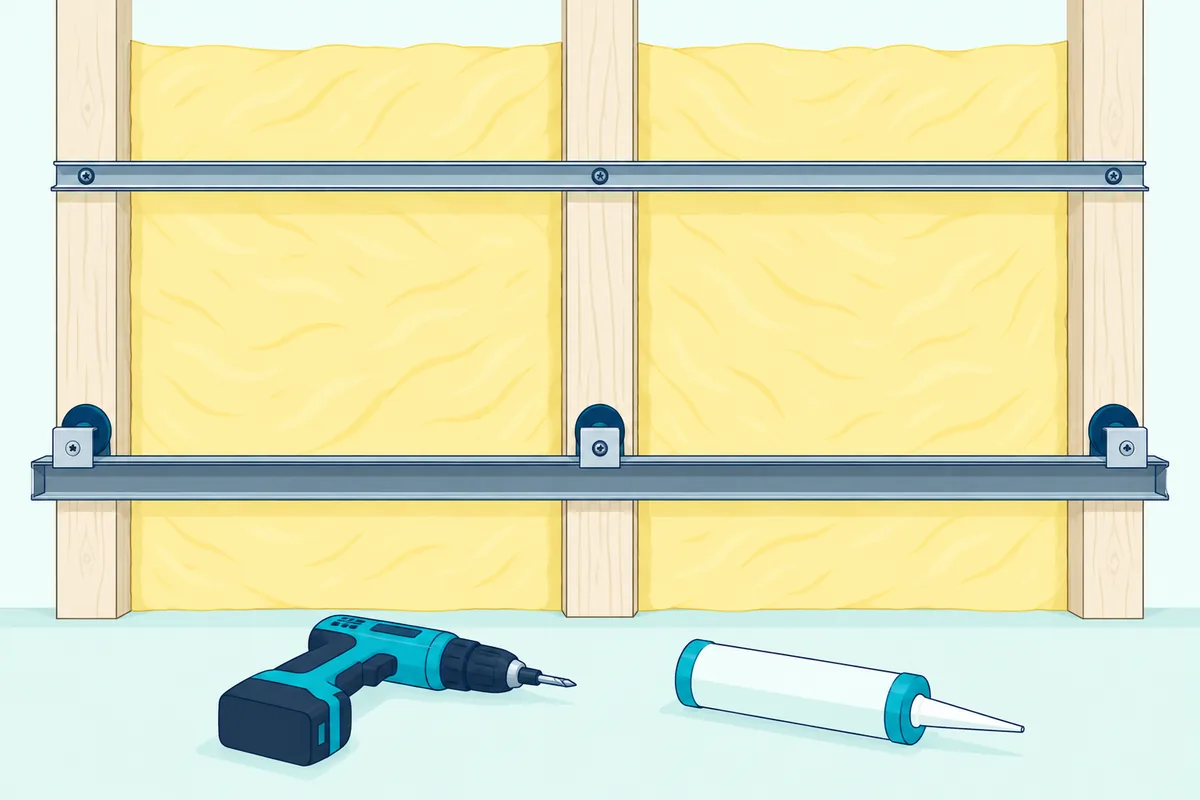
Even the best board leaves the studs, the cavity and the edges to do their share, which is where these add-ons come in. Add resilient channel or clips, cavity insulation and acoustical sealant, plus a damping compound if you’re doubling up plain sheets, and each one has its own page with the full numbers.
Damping Compound Between Two Sheets
A damping compound spread between two ordinary sheets builds a similar gypsum, polymer and gypsum sandwich on site, where the damped boards get theirs in the factory. Read what Green Glue does between two sheets for its lab results, and sound deadening vs soundproofing if damping and absorption still blur together.
Resilient Channel and Sound Clips
Channel decouples one face of the wall from the studs, and in both labs it beat a damped board on rigid wood studs, STC 48 to 51 against 41 to 42. National Gypsum’s guide describes isolation clips as a rubber disc that does the decoupling, with a rigid furring channel holding the board, and its Q&A warns against hanging wall cabinets on a channel wall because they compromise the rating.
PABCO’s counterpoint for its boards: they can’t be easily short-circuited like channel, even when fixtures are installed. For how to fit either, see how to soundproof a wall, or go further with building a room within a room.
Insulation in the Cavity
Insulation adds less than most people expect to an ordinary stud wall: PABCO’s home brochure rates it a minimal improvement and shows a 1/2-inch drywall wall going from STC 31 to 34 when fiberglass filled the cavity. On light steel studs, National Gypsum’s guide shows 40 rising to 48, and NRC Canada’s research explains the gap: absorbing material works well only when the two faces are isolated, and light steel studs flex enough to do that.
National Gypsum adds that spray foam gives little STC value because it fills the cavity and hardens. Our breakdown of the best insulation for soundproofing compares the batts.
Acoustic Sealant and Putty Pads
The SoundBreak XP submittal sheet calls for a 1/4-inch gap at every wall edge, sealed completely with acoustical sealant, and sealant or putty pads on every penetration such as an outlet box. PABCO says leaving out its sealant and putty may compromise the acoustical rating, and National Gypsum notes that a non-hardening sealant stays flexible where a hard one lets vibration through.
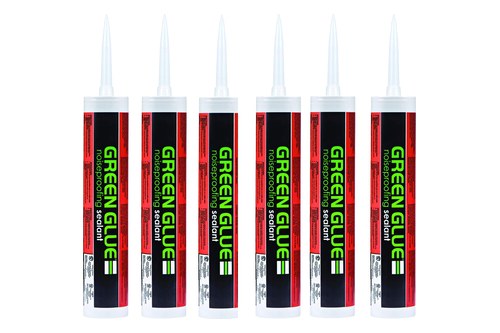
For those edges and boxes, Green Glue Noiseproofing Sealant is an acoustical sealant that doesn’t completely dry out, so it resists cracking with age, and it comes in a pack of six 28-ounce tubes. Green Glue says it isn’t a glue and shouldn’t replace standard caulk, such as on exterior windows.
Green Glue Noiseproofing Sealant
What Is the Best Drywall for Soundproofing a Ceiling?
Unlike a wall, a ceiling limits which board you can use, though the same seals still matter. The best drywall for soundproofing a ceiling is a damped board its maker approves for ceilings, such as SoundBreak XP’s 3/4-inch ceiling board, which has a fire-resistant Type C core for specific floor-ceiling designs.
CertainTeed says SilentFX QuickCut is made for walls and ceilings, while QuietRock 510’s data sheet allows it only as a base layer in multi-layer ceilings. National Gypsum’s guide adds that footsteps are impact noise, rated by IIC for the whole floor-ceiling assembly, so the floor above is part of the fix and not just the board below.
If the thud comes from the floor above, start with how to soundproof a floor, then plan the soundproof ceiling below it. For a basement, see how to soundproof a basement ceiling before you pick the board.
When Won’t Better Sheetrock Fix the Noise?
Both footsteps and leaks show the same limit: drywall only fixes the path it covers. But if the weak point is really the door, the window or an unsealed edge, premium drywall can still disappoint because the rest of the room shell keeps leaking.
National Gypsum makes the same point about doors: a heavy, solid door transmits less sound than a light, hollow-core one.
If you rent and can’t change the walls, read how to soundproof an apartment first. The code targets and lab results for shared walls are laid out in our townhouse party wall guide.
If the complaint is next-door speech or TV through one wall, compare your plan with how to soundproof a wall from noisy neighbors. Whole-wall product picks sit in the best soundproofing walls roundup, and other materials in the best soundproofing material guide.
Which Drywall Fits Your Project?
Those limits settle most choices, and the table matches common jobs to a board and to the tested walls behind it. Most rooms need a 5/8-inch damped board on one side, while remodels, theaters and fire-rated walls each change the pick.
| Project | Board | Result |
|---|---|---|
| Wall stays up, remodel only | QuietRock 510 or SoundBreak XP retrofit | STC 34 to 41 over a 1/2-in. board |
| New wall between bedrooms | QuietRock ES or SoundBreak XP, one side | STC 41 to 42 on 2×4 studs 16 in. apart |
| Home theater or music room | QuietRock 545, or a board plus channel | STC 55; 53 to 54 with channel |
| Fire-rated wall | 5/8-in. damped Type X board | Three damped boards come in Type X |
| Plain board only | Type X, sealed edges, channel one side | STC 48 to 51 with channel |
If you’re replacing drywall anyway, the one-side damped board is the simple upgrade. For a theater, combine a damped board with channel, which tested higher than either alone.
In a fire-rated wall, build the listed UL design with the 5/8-inch damped Type X board it names, since QuietRock ES, SoundBreak XP and SilentFX QuickCut each come in Type X.
The Bottom Line
Every row in those tables points the same way: the best drywall for soundproofing is a damped board on one side of the wall, not a thicker or doubled sheet. QuietRock ES and SoundBreak XP lifted a plain 2×4 wall from STC 35 or 36 to 41 or 42, and a second damped side added only three or four more.
For bigger jumps, decouple one side with channel or clips, keep the cavity insulated and seal every edge and outlet. Read each STC as the tested wall it is, and compare walls built the way you’ll build yours.
Frequently Asked Questions
Is there a soundproof drywall?
Not in the sense of a sheet that stops sound by itself, because an STC rating belongs to a whole wall. Damped boards are the closest thing: QuietRock from PABCO, SoundBreak XP from National Gypsum and SilentFX QuickCut from CertainTeed all bond gypsum layers with a viscoelastic polymer. On insulated 2×4 studs 16 inches apart, a damped board on one side raised a plain Type X wall from STC 35 or 36 to 41 or 42 in the makers’ labs, and resilient channel on one side raised it further still.
Is sheetrock soundproof?
Not much. Sheetrock is USG’s brand name for its gypsum panels, and its 5/8-inch Firecode X is a Type X panel made for extra fire resistance. With one layer of 5/8-inch Type X from PABCO or National Gypsum on each side of an insulated 2×4 wall, the makers measured STC 35 and 36, while National Gypsum’s guide says party walls between apartments usually need STC 50. To get closer, put a damped board on one side, resilient channel on the other, and seal every edge.
Is QuietRock better than SoundBreak XP?
Neither maker’s guide puts the other’s board in the same wall, so there’s no head-to-head result from them. On their own insulated 2×4 walls with studs 16 inches apart, the two boards behave almost the same: one side lifted a Type X wall by six points in both labs (35 to 41 for QuietRock ES, 36 to 42 for SoundBreak XP), and both sides reached STC 45 for each. The bigger differences are practical: QuietRock ES scores and snaps with no paper or metal inside, while SoundBreak XP is scored deeply from both sides or sawn, and has its own 3/4-inch ceiling board.
Can soundproof drywall go over existing drywall?
Yes, for the boards made for it. PABCO says QuietRock 510 and QuietRock ES can be installed over existing drywall, and in PABCO’s test a 1/2-inch QuietRock 510 screwed over a 1/2-inch board on one side raised the wall from STC 34 to 41. National Gypsum makes a 5/16-inch SoundBreak XP retrofit board with the polymer on its back for the same job. Seal the new perimeter and every outlet the way each maker’s instructions describe.