How to Soundproof a Shed: Seal, Fill, Add Mass and Fix the Door

You close the door, start the saw or the drum kit, and the sound carries straight across the garden, which is when many people look up how to soundproof a shed.
A shed is built to keep the weather out, not the noise in, and even a finished frame wall rates only STC 39 in HUD’s Noise Guidebook.
This guide follows HUD’s Noise Guidebook, Rockwool’s tested wall assemblies, Tuff Shed’s finishing pages and the makers of the seals and window inserts.
You’ll see where a shed leaks, the five steps in order, what each step gains in the sources’ own numbers and what to watch for with moisture.
Start with the five steps, because HUD says a wall only reaches its rating when its gaps and edges are sealed.
How to Soundproof a Shed in Five Steps
That order follows the sources, which put sealing first and the heavy building last.
- Find the leaks. Close the shed after dark with a bright lamp inside and look for lines of light around the door, the windows and the eaves, because a gap that lets light out lets sound out too. If you have an iPhone, NIOSH’s free Sound Level Meter app runs on iOS devices and is accurate within 2 dBA, according to NIOSH, so measure from outside the shed before and after each step.
- Seal the gaps. HUD says a one-inch square hole or a 1/16-inch crack 16 inches long takes a 50 STC wall down to 40, so strips, a door seal and sealant come before any new layer.
- Fill the wall cavities with mineral wool. HUD says a blanket in the air space can cut noise by as much as 10 dB in light construction, and Rockwool makes a batt sized for wood studs at 16 and 24 inches.
- Add mass and break the contact. Extra drywall adds weight, and resilient channels or staggered studs cut the path through the studs: HUD puts the gain at 2 to 5 dB, while Rockwool lists one 2×4 wall at STC 38 and the same wall with channels at STC 51.
- Fix the door and the windows. HUD’s example puts a window rated STC 26 across 30 percent of an STC 45 wall and gets 35 overall, so a weak opening drags the whole wall down.
Steps 1, 2 and 5 work on a finished shed as it stands, while steps 3 and 4 mean opening or lining the walls.
Can You Really Soundproof a Shed?
That depends on what you expect, because the sources give a range and not a promise.
HUD lists a frame wall with siding, sheathing, 2×4 studs, fiberglass insulation and half-inch gypsum at STC 39. Rockwool’s catalog lists exterior wood-stud walls from STC 35 to 39 and interior ones from STC 36 to 66:
| Wall as the source describes it | STC | Source |
|---|---|---|
| Siding, insulation board sheathing, 2×4 at 16 in, fiberglass, 1/2 in gypsum | 39 | HUD Table 3 |
| 2×4 at 16 in, 5/8 in gypsum, 3 in Safe’n’Sound | 38 | Rockwool IWS-02 |
| The same wall with RC Deluxe resilient channels at 24 in | 51 | Rockwool IWS-07 |
| 2×4 staggered studs, 5/8 in Type X, 3 in Safe’n’Sound in each row | 50 | Rockwool IWS-19 |
| 2×4 staggered studs on 2×6 plates, two layers of 5/8 in Type X, channels, wool in each row | 66 | Rockwool IWS-26 |
STC points aren’t exactly decibels, but HUD’s own window example counts them that way, and FHWA’s noise primer says 3 dBA is barely perceptible, 5 dBA is readily perceptible and 10 dBA sounds half as loud.
None of these is a bare shed wall. Tuff Shed’s finishing page talks about painting over the siding and framing inside, which shows where an unfinished shed starts, and no source here gives a figure for that.
So the table shows what you can build, not what you have: adding the insulation and gypsum gets a wall toward HUD’s finished figure, and the 50s need channels or staggered studs.
Get Studio Tips Weekly
Join 5,000+ creators getting acoustic treatment advice every week.
No spam. Unsubscribe anytime.Where Does Sound Escape From a Shed?
Those wall numbers describe a sealed wall, but sound leaves a shed through its weakest parts first.
- Gaps. HUD’s one-inch hole or 1/16-inch crack example is the reason to start here.
- Windows. HUD’s Table 3 lists five of its six sample windows at STC 22 to 25, and only a sealed one with insulating glass and a storm sash reaches 35.
- Doors. The same table lists exterior doors at STC 26 to 34, against 39 for the frame wall.
- Vents. HUD says vents and similar openings substantially reduce what the best wall can do, and that their ducts must be specially designed and insulated.
A chicken coop is the hardest case, because its vents can never be shut, and our soundproof chicken coop guide shows how lined, bent ducts let air out while the crow stays in.
No source here rates a bare shed roof or floor, so measure from outside after each step instead of assuming.
How Do You Seal the Gaps Before Anything Else?
That comes first because HUD says small holes and cracks can be devastating to a wall’s insulation value and that the wall must be well sealed at its perimeter.

Start with the door’s edges. Kikerike’s self-adhesive foam weatherstrip is sold for door and window sound isolation, and its listing gives the size as 1/2 inch by 1/4 inch, with 42 feet in total.
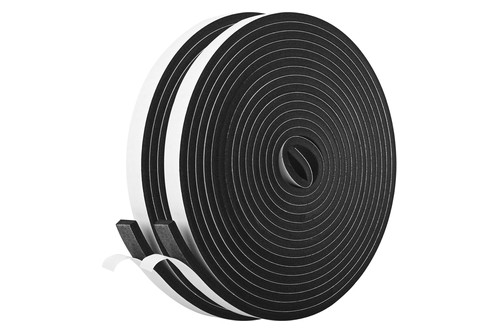
Kikerike’s self-adhesive foam weatherstrip
The gap under the door needs a seal that matches its height. M-D’s Cinch slide-on under door seal adjusts to a 3/8 to 3/4 inch gap, according to M-D, and it’s listed for a standard 1-3/4 inch thick door, so measure your shed door first.
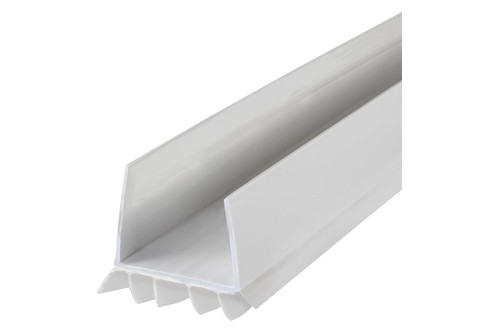
M-D’s Cinch slide-on under door seal
If your gap is wider than that, our roundup of door sweeps for soundproofing covers other options.
Then fill the joints you can see, such as the seams between boards and where the walls meet the roof, with sealant, because HUD’s advice is to seal cracks and edges. Vents are the exception, which the ventilation section below covers.
What Should Go Inside the Walls?
Those sealed walls still pass sound through the boards themselves, so HUD’s next step is a blanket in the air space, which it says can attenuate noise by as much as 10 dB and works mainly in lightweight construction.
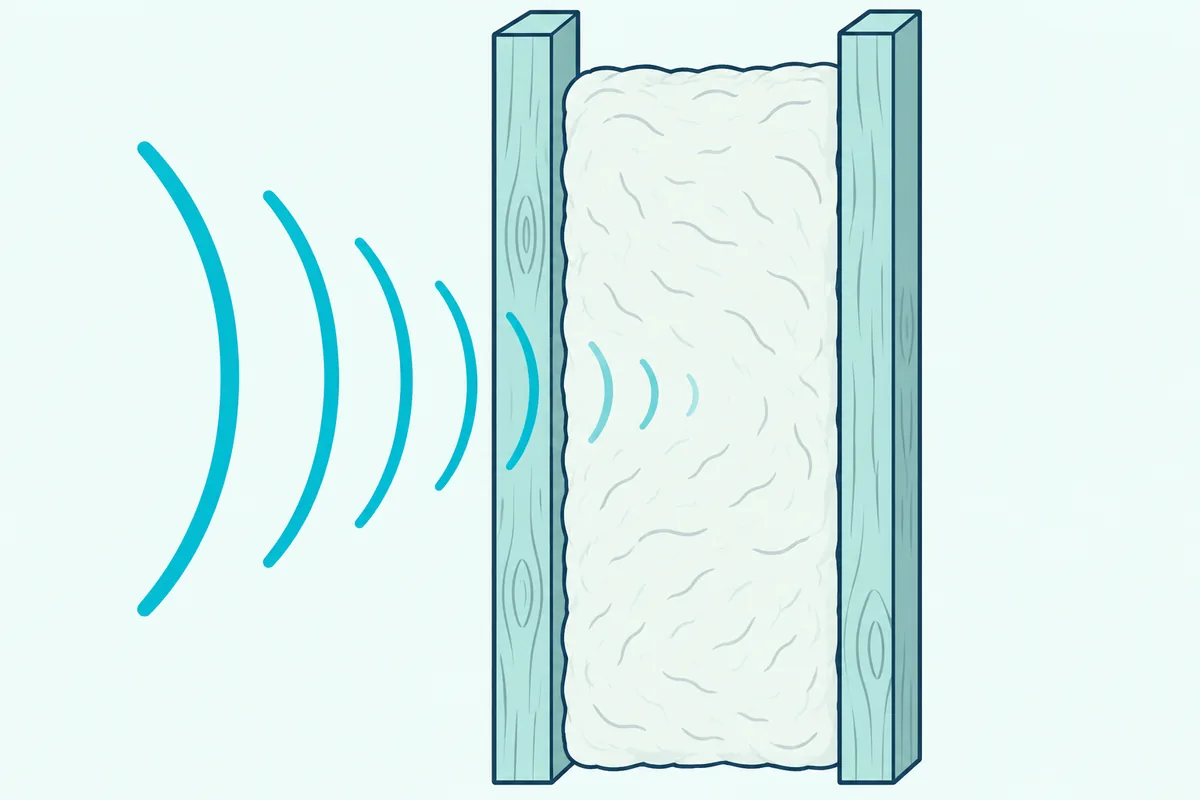
Rockwool’s Safe’n’Sound is a stone wool batt for interior partitions, sold in 3 and 6 inch thicknesses and sized for wood studs at 16 and 24 inches on center. Its data sheet lists it as noncombustible, with a flame spread of 0 and a smoke developed index of 0, which counts in a shed that holds a heater or a workbench.
The sheet’s absorption figures, an NRC of 1.10 at 3 inches and 1.25 at 6 inches, describe how well the wool soaks up sound, not how much a finished wall stops. The same 3 inches of wool sits in Rockwool’s STC 38 wall and its STC 51 wall, so what surrounds it decides the rating.
For the wool’s own numbers next to fiberglass and spray foam, Rockwool’s STC numbers in detail runs through Rockwool’s listed walls.
Moisture needs a plan before the wool goes in. Tuff Shed’s finishing page says the common first step is a vapor barrier between the siding and the insulation, and that anyone planning to insulate later should choose house wrap when buying the shed.
It also says to consult a local insulation contractor, because the right approach varies by climate.
How Do You Add Mass Without Losing the Shed?
That filled wall is still light, so the next gain comes from weight and from breaking the path between the two faces.
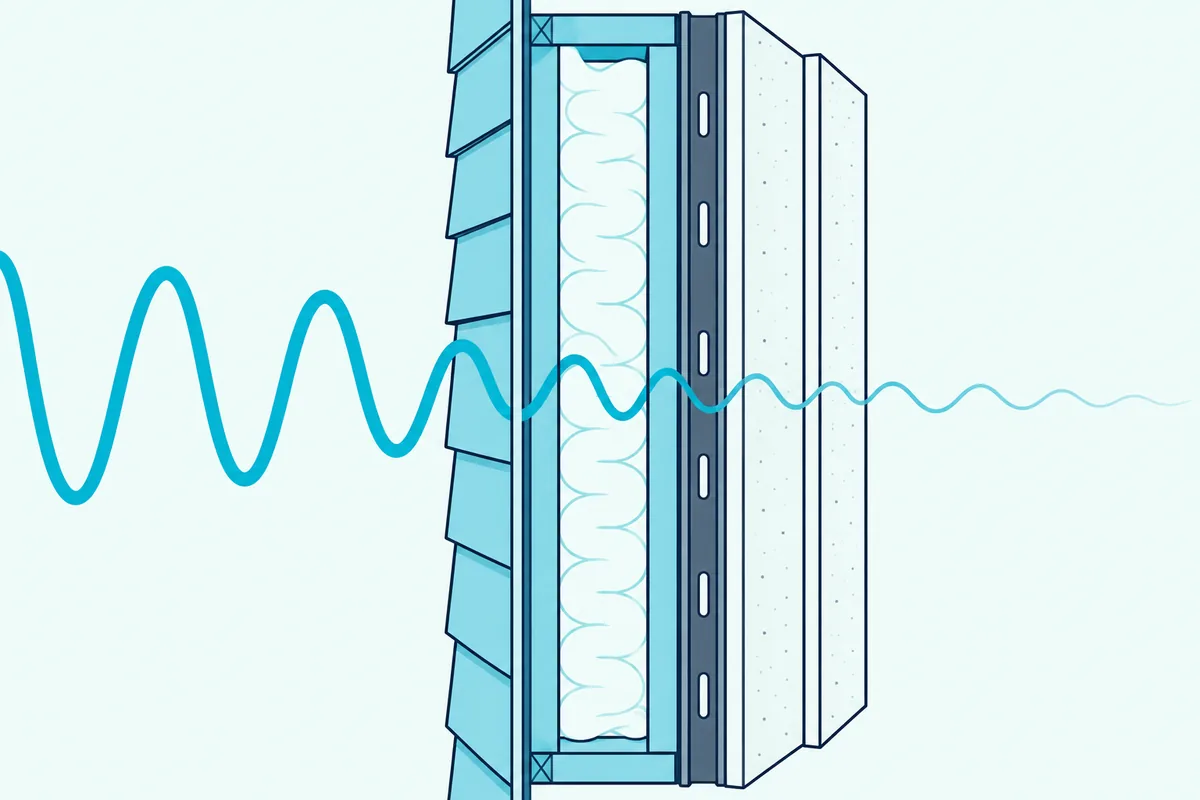
USG lists its 5/8 inch Sheetrock Firecode X panel at 2.2 pounds per square foot, so a 4 by 8 foot sheet works out at about 70 pounds, which is arithmetic and not a listed figure. Rockwool’s two-layer 5/8 inch Type X walls rate STC 48 on 2×6 studs at 24 inches and STC 54 on staggered 2×4 studs.
Breaking the contact is the other half. HUD says resilient layers can raise a wall’s STC by 2 to 5 dB, that 24 inch stud spacing gains 2 to 5 dB over 16 inches, and that its staggered stud wall rates STC 39 against 35 for a common stud wall and 43 with an absorbent blanket.
Each layer costs room. Two 5/8 inch layers on each of two facing walls take 2-1/2 inches off the shed’s width before any channels, which is arithmetic, and none of the sources rates a shed’s floor or framing for the extra weight, so check yours first.
Our guide to adding layers to an existing wall covers the drywall steps in more detail.
What About the Door and the Windows?
Those two openings matter because HUD’s example shows how far one weak window drags a strong wall down.
HUD lists a solid-core wood exterior door with brass weatherstripping at STC 27, and one with plastic weatherstripping and an aluminum storm door at 34. The entries differ in more than the storm door, so treat the gap as a hint at what a second layer can do, and note that the table has no entry for a plywood shed door.
For windows, HUD says the greatest sound insulation comes from permanently sealed windows, and it rates a sealed window with insulating glass and a storm sash at STC 35. Indow lists 18.9 dBA for its Acoustic Grade inserts and 10 to 12 dBA for Standard Grade over single-pane windows, measured in a plywood mock enclosure at a Portland State lab.
Our guide to making a door quieter from edge to edge covers the rest of it.
Does an Insulated Shed Need Ventilation?
That sealing has a cost, because Tuff Shed’s winter guide says adequate ventilation prevents condensation and mold growth once you insulate.
HUD’s advice for noisy walls is to eliminate openings or give them specially designed, insulated ducts, and no source here gives a vent design for a shed. Plan a few ventilation openings on purpose instead of leaving gaps, and measure from outside again once they’re in.
Don’t take those vents as a reason to move a generator in, though, because the Consumer Product Safety Commission says never to run one in a shed, even with doors and windows open, and our guide to making a generator quieter outdoors keeps it outdoors.
The Bottom Line
Soundproofing a shed comes down to sealing the gaps, filling the walls with mineral wool, adding layers and channels, and treating the door and windows, in that order. Rockwool’s tested walls run from STC 35 to 66 and HUD’s finished frame wall sits at 39, so the layers you add decide where your shed lands.
Plan the ventilation as you go, and re-measure from outside after each step so you know which one paid off.
Frequently Asked Questions
Can you soundproof a shed cheaply?
The first steps need little: HUD says small holes and cracks can be devastating to a wall’s insulation value, so a foam strip, a door seal and sealant tackle the biggest leaks before any wall layer.
Does insulation alone soundproof a shed?
No. HUD says blankets in the air space can attenuate noise as much as 10 dB and work mainly in lightweight construction, but Rockwool’s STC 38 and STC 51 walls hold the same 3 inches of wool, so the structure around it decides the result.
How do you soundproof a metal shed?
The sources here cover wood-frame walls, so any figure for a metal shed would be a guess. The same order still applies: seal the gaps, fill and line the walls, then fix the door and windows.
Can you soundproof a shed for drums?
A drum kit asks the most of every step, and no source here gives a figure for drums in a shed. Rockwool’s best wood-stud wall, with staggered studs on 2×6 plates, two layers of Type X and resilient channels, reaches STC 66, and measuring from outside shows what each step bought. If the noise lives in a garage instead, our guide to soundproofing a garage covers that case.
How thick should the mineral wool be?
Rockwool sells Safe’n’Sound in 3 and 6 inch thicknesses, and its tested 2×4 walls with Safe’n’Sound use the 3 inch batt.
Is a Tuff Shed different from other sheds?
Tuff Shed’s finishing page says to choose house wrap at purchase if you plan to insulate later, with a vapor barrier between the siding and the insulation, and to consult a local insulation contractor.
How much quieter will it get?
FHWA’s primer says 10 dBA sounds half as loud, 5 dBA is readily perceptible and 3 dBA is barely perceptible, so a step that gains only a few points won’t change much from outside.
Can you soundproof a shed without rebuilding it?
Yes for the gaps, the door and the windows, which work on a finished shed as it stands. The wall layers mean lining the inside, and each 5/8 inch layer takes 5/8 inch off the interior.