DIY Cheap Bass Traps: Budget Builds That Absorb Low Frequencies
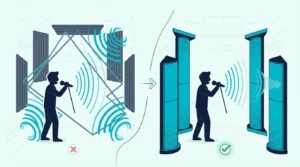
Rockwool Safe’n’Sound stacked directly into corners makes a bass trap with no frame, and muslin stapled to a simple 1×3 lumber frame gives it a finished look.
A diy cheap bass trap can be built from stone wool insulation made for interior walls, and the material and its thickness decide how much bass it absorbs.
| Pick | Best for | Why |
|---|---|---|
| ROCKWOOL Safe’n’Sound | The cheapest corner trap | 1.38 at 125 Hz at 6 inches |
| ROCKWOOL ComfortBoard 80 | The quickest build | Rigid boards need no frame |
| Owens Corning 703 | Fiberglass board traps | 0.56 at 125 Hz at 4 inches |
| SODOCT 8 Pack | No building at all | Eight ready-made corner pieces |
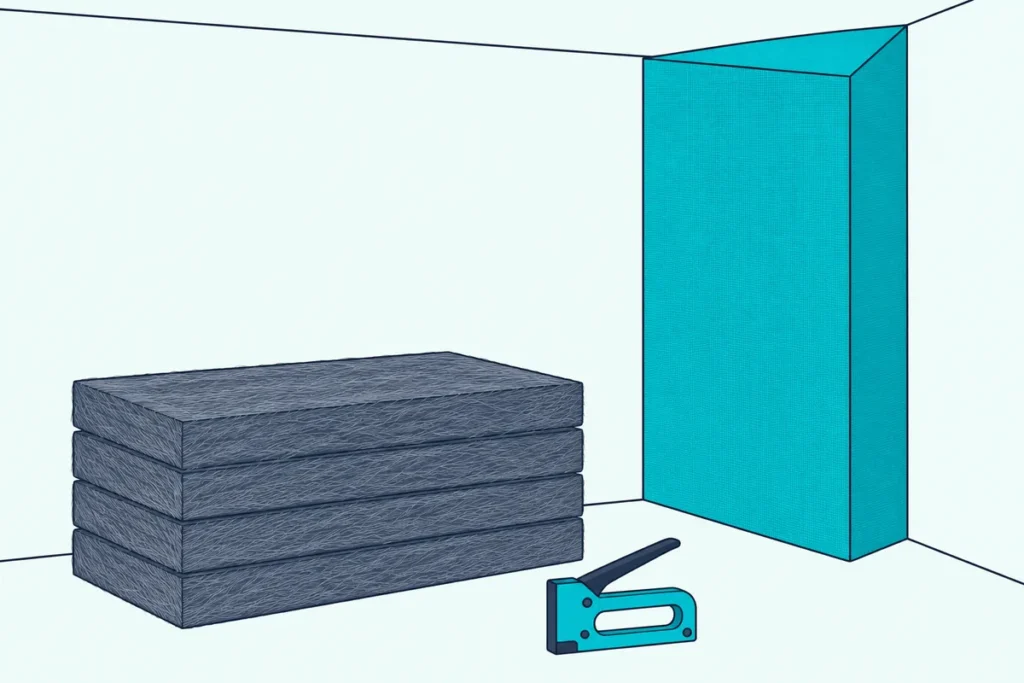
ROCKWOOL Safe’n’Sound is the stone wool batt the builds below use, and ROCKWOOL lists it at 0.44 at 125 Hz at 3 inches thick and 1.38 at 6 inches. Household items like blankets and towels can help with mid-frequency reflections, but they lack the density and rigidity to absorb low-frequency sound waves.
Building these bass traps doesn’t require woodworking skills or special tools. The simplest effective design is stacking insulation batts directly into the corner with no frame at all — the corner walls hold the material in place.
The sections below cover the materials that absorb bass, a step-by-step corner trap build, how DIY compares with commercial traps, and ways to make the traps look presentable.
Blankets, towels and thin foam absorb mid and high frequencies but do little in the low bass, so they don’t work as primary bass treatment.
The descriptions come from the makers’ data sheets and listings.
Can You Build Effective Bass Traps On A Budget?
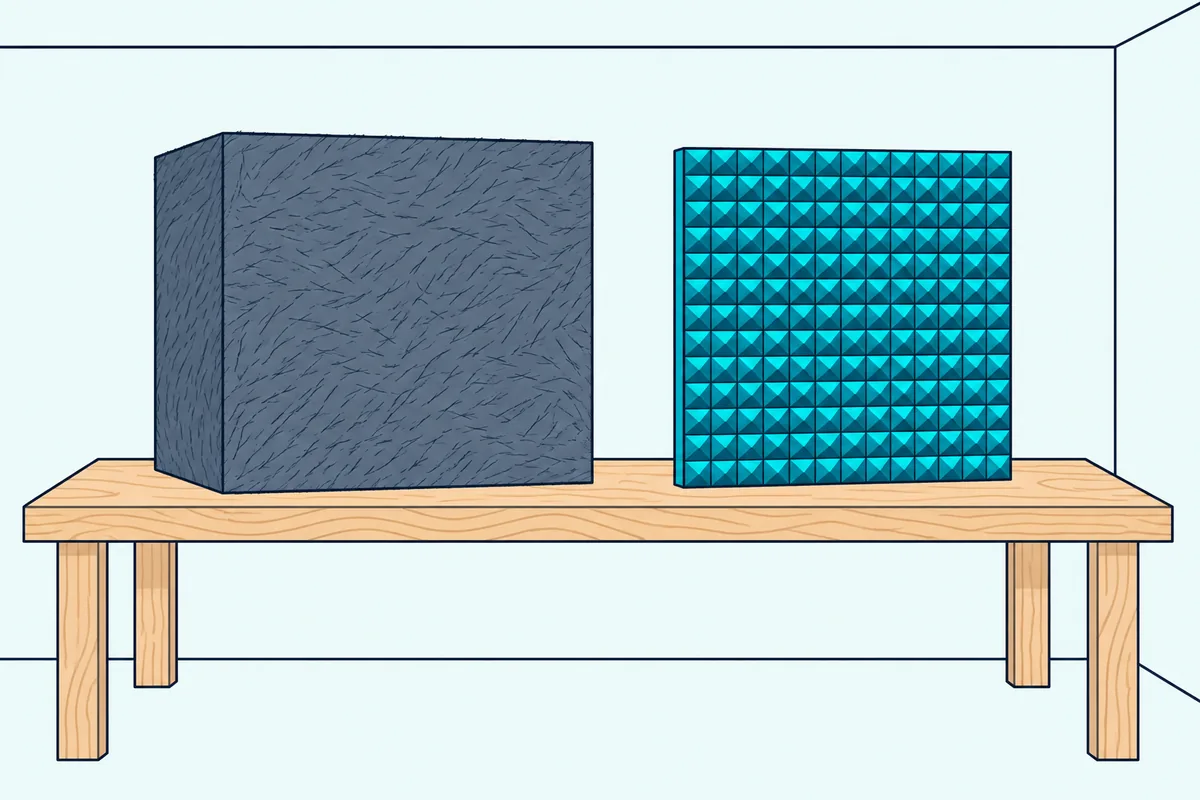
You can, because a bass trap’s absorption comes from its insulation material, not the brand, frame, or fabric.
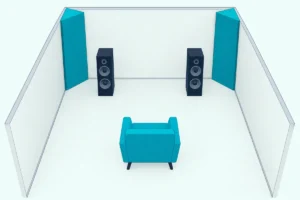
What decides the absorption is the material and its thickness, as the makers’ figures below show. For placement, Auralex’s home-studio guide puts bass traps in all of the corners as the first step in any small room.
Materials That Absorb Bass
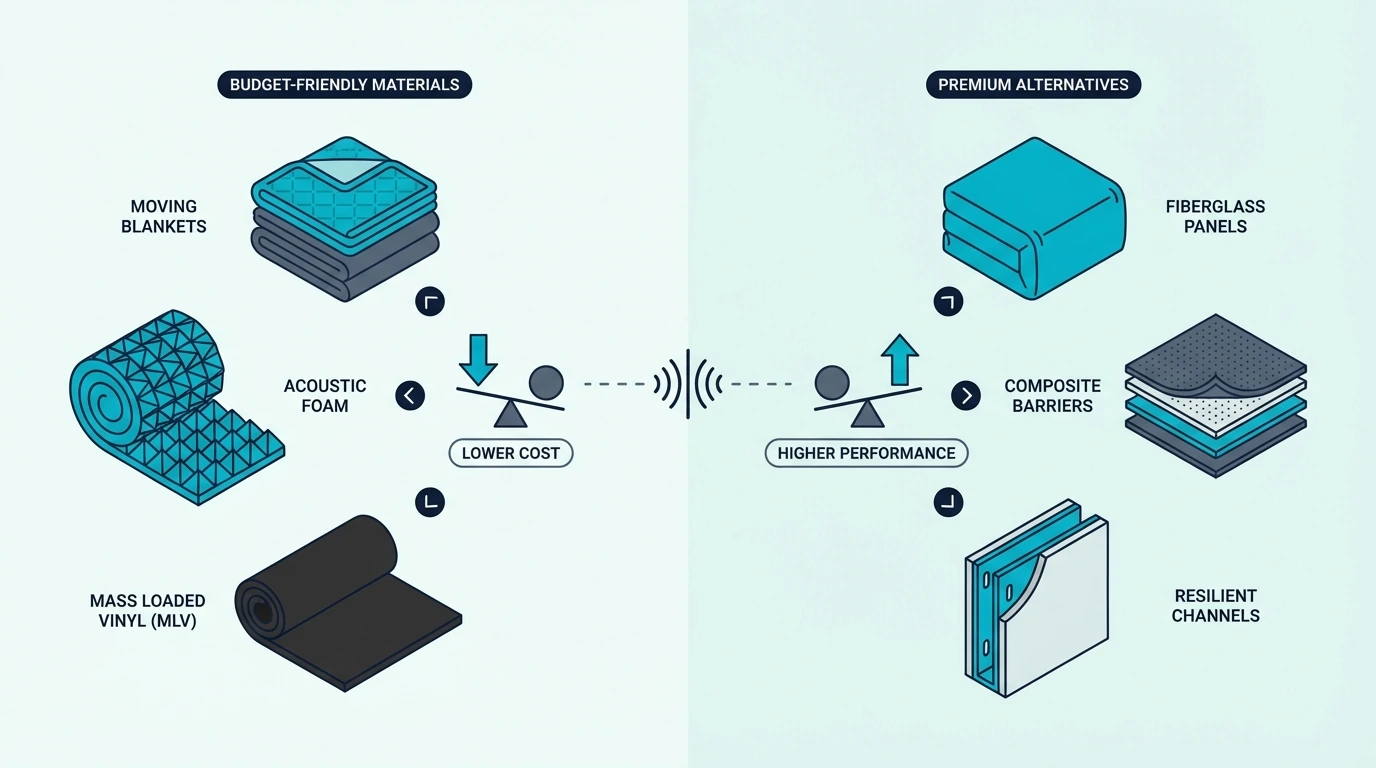
Not every insulation or household material absorbs bass. The ones that do are fibrous insulation boards and batts at enough thickness: Owens Corning lists its 703 board at 0.15 at 125 Hz at 2 inches thick and 0.56 at 4 inches.
Owens Corning 703 comes as six 2-inch semi-rigid fiberglass boards to a pack, so two stacked make a 4-inch trap.
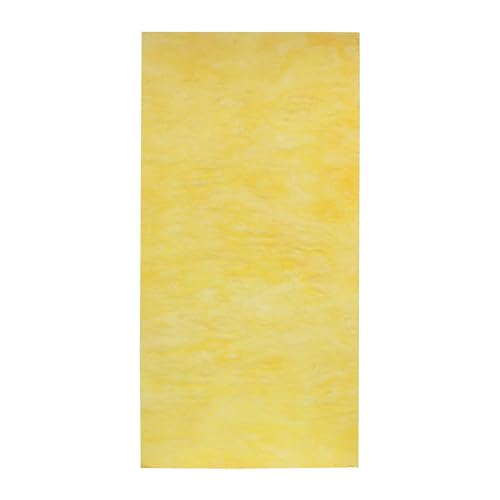
Owens Corning 703
Mineral Wool On A Budget
ROCKWOOL Safe’n’Sound is a stone wool batt for interior walls; ROCKWOOL’s sheet gives it 3 or 6 inches thick and, for wood studs 16 inches on center, 15.25×47 inches. Doubling up two 3-inch batts gives 6 inches of insulation.
Safe’n’Sound is designed as building insulation, not acoustic treatment, but ROCKWOOL’s sheet gives its sound absorption figures (ASTM C423): an NRC of 1.10 at 3 inches and 1.25 at 6 inches.
ROCKWOOL ComfortBoard 80 comes as rigid stone wool boards that hold their shape without a frame; ROCKWOOL’s sheet gives them 1 to 5 inches thick, 24×48 inches and larger. If you want the simplest possible build — no frame, no stapling — ComfortBoard stacked in a corner is the quickest to set up.
Household Items As Bass Traps
Thick moving blankets folded and stuffed into corners provide some acoustic benefit, but they primarily absorb mid and high frequencies. A folded moving blanket is too thin to reach bass frequencies effectively.
Pillows and towels stacked in corners create even less absorption — their density is too low to convert bass-frequency sound energy to heat. They may reduce flutter echo and room brightness, but they won’t address room modes or bass buildup.
Household items are better than nothing for general room acoustics, but they don’t do what a bass trap does. If your room has bass problems (boomy corners, uneven low-frequency response), you need proper insulation material.
How To Build A Cheap Corner Bass Trap
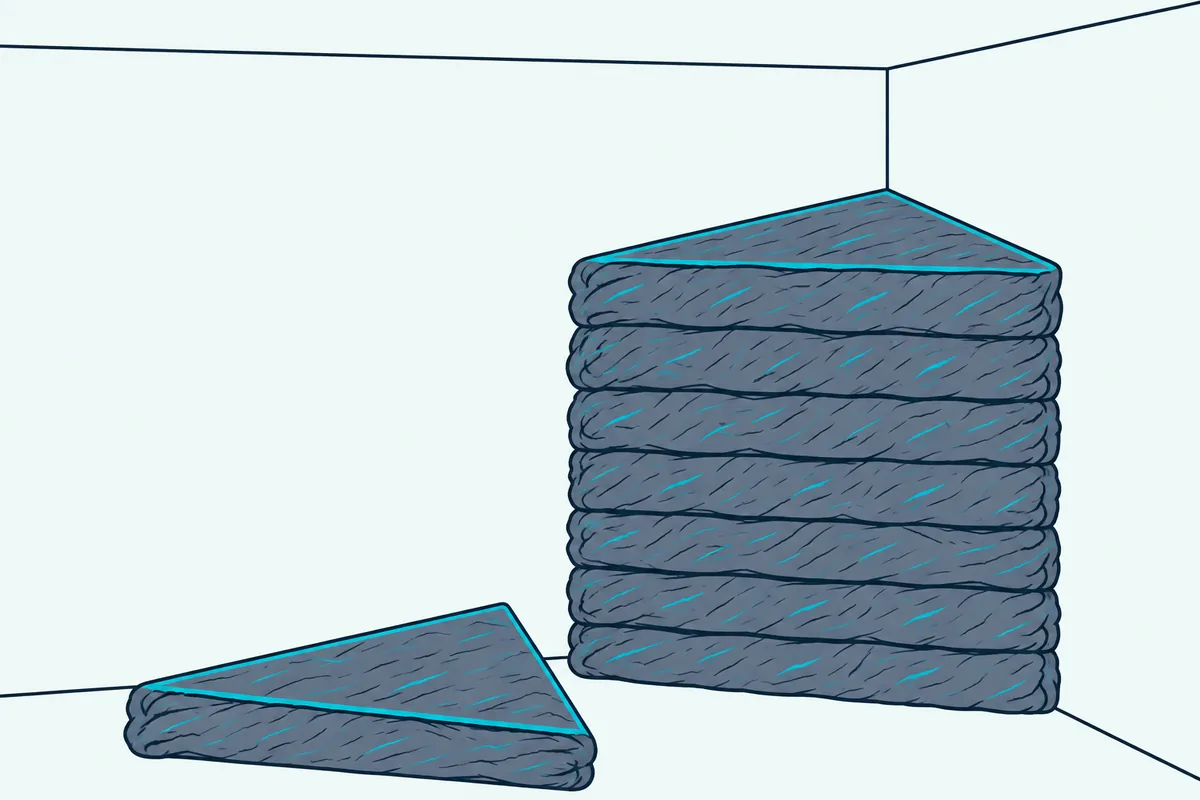
This bass trap requires zero woodworking — just stack insulation batts directly into the corner.
What you need: – 2-3 Rockwool Safe’n’Sound batts – A utility knife for cutting (optional — batts can be folded or stacked as-is)
Step 1: Take a Safe’n’Sound batt and fold it diagonally, pressing the folded edge into the corner where two walls meet.
Step 2: Stack additional folded batts on top until you reach the ceiling or run out of material.
Step 3: For a superchunk approach, cut batts diagonally with a utility knife to create triangular pieces that nest tightly into the corner. This fills more of the corner volume with insulation.
The build needs no frame, no fabric and no hardware: the walls hold the insulation in place and gravity keeps the stack compressed. If the stack leans, press a scrap piece of lumber across the front to hold it in position.
For a slightly more finished version, build a simple triangular frame from three pieces of 1×3 lumber and stretch muslin over it. Lean the fabric-covered frame against the corner to hide the insulation behind it.
DIY Bass Traps vs Commercial: How Do They Compare?
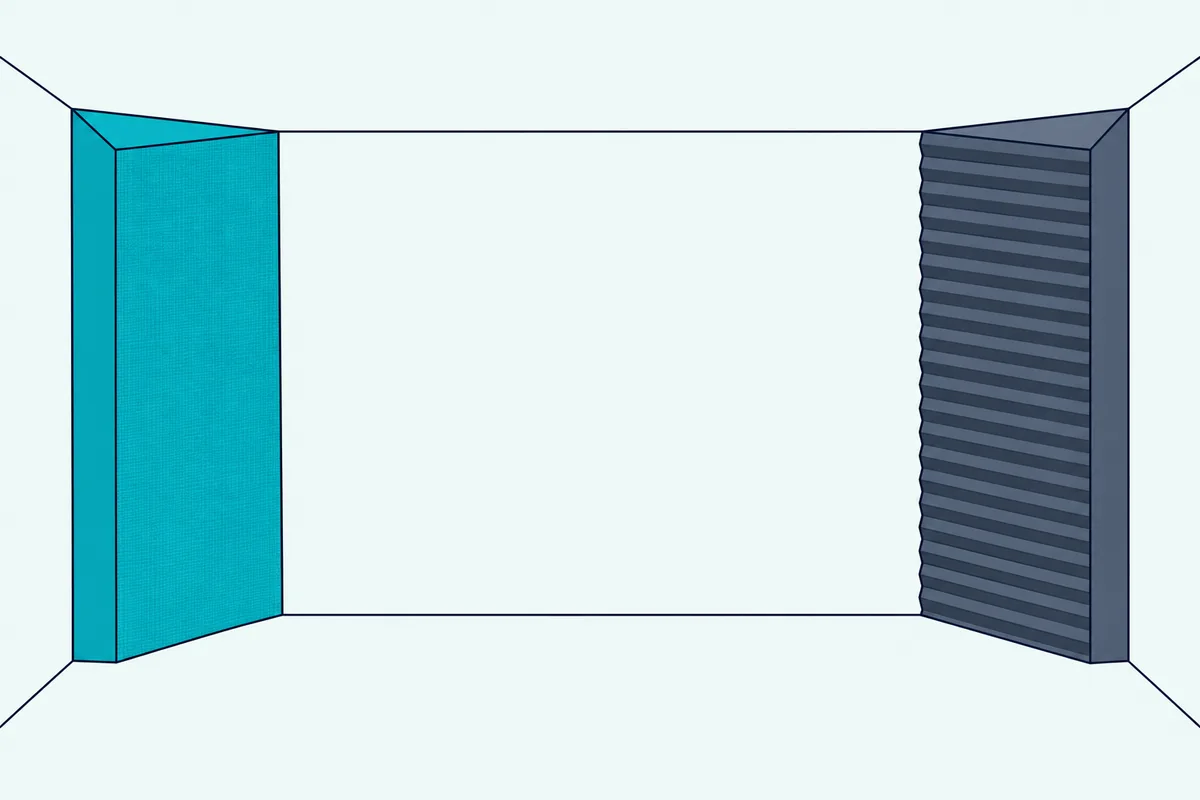
Here is what DIY bass traps take next to commercial ones:
| Option | What It Takes | Finish |
|---|---|---|
| DIY (no frame, insulation only) | Insulation batts stacked in the corner | Bare insulation |
| DIY (framed + muslin wrap) | Batts, a frame of three 1×3 boards, muslin and staples | Muslin over a lumber frame |
| Commercial foam | Ready-made foam corner pieces | As made |
| Commercial fiberglass | A ready-made panel | As made |
Rigid Mineral Wool vs Foam Traps
Rigid mineral wool reaches into the bass: ROCKWOOL lists its ComfortBoard 80 board at 0.84 at 125 Hz at 3 inches thick and 0.89 at 5 inches. For foam, Auralex, which makes it, notes that thicker acoustic foam is better at absorbing low frequency sounds.
Foam traps need no construction.
For treating multiple corners, an 8-pack of foam corner pieces such as the SODOCT 8 Pack gives two pieces for each of the four vertical corners.
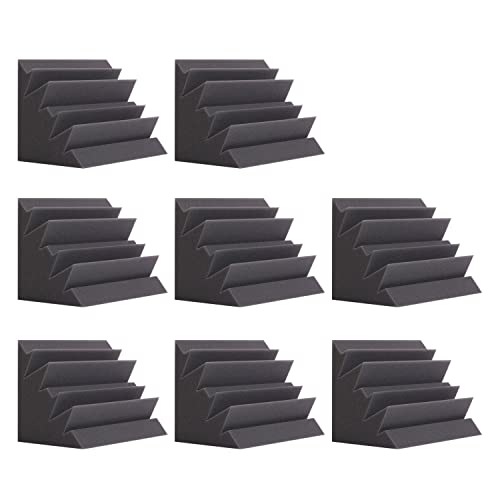
SODOCT 8 Pack
Making Budget Bass Traps Look Good
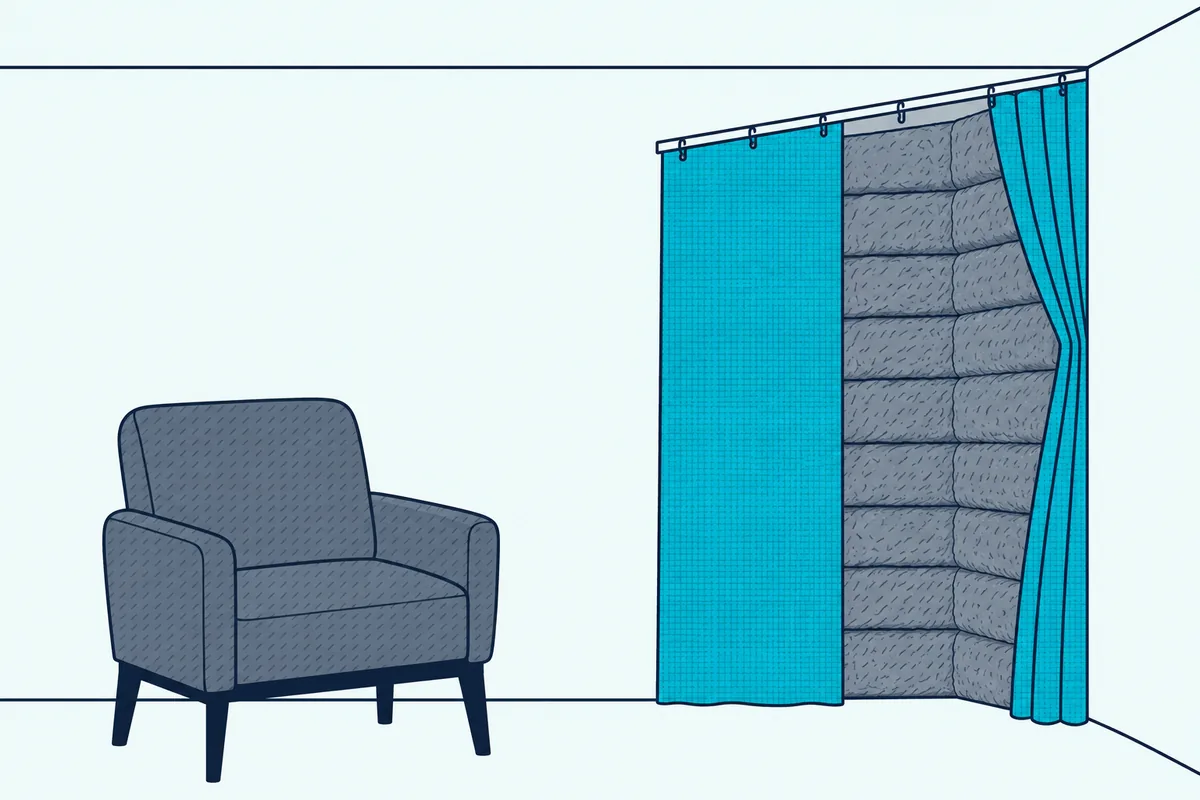
Raw insulation in corners looks unfinished, but a simple cover makes the traps presentable.
Muslin curtain: Hang a strip of muslin fabric from the ceiling in front of the insulation stack using small cup hooks, and hem the muslin with iron-on tape for a clean edge.
Thrift store fabric: Browse thrift stores for large fabric pieces — curtains, bed sheets, or tablecloths in solid colors work well. Stretch the fabric over a simple 1×3 lumber frame and lean or mount it in front of the corner treatment.
Simple wood frame: Build a triangular frame from three pieces of 1×3 lumber, wrap it in muslin, and use it as a cover panel for the insulation behind it. The frame gives the corner a finished look.
Painting bass traps is another option once they’re wrapped — use latex paint applied lightly to the fabric surface to match your room’s color scheme.
The Bottom Line
A diy cheap bass trap can be Rockwool Safe’n’Sound stacked directly into corners, the quickest build, or the same insulation behind a simple frame and muslin wrap for a finished look.
Skip household items like blankets and towels as your primary bass treatment — they help with general acoustics but don’t address the low frequencies where room modes occur. Mineral wool insulation treats those frequencies inside the room, though bass traps don’t stop outside noise.
Frequently Asked Questions
Can a blanket be a good bass trap?
A thick moving blanket provides some mid-frequency absorption when folded and placed in a corner, but it’s not an effective bass trap. Blankets lack the density and thickness needed to absorb the low bass, so they’re better used as supplementary treatment alongside proper mineral wool or fiberglass traps.
What is the cheapest effective bass trap material?
ROCKWOOL Safe’n’Sound, a stone wool batt made for interior walls: ROCKWOOL lists it at 0.44 at 125 Hz at 3 inches thick and 1.38 at 6 inches, the thickness two 3-inch batts give when doubled up.
Are cheap foam bass traps worth it?
Foam bass traps absorb mid and high frequencies, and for the bass, Auralex, which makes them, notes that thicker acoustic foam is better at absorbing low frequency sounds. They’re a convenience upgrade over bare walls.