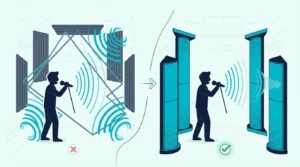
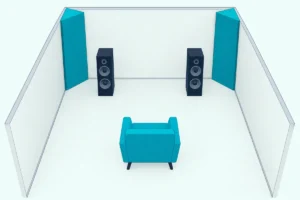
Start with 4 bass traps in the front wall corners (floor-to-ceiling if possible), then add rear corners (8 total), then wall-ceiling edges (12+).
How many bass traps do i need depends on your room size, the severity of your bass problems, and how much of the room’s corner and edge surface area you can cover, but the short answer for most home studios is to start with the highest-priority corners.
The count matters less than how much corner and edge length the traps cover: a 48-inch trap spans the same length of corner as four 12-inch foam wedges.
Bass problems are a small-room problem first: Auralex’s home-studio guide names the buildup of low frequencies, especially in corners, as one of the most common problems in small rooms.
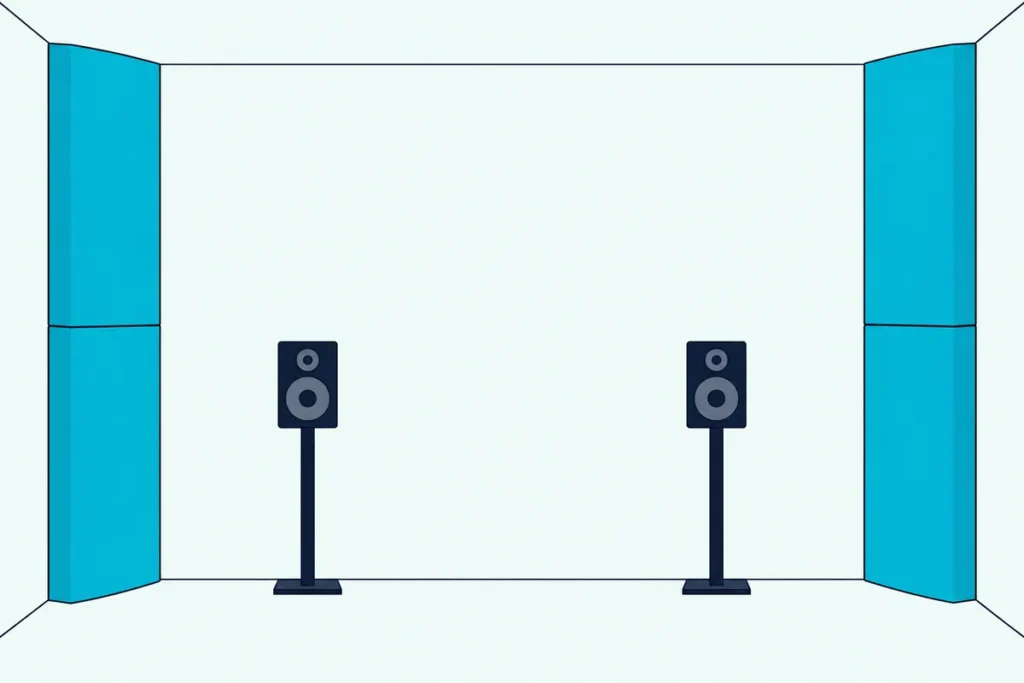
Below, you’ll find specific trap counts by room size, whether you need traps in every corner, how to calculate coverage for your space, and when to stop adding traps before you over-treat the room.
Measure your room’s frequency response with REW before and after each round of treatment to know when you’ve done enough.
How Many Bass Traps Do I Need?
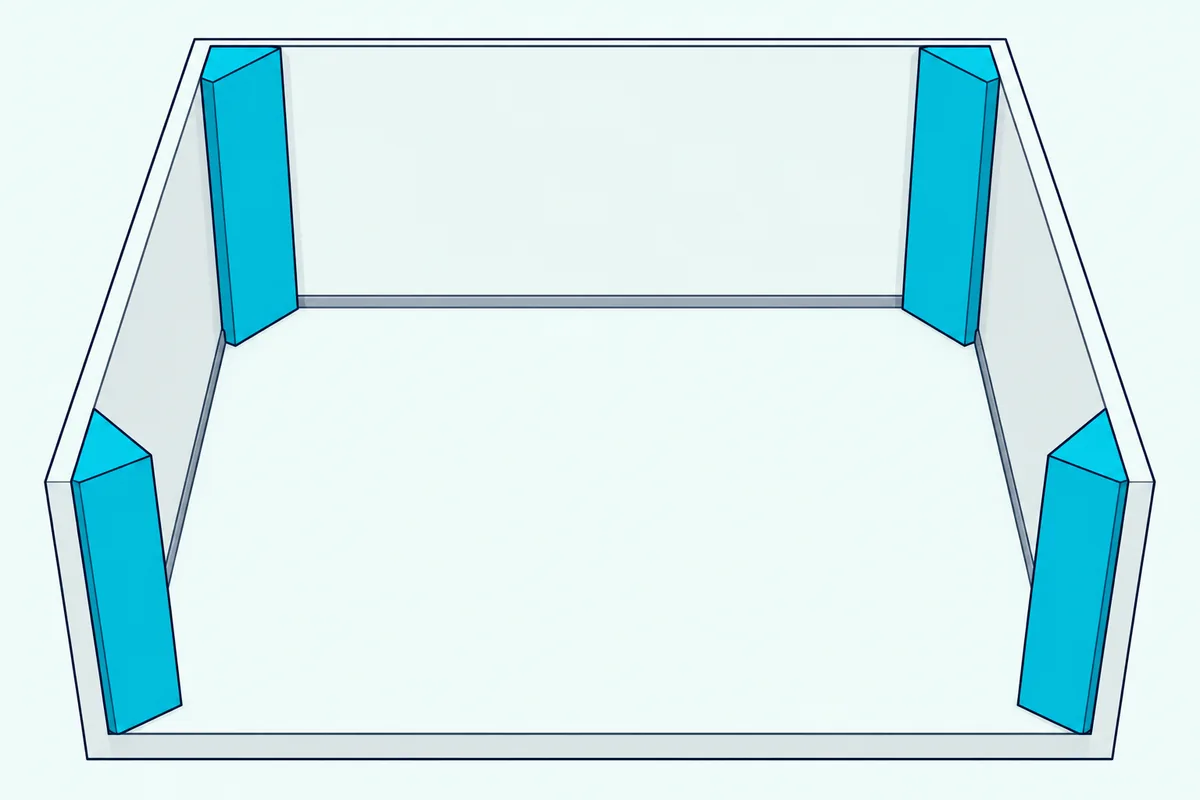
The number of bass traps you need follows a simple priority system based on your room’s corners and edges.
4 traps (minimum effective setup): The two front wall corners, floor to ceiling, which with an 8-foot ceiling is two 48-inch traps stacked in each corner. With only a few traps, start here.
8 traps (strong foundation): All four vertical wall-wall corners, floor to ceiling. This treats every vertical corner and keeps the treatment symmetrical, which Auralex’s home-studio guide says plays an important role in its effectiveness.
12+ traps (comprehensive treatment): All vertical corners plus wall-ceiling edge traps along the front and sides. This adds the edges where the walls meet the ceiling.
The trap count assumes full-sized traps, such as a panel built around a 24 x 48-inch board, one of the sizes ROCKWOOL lists for Comfortboard 80. Smaller traps like 12-inch foam wedges count as partial coverage: a 48-inch trap spans the same length of corner as four 12-inch pieces.
How Many Bass Traps For A Small Room?
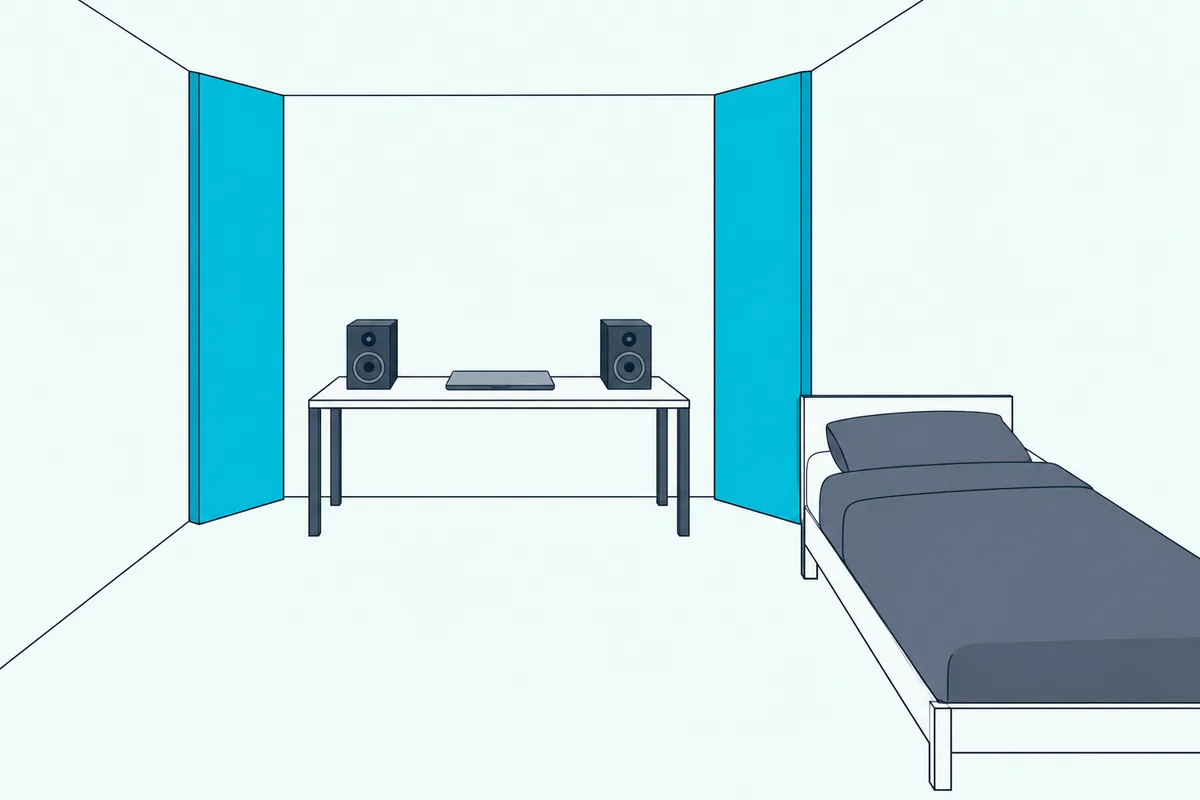
Small rooms need bass treatment first because room modes are mostly their problem: Auralex describes a room mode as a low frequency standing wave and says it is normally a small room phenomenon, though large rooms have very low modes as well.
A small room has the same four vertical wall-wall corners as a large one, so the traps go into the same places. In a small room, the corners come first.
Bedroom Studios (Under 150 sq ft)
In a bedroom-sized studio (10×12 to 10×15 feet), start with the corners: Auralex’s home-studio guide makes bass traps in all of the corners the first step in any small room. The priority order:
- Floor-to-ceiling traps in the two front wall corners (behind/beside your monitors): four 48-inch traps with an 8-foot ceiling
- Floor-to-ceiling traps in the two rear wall corners: four more
- Two wall-ceiling edge traps along the front wall junction
In rooms this small, the front wall corners sit closest to the listening position, which is why they come first in the order above.
Home Theaters And Listening Rooms
Home theaters and dedicated listening rooms have to work for listeners across a wider seating area, not just a single sweet spot.
Cover all four vertical corners first (8 traps, two per corner), then add ceiling-wall edge traps at the front and side junctions. For rooms with subwoofers, give the front wall corners and the wall behind the sub the thickest treatment.
Do I Need Bass Traps In Every Corner?
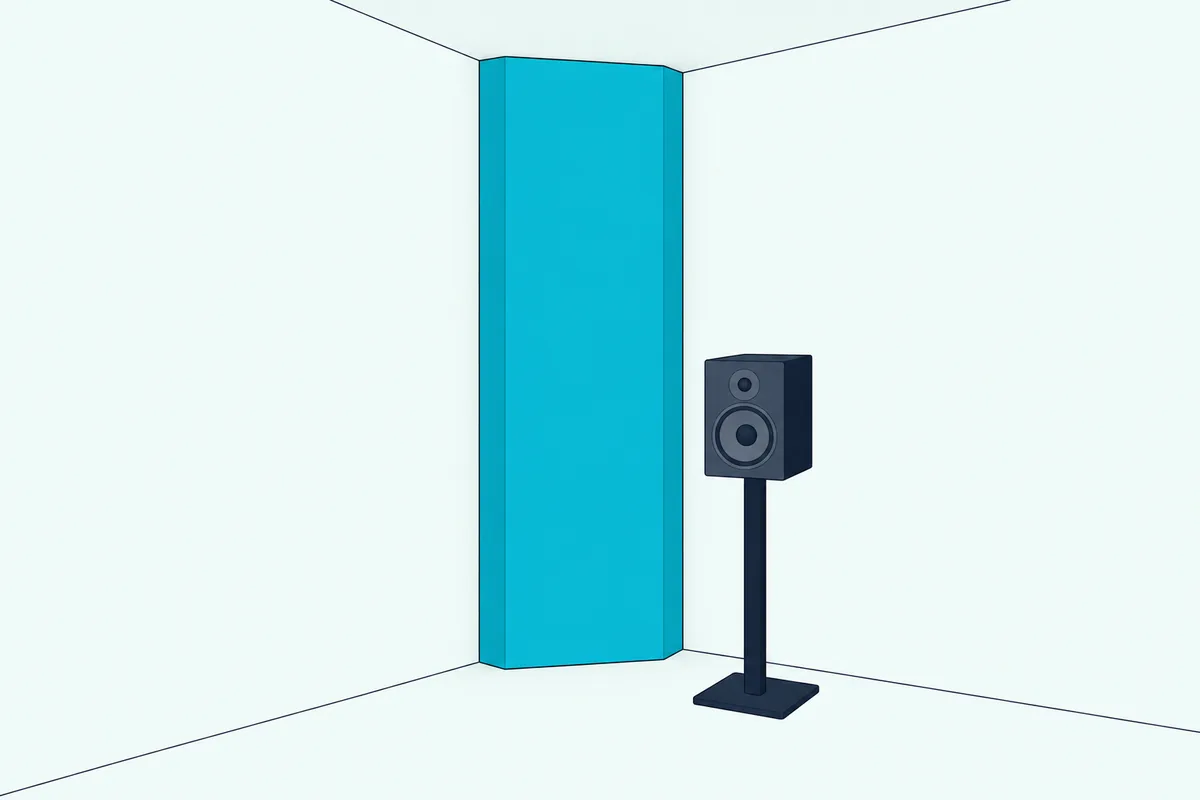
Every corner is ideal, but the front corners come first.
Here’s the order, step by step:
- First 4 traps (front corners): Two 48-inch traps stacked in each corner behind or beside your monitors
- Next 4 traps (rear corners): All four vertical corners covered, 8 traps in all
- Next 4 or more traps (ceiling edges): Along the front and side wall-ceiling edges, 12 or more in all
- Beyond 12 traps: Measure before adding more
If you can treat only two corners, choose the front — if you can do four, do all wall-wall verticals (8 traps), and after that add ceiling edges.
Bass traps are necessary where low frequencies build up, which Auralex’s home-studio guide calls one of the most common problems in small rooms, but “every corner” isn’t required to start: the order above begins with the front corners.
How To Calculate Bass Trap Coverage For Your Room
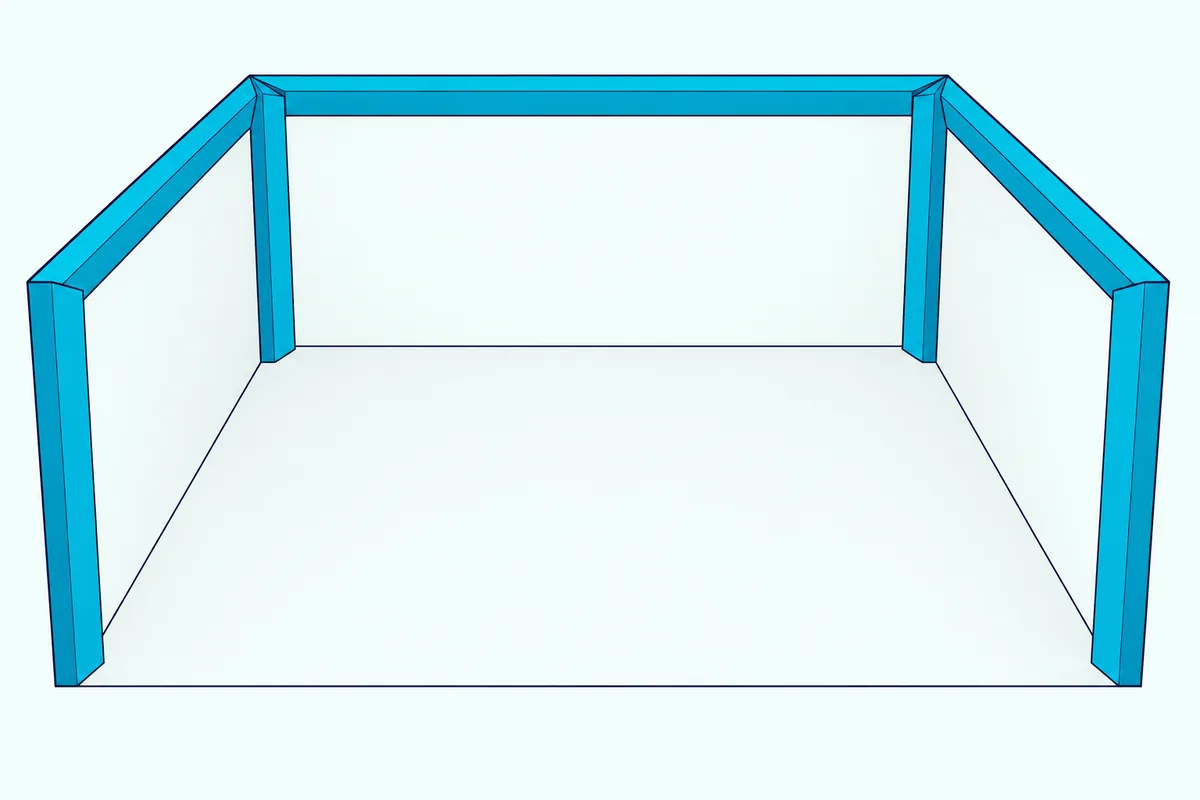
A practical coverage calculation uses the total length of corners and edges in your room as the baseline. Every rectangular room has 4 vertical wall-wall corners and 8 horizontal wall-ceiling/wall-floor edges — that’s your total treatable surface.
Step 1: Measure your vertical corners. Multiply your ceiling height by 4 (corners). An 8-foot ceiling gives you 32 linear feet of vertical corner to potentially treat.
Step 2: Measure your horizontal edges. Add the perimeter of your room twice (ceiling edges + floor edges). A 10×12 room has a 44-foot perimeter, so 88 linear feet of horizontal edges total.
Step 3: Calculate your current coverage. Add up the total linear feet of corners and edges your traps cover. Four floor-to-ceiling traps in a room with 8-foot ceilings covers 32 feet of the total 120 feet — about 27%.
Use room measurement software like REW (Room EQ Wizard) with a calibrated microphone to verify your results. The measurement tells you exactly which frequencies still need attention and whether more traps will help or whether you’ve reached the practical limit for porous absorption.
When To Stop Adding Bass Traps
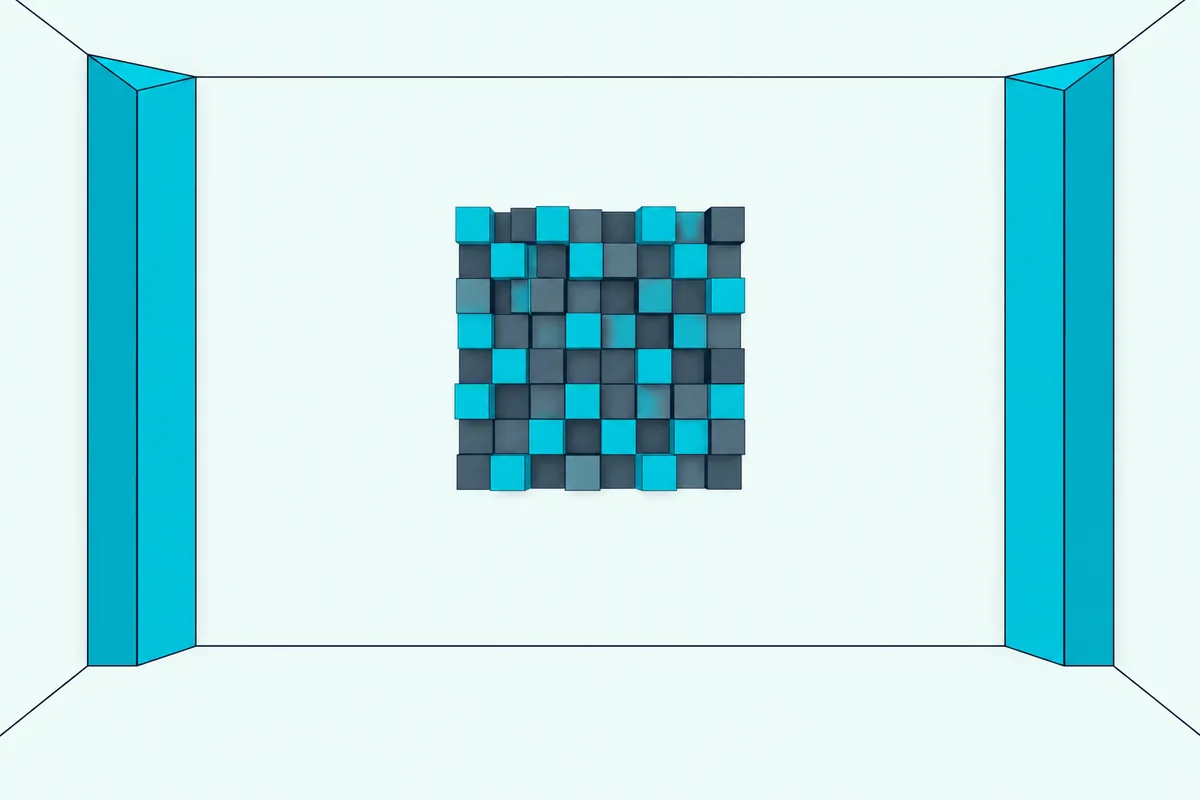
A room can be over-treated with bass traps. The goal is controlled, even bass, not zero bass energy.
Measurement-based stopping point: Run a frequency sweep with REW at your listening position after each round of traps, and stop when a new trap no longer changes the measured bass response.
If your room feels over-treated, remove a trap or two from the rear corners or sides first. The front corner treatment should stay, since it is the first step in the order above.
The balance between absorption and diffusion matters once you’ve covered your corners — diffusers scatter sound energy rather than absorbing it; Auralex’s Acoustics 101 puts broadband diffusion on the rear wall of a stereo mixing room to spread out the sound energy without killing it. That is the comparison between a room with bass traps in the corners and diffusers on the rear wall and one with absorbers everywhere.
The Bottom Line
Start with 4 bass traps in the front wall corners and measure your room’s frequency response before and after. Add rear corners next (8 total), then ceiling edges (12+), measuring after each addition to confirm improvement.
In a small room, Auralex’s home-studio guide puts bass traps in all of the corners first.
Stop adding traps when a new one no longer changes your measured bass response.
Frequently Asked Questions
How much of a difference do bass traps make?
Bass traps work on the low-frequency buildup that Auralex’s home-studio guide calls one of the most common problems in small rooms. How much they change your room shows in a before-and-after REW measurement at the listening position.
Can you have too many bass traps?
Yes: Auralex says a room should almost never have 100% of its walls and ceiling covered, short of an anechoic chamber or a really tight vocal booth. Balance bass traps with some reflective or diffusive surfaces.
Stop adding traps when a new one no longer changes your measured bass response.
What is the best Rockwool for bass traps?
Two Rockwool products come up for bass traps: Safe’n’Sound and Comfortboard 80. Safe’n’Sound is a stone wool batt that ROCKWOOL makes in 3-inch and 6-inch thicknesses, and it works for DIY bass trap builds when packed into frames.
Comfortboard 80 is a rigid stone wool board, and at 3 inches thick ROCKWOOL gives it an absorption coefficient of 0.84 at 125 Hz, against 0.44 for Safe’n’Sound.