Best MIDI Controller for Reason: 8 Picks on Reason’s Own List
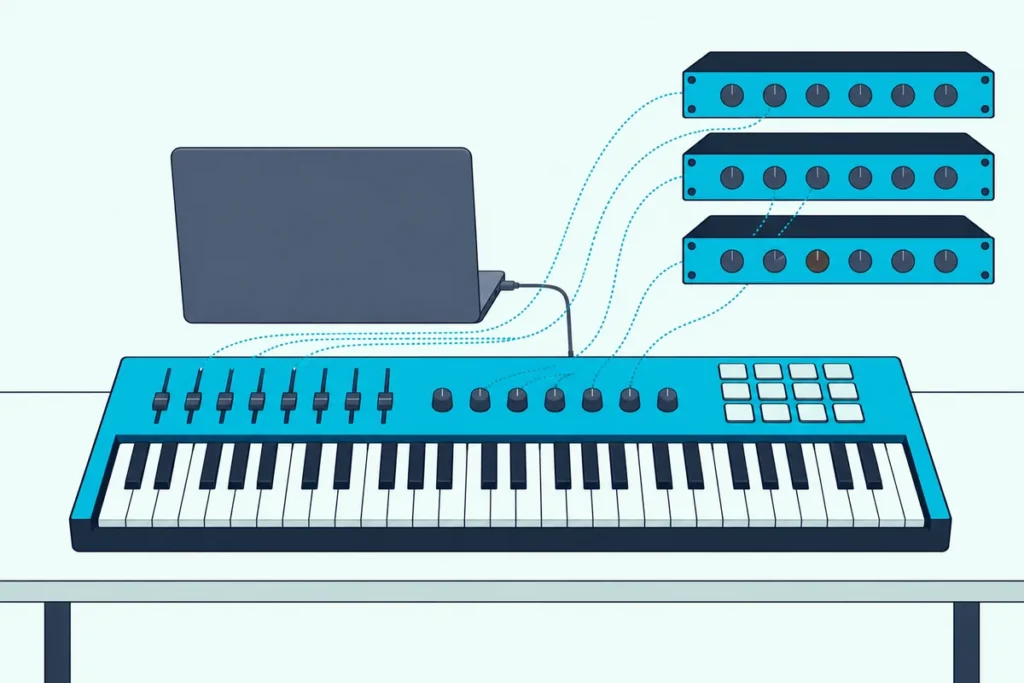
Picking the best MIDI controller for Reason starts with one list, because Reason only maps a controller’s knobs, faders and transport for you when it knows that model.
Plug in anything else and the keys still play, but its knobs do nothing in Reason until you map or program them yourself.
With a supported controller, Reason finds it, and its knobs follow whichever instrument you’re playing with no mapping at all.
This guide compares eight controllers from Reason Studios’ own supported list, from a 61-key board with nine faders to a slim mixer strip and a pad controller, using Reason’s manual and each maker’s setup notes.
Start with the quick picks, then see how Remote works, because it explains every setup step that follows.
Which Is the Best MIDI Controller for Reason?
For most people it’s the Novation Launchkey 49 MK4, because Reason 13.0.2 and later already contain its scripts and Reason Studios lists it with display and LED feedback. The table sorts all eight picks by the job each one does best.
| Your goal | Pick | How Reason finds it |
|---|---|---|
| One board for playing, mixing and pads | Novation Launchkey 49 MK4 | Script built into Reason 13.0.2 and later |
| Deepest control of Reason’s devices | Nektar Impact LX49 mk3 | Nektar’s Reason integration files |
| 61 keys with aftertouch | M-Audio Oxygen Pro 61 | Supported list, auto-detect |
| A small desk, with faders | Arturia MiniLab 3 | Script added in Reason 12.5 |
| Reason’s instruments on a mini | Nektar Impact LX Mini | Nektar’s Reason integration files |
| A tight budget | Akai MPK Mini MK3 | Supported list, auto-detect |
| Mixing without keys | Korg nanoKONTROL2 | Supported list, auto-detect |
| Pads for Kong and Redrum | Akai MPD218 | Supported list, auto-detect |
All eight appear on Reason Studios’ list of supported keyboards and control surfaces, which marks each of them for auto-detect. Each pick also had at least 4.0 stars and 50 reviews on Amazon and was in stock on 6 October 2026, and no prices appear because they change often.
If Reason is only one of the programs you use, our best MIDI keyboard rankings cover controllers for every DAW.
| Product | Link |
|---|---|
Best All-Round Controller for Reason 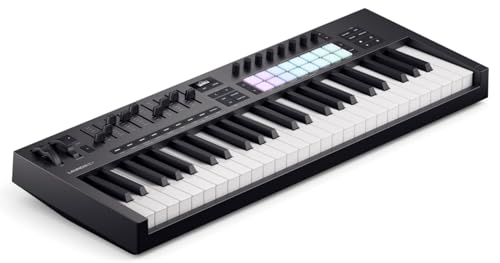 | See ratings |
Best for Reason 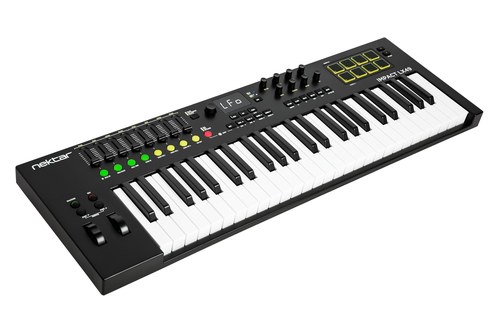 | See ratings |
Best 61-Key Pick for Reason 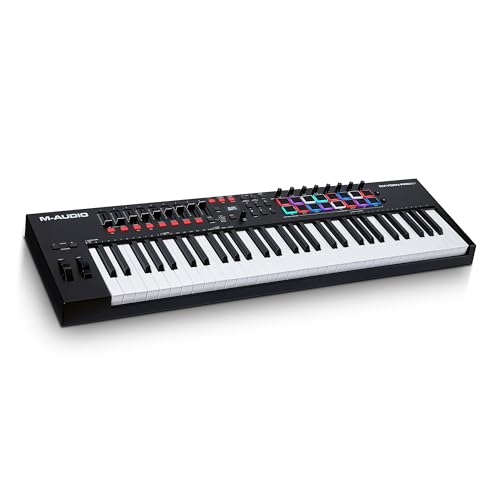 | See ratings |
Best Compact Controller for Reason 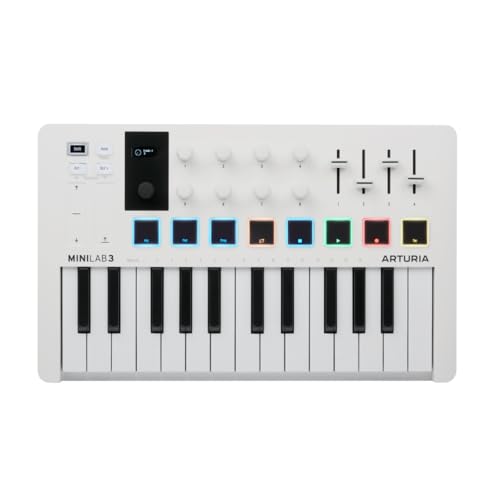 | See ratings |
Best Mini for Reason 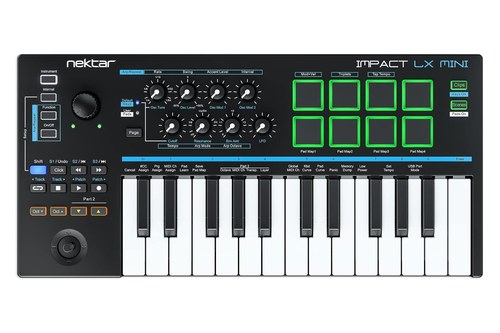 | See ratings |
Best Budget Controller for Reason 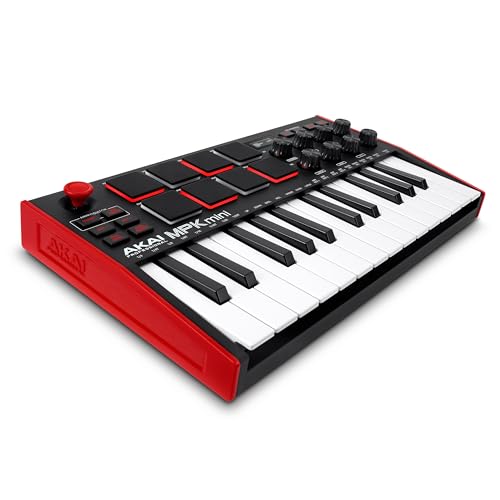 | See ratings |
Best for Mixing in Reason 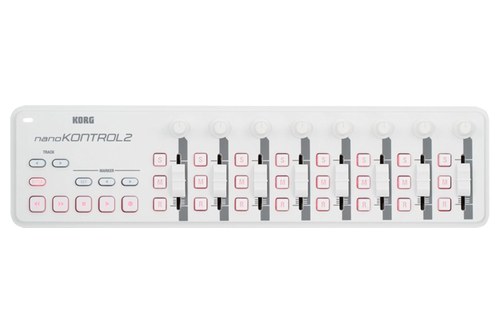 | See ratings |
Best Pads for Kong and Redrum 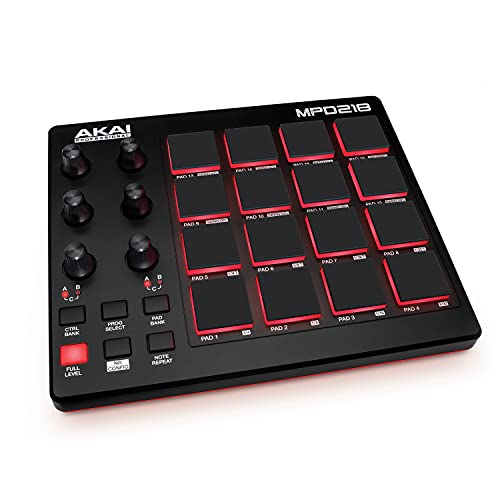 | See ratings |
How Does Reason Talk to a MIDI Controller?
That auto-detect column matters because Reason runs controllers through a protocol called Remote, which maps a supported surface’s knobs, faders and buttons to each Reason device for you. Reason Studios says Remote arrived with Reason 3.0 and talks both ways, so it can drive motor faders, displays and LEDs.
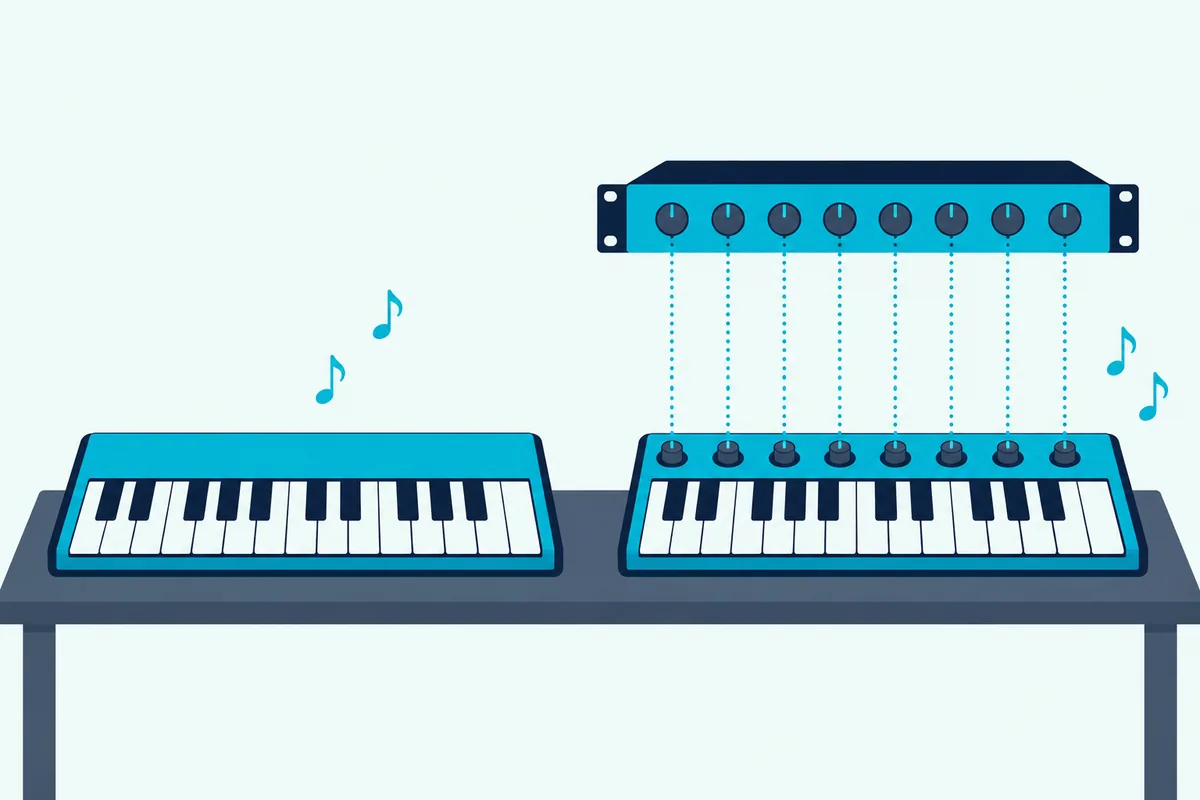
Anything Reason doesn’t recognize still works through Easy MIDI Inputs, which Reason switches on for every MIDI port it finds. The Reason 14 manual says that route carries notes with velocity plus mod wheel, pitch bend and sustain, so you can play while every knob waits for a manual mapping.
Between the two sits a generic option: add the controller by hand and pick Other, then MIDI Control Keyboard, MIDI Control Surface or MIDI Keyboard (No Controls). The first two give its controls predefined destinations, but only after you set them to send the CC numbers in Reason’s MIDI Implementation Chart.
A supported surface also follows the Master Keyboard Input, so its knobs move to the device on whichever track has it. Give a Subtractor’s track the Master Keyboard Input and they control its most important parameters, then move it to an NN-XT track and they switch to the NN-XT, the manual’s own example.
Get Studio Tips Weekly
Join 5,000+ creators getting acoustic treatment advice every week.
No spam. Unsubscribe anytime.Why Is the Novation Launchkey 49 MK4 the Best All-Round Pick?
It does every job in one board, and that Remote mapping comes with nothing to install, since Novation says Reason 13.0.2 and later contain the scripts for the Launchkey MK4. Open Reason with the keyboard connected, go to the control surface settings and click Auto-detect Surfaces (Novation).
The Novation Launchkey 49 MK4 has 49 semi-weighted keys, 16 velocity-sensitive pads with polyphonic aftertouch, eight endless encoders and nine faders, according to Novation. Its 128 by 64 monochrome OLED display pairs with the display and LED feedback Reason Studios lists for the MK4.
The Novation Launchkey 49 MK4
Reason’s manual shows a nine-slider surface locked to the mixer, with eight sliders on channel faders and the ninth on the master, and the Launchkey has nine faders too. Novation also lists a five-pin MIDI output, a sustain input, a Scale mode with 30 scales and an arpeggiator.
On Reason 11 or 12, Novation offers the same scripts as a download you copy into Reason’s Remote folders, though it advises updating to 13.0.2 if you can. The Launchkey Mini MK4 shares those scripts in a 25 or 37 mini-key body, and Reason Studios lists it for auto-detect too.
Does the Nektar Impact LX49 mk3 Give You More Control of Reason’s Devices?
It goes deeper into Reason’s own instruments, because Nektar writes its Reason integration itself rather than leaving it to a generic map. Nektar’s Reason guide lists extended transport, track selection, project navigation, volume, pan, filter and selected parameter control, mute and solo, and instrument control with special support for Reason’s drum instruments.
The Nektar Impact LX49 mk3 has 49 synth-action keys, eight 30 mm faders, a large encoder plus eight more, and eight velocity-sensitive pads, according to Nektar. It measures 80.2 by 27 by 7 centimeters and weighs 3.1 kilograms.
The Nektar Impact LX49 mk3
Nektar’s manual says the integration files come from your Nektar account after you register the keyboard, and to update the firmware first. Its Grab function assigns a plug-in parameter when you hold Shift and move it, then move the control, and Reason keeps those assignments for as long as it stays open.
Reason Studios lists the Impact series with auto-detect and display feedback, noting that the Remote files come with the hardware. The gap is a five-pin MIDI output, which Nektar’s spec table marks as absent on every LX mk3 size.
Is the M-Audio Oxygen Pro 61 Worth It for Two-Handed Playing?
It is if you want 61 keys with aftertouch, 12 more than the LX49 mk3, and Reason Studios lists the Oxygen Pro Mini, 25, 49 and 61 for auto-detect. M-Audio’s page names Ableton, Pro Tools, MPC Beats, Cubase, Logic and Studio One for its DAW mode, then “any other major DAW,” without naming Reason.
The M-Audio Oxygen Pro 61 has 61 semi-weighted keys with channel aftertouch, 16 RGB pads with Note Repeat, eight knobs and nine faders, according to M-Audio. An OLED screen, Smart Chord and Smart Scale modes and an arpeggiator sit alongside them.
The M-Audio Oxygen Pro 61
Its nine faders match the count in that mixer example from Reason’s manual, and M-Audio lists a five-pin MIDI output and a sustain input. Reason Studios marks auto-detect for the Oxygen Pro but not display or LED feedback, which the Launchkey and the Nektar boards have.
Is the Arturia MiniLab 3 the Best Compact Pick for Reason?
For a small desk it’s the strongest compact pick, because it keeps four of the faders the bigger boards have and Arturia says Reason 12.5 added its integration script. To set it up, select the DAW program with Shift and pad 3, then press Auto-detect Surfaces on Reason’s MIDI tab (Arturia).
The Arturia MiniLab 3 has 25 velocity-sensitive slim keys, eight encoders, four faders and eight pads that sense velocity and pressure, according to Arturia. Pitch and modulation sit on touch strips rather than wheels.
The Arturia MiniLab 3
Reason Studios’ current list includes the MiniLab 3, and its pedal input takes a sustain, expression or footswitch pedal. If auto-detect misses it, Arturia’s steps are to add it by hand as Arturia, MiniLab 3, set both ports to MiniLab 3 MIDI and disable its MCU, DIN THRU and ALV ports.
Can a Mini Keyboard Control Reason’s Own Instruments?
Yes, and the Nektar Impact LX Mini is built for it, since Nektar says Reason’s internal instruments are pre-mapped to its eight knobs. Nektar’s Reason guide names special support for Kong, Redrum and Boom 808, and you can add your own assignments for third-party plug-ins too.
The Nektar Impact LX Mini has 25 velocity-sensitive mini keys, eight knobs, eight velocity-sensitive pads, a joystick and two independent arpeggiators, according to Nektar. Its sustain socket, which Nektar says is often missing on mini keyboards, takes a standard pedal through the included 1/8-inch to 1/4-inch adapter.
The Nektar Impact LX Mini
Nektar’s Reason guide adds extended transport with locators, project navigation and track and patch selection, plus volume for the selected track. Like the LX49 mk3, it needs Nektar’s integration files installed first.
What’s the Best Budget MIDI Controller for Reason?
The Akai MPK Mini MK3 is the safest low-cost pick, a 25-key mini like the LX Mini that Reason Studios lists by name for auto-detect. Akai’s newer MPK Mini IV isn’t on that list, which Reason Studios last updated in June 2025, so the MK3 is the one Reason names.
The Akai MPK Mini MK3 has 25 velocity-sensitive keys, eight backlit pads that sense velocity and pressure across two banks, eight 360-degree knobs and a thumbstick with three modes, according to Akai. It runs on USB bus power and measures 318 by 181 by 44 millimeters.
The Akai MPK Mini MK3
Akai’s page doesn’t name Reason, so its Reason support rests on Reason Studios’ list. Mini keys and no faders are the trade for the small body.
Do You Need Faders to Mix in Reason?
You don’t, but a fader strip makes mixing faster, and the manual’s nine-slider example from the Launchkey section shows how: lock a control surface to the Master Section and it runs the master plus a block of channels, often eight. A Remote Base Channel marker sets the first channel, and you move it in steps of one or eight (Reason 14 manual).
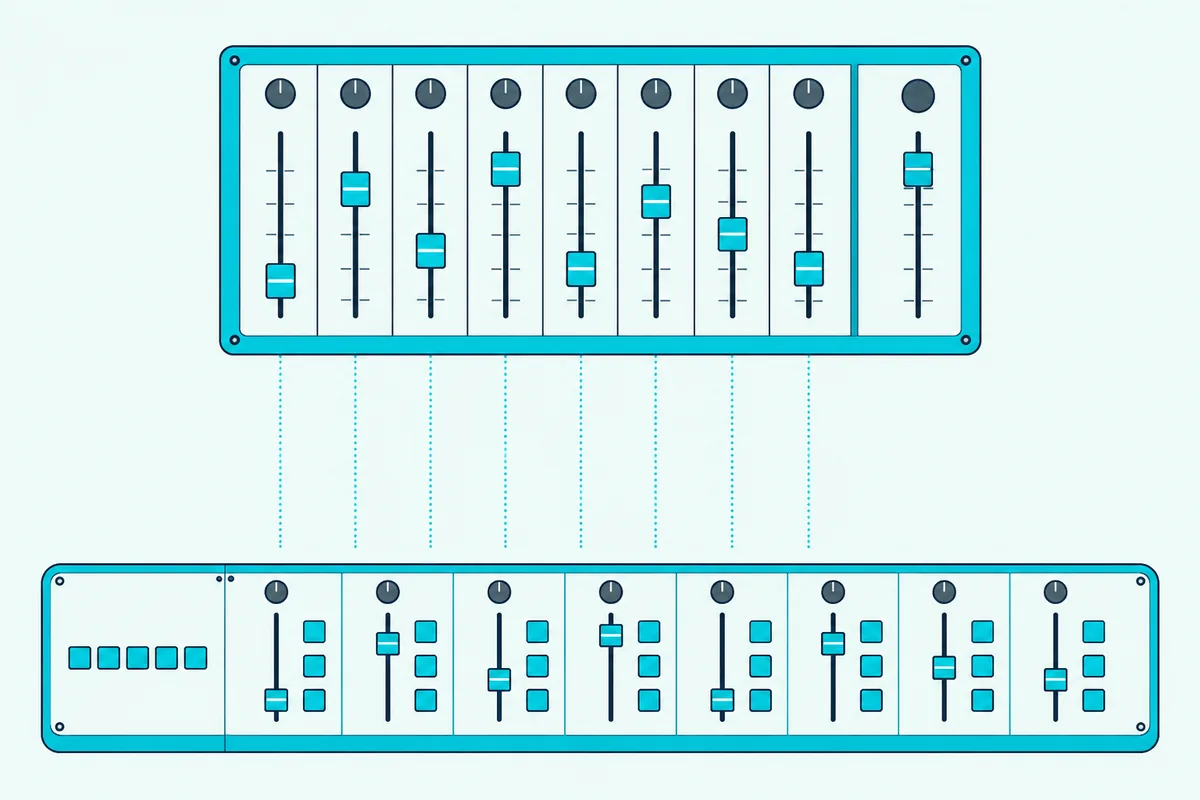
The Korg nanoKONTROL2 gives each of its eight channels a knob, a fader and three buttons, assigned to pan, volume and solo, mute and record, according to Korg. A dedicated transport section adds track select and marker buttons, and one USB cable carries power and MIDI.
The Korg nanoKONTROL2
Reason Studios lists the nanoKONTROL2 for auto-detect, and the manual’s locking steps put it on the mixer. Select the Master Section, then choose the lock command with your surface’s name from the Edit menu, and it keeps controlling the mixer whatever track you’re playing.
Which Pad Controller Suits Kong and Redrum?
Kong came up with the LX Mini’s knobs, and for its pads the Akai MPD218 is the pick, because its 16 pads match Kong’s 16 and Reason Studios lists it for auto-detect. Reason’s manual says Kong’s pads answer to the notes C1 to D#2, one note per pad, and Redrum’s ten channels to C1 to A1 (Reason 14 manual).
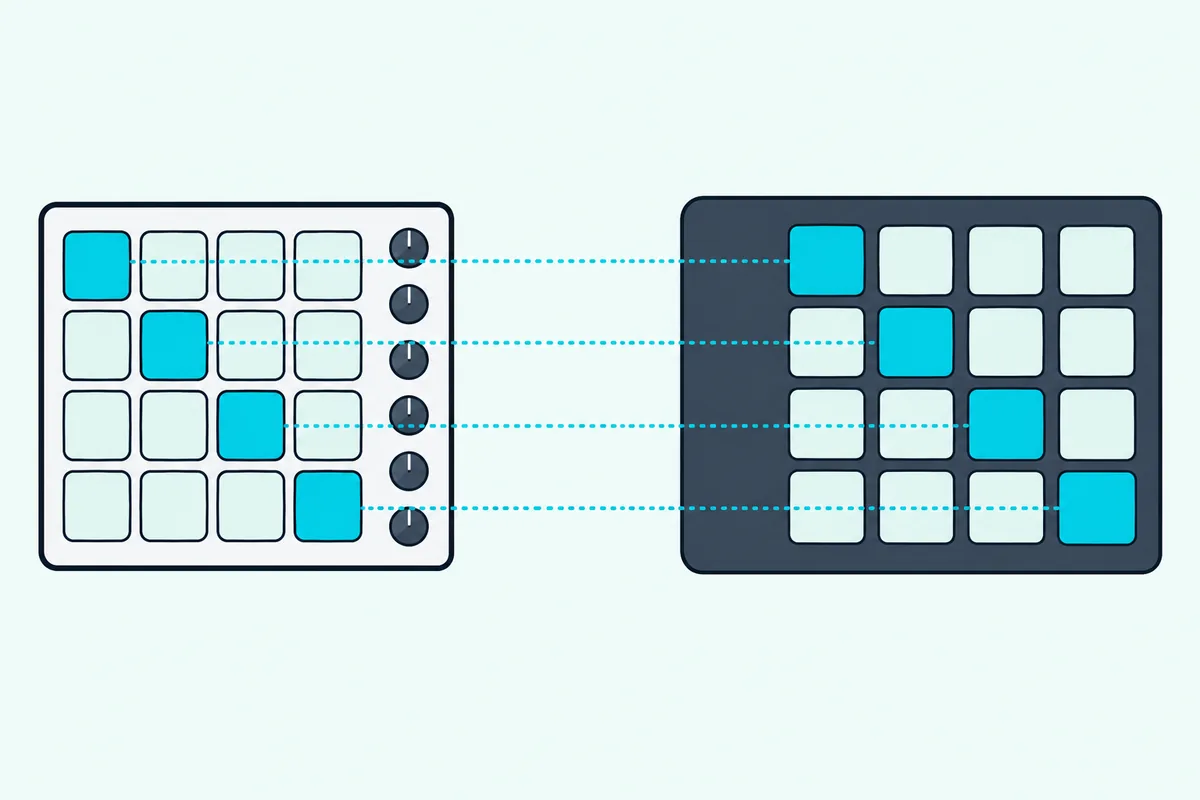
The Akai MPD218 has 16 velocity- and pressure-sensitive pads in three banks and six 360-degree knobs, also in three banks, according to Akai. It needs no drivers, runs on USB power and measures 23.9 by 20.1 by 4.1 centimeters.
The Akai MPD218
Pair it with a keyboard by locking it to your Kong, which the manual says keeps a locked surface playable and record-enabled whatever track has the master keyboard. If a pad plays the wrong drum, compare the note it sends with Kong’s C1 to D#2, and use the Software Preset Editor Akai bundles to change the MPD218’s presets.
How Do You Set Up a MIDI Controller in Reason?
All eight picks start the same way, and these steps from the Reason 14 manual cover any supported controller. Nektar’s two need their integration files installed first, and the MiniLab 3 needs its DAW program selected.
- Connect the controller, open Settings (Preferences in Reason 13) and click the MIDI tab.
- Click Auto-detect Surfaces, which sends an ID request to every MIDI port.
- If nothing appears, click Add manually, pick the manufacturer and model, read the note under its picture and choose the MIDI input, using Find if you’re unsure.
- Set a MIDI output too when the surface has displays or motor faders, then click OK.
The first keyboard you add becomes the master keyboard, and Make Master Keyboard on the same tab moves that role. Auto-detect also takes a detected surface’s port out of the Easy MIDI Inputs list.
How Do You Map a Knob to Any Reason Parameter?
Standard mapping covers the main parameters, and Remote Override handles the rest on any controller, supported or not. The manual’s shortest method is to double-click a parameter in Remote Override Edit Mode, wait for the rotating lightning bolt, then move the knob you want.
- Choose Remote Override Edit Mode from the Options menu, where yellow knob symbols mark standard-mapped parameters.
- Right-click a parameter and choose Edit Remote Override Mapping.
- Tick Learn From Control Surface Input, move the control and click OK.
Overrides are saved with the song, not in new songs, and Additional Remote Overrides on the Options menu adds next and previous track, patch selection and Undo. With fewer knobs than parameters, hold Ctrl and Alt on Windows or Cmd and Option on a Mac and press 1 to 10 to switch mapping variations.
Does Your Controller Work the Same in Reason Rack Plugin?
Not quite, because Reason Studios says the Rack Plugin doesn’t talk to MIDI hardware directly; your host DAW does, then passes MIDI on (Reason Studios). So inside Ableton Live, FL Studio or Logic Pro, you set the controller up in that DAW.
That makes the host’s guide the one to read, such as our picks for the best MIDI controller for Ableton Live or the best FL Studio MIDI keyboard roundup. Reaper users have Burton Acoustix’s Reaper controller guide, and the Remote steps on this page are for Reason running as its own DAW.
What If Your Controller Isn’t on Reason’s List?
It still plays notes through Easy MIDI Inputs, and Reason Studios suggests asking the maker about Reason Remote support or adding it as a generic controller. Age alone doesn’t make a keyboard obsolete in Reason, either, since the list still includes older models such as the original Launchkey, the M-Audio Oxygen 8 v2 and Edirol’s PCR range.
Arturia’s KeyLab Essential mk3 shows the middle ground. Arturia says no dedicated Reason script exists, but setting its DAW mode to Mackie and adding a Mackie Control surface in Reason gets play, stop, record, forward and backward working (Arturia).
The Bottom Line
Buy the Novation Launchkey 49 MK4 for one board that plays, mixes and drums with nothing to install, or the Nektar Impact LX49 mk3 for the deepest control of Reason’s own devices.
Choose the M-Audio Oxygen Pro 61 for 61 keys, the Arturia MiniLab 3 or Nektar Impact LX Mini for a small desk, and the Akai MPK Mini MK3 for a tight budget. Add a Korg nanoKONTROL2 for mixing or an Akai MPD218 for Kong and Redrum.
Whichever you pick, run Auto-detect Surfaces first, because a controller left on Easy MIDI Inputs plays notes but can’t be locked to the mixer or a drum device.
Frequently Asked Questions
Does Reason work with any MIDI keyboard?
Yes for playing. Reason scans every MIDI port and turns on Easy MIDI Inputs, which carry notes, velocity, mod wheel, pitch bend and sustain, while knobs and faders need a supported map or Remote Override mapping.
Do I need Reason 14 for these controllers?
No. Novation says Reason 13.0.2 and later contain the Launchkey MK4 scripts, Arturia says Reason 12.5 contains the MiniLab 3 script, and Reason 14’s manual simply calls the setup dialog Settings instead of Preferences. Reason Studios says Reason+ always includes the latest version, and that Reason 13 licenses bought since 1 March 2026 include a free upgrade to Reason 14.
Can I use two controllers with Reason at once?
Yes. Reason Studios says Remote handles any number of control surfaces, and the manual’s ideal setup is a keyboard with controls plus surfaces locked to the Main Mixer or to devices, each on its own USB connection. Our guide to pairing a keyboard with a second controller covers the general idea.
Do these controllers work with older Reason versions?
Often, with an extra step. For the Launchkey MK4, Novation’s article copies its scripts into Reason’s Remote folder on Reason 11 and 12, and into a hidden Remote folder under ProgramData on Windows for Reason 10, so check each maker’s setup page for your version.
Is Nektar Panorama still the top Reason controller?
Nektar calls its Panorama models the ones that bring you closest to using Reason as if it were hardware, and Reason Studios lists the Panorama series with motor fader support. An Amazon US search on 6 October 2026 didn’t return a Panorama listing, so it isn’t one of the eight picks.