In a JBL vs Samsung soundbar matchup, the TV you already own matters more than the badge, because Samsung keeps Q-Symphony and its wireless TV link for Samsung screens.
Products in this guide
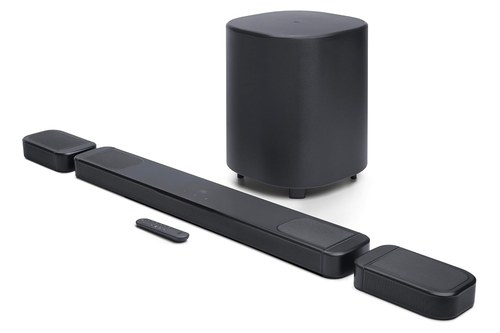
- Detachable battery-powered surround speakers, up to 10 hours per charge
- Dolby Atmos and DTS:X with up-firing drivers in the bar and the surrounds
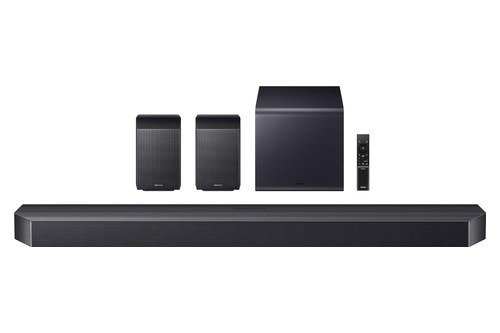
- 11.1.4 channels with the subwoofer and rear speakers included
- Q-Symphony and wireless Dolby Atmos with compatible Samsung TVs
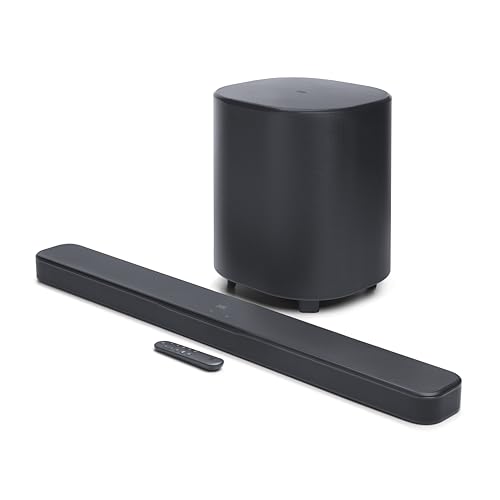
- 10-inch wireless subwoofer that RTINGS found reaches lower than the HW-Q800F's
- Easy Sound Calibration and PureVoice 2.0
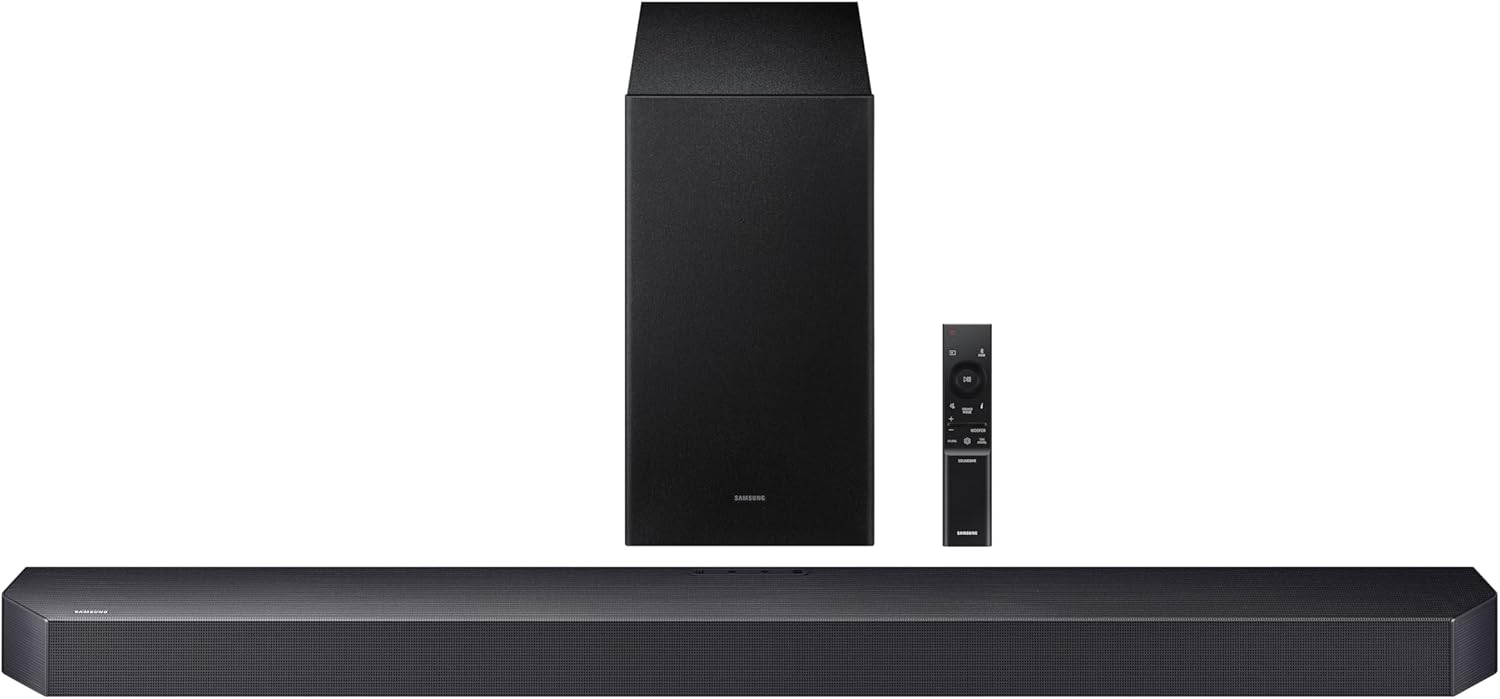
- Up-firing channels and a dedicated center channel
- Takes Samsung's SWA-9250S rear speaker kit later
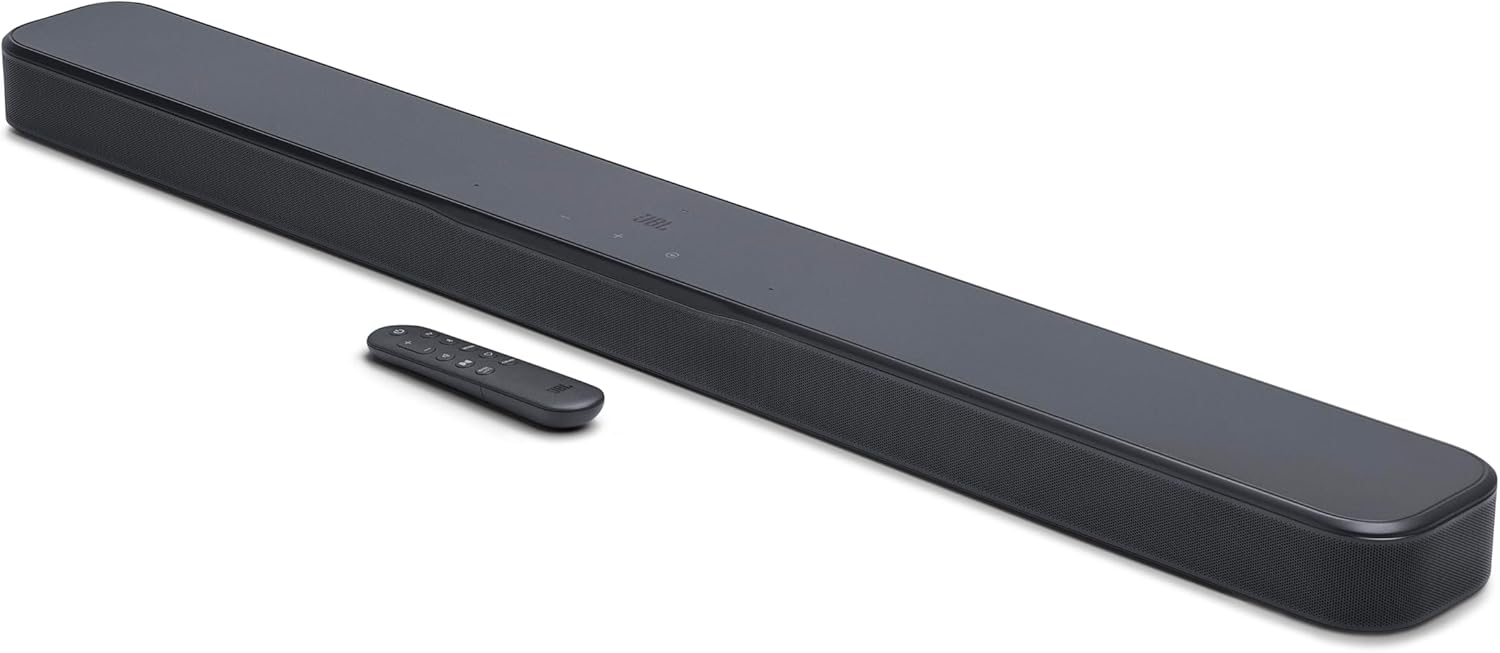
- One bar with no subwoofer to place
- Google Cast, AirPlay and Spotify Connect over Wi-Fi 6
Choose on the logo alone and you can end up paying for TV tricks your LG never switches on, or settling for virtual height when you wanted speakers that fire at the ceiling.
Match the bar to your TV, your room and your patience for cables, and either maker can sound far fuller than a flat TV’s own speakers.
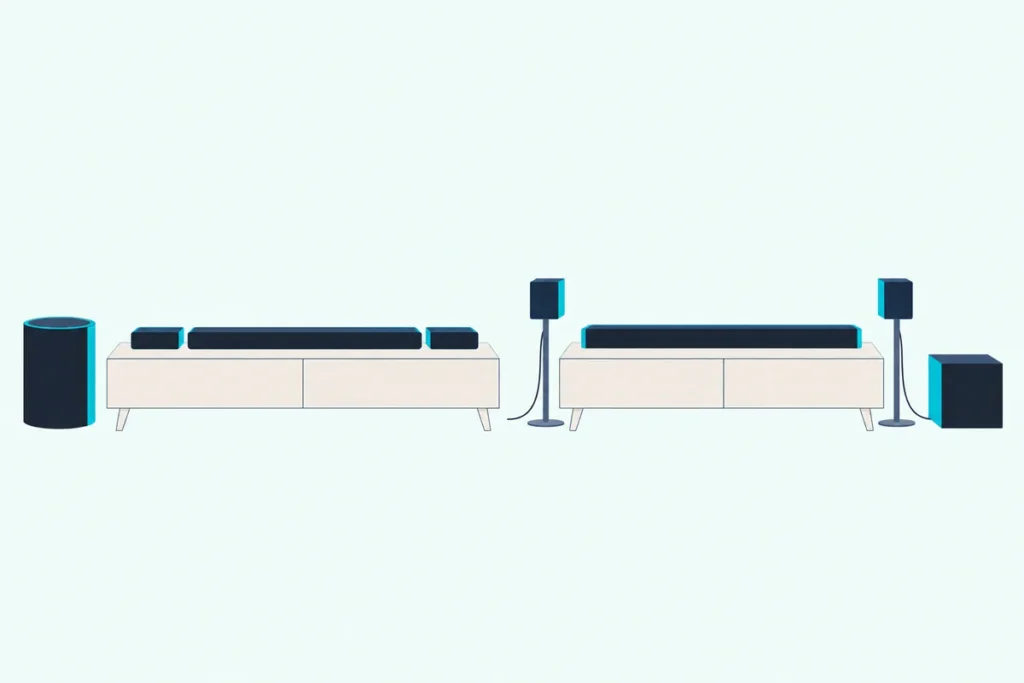
Both brands now run from one-piece Dolby Atmos bars to 11.1.4-channel systems with rear speakers, so the real differences sit in bass, surround design, dialogue tools and TV features.
The short verdict and a side-by-side table come first, then each difference in turn and a matched JBL and Samsung pick at three budgets.
Which Is Better, a JBL or Samsung Soundbar?
That TV question settles more of the decision than any spec sheet. On a recent Samsung TV, a Samsung soundbar is the better buy, because Q-Symphony, the Wi-Fi link to the TV and Wi-Fi Dolby Atmos only work between Samsung’s bars and some Samsung TVs, as Samsung’s HW-Q990F, Q930F, Q900F and Q800F user guide spells out.
On any other TV, JBL’s MK2 bars make the stronger case if you want detachable rear speakers, Wi-Fi 6 streaming or, in the middle of the range, deeper bass. RTINGS found that the subwoofer of JBL’s Bar 500MK2 reaches lower than the one with Samsung’s HW-Q800F, and Samsung’s 2025 and 2026 user guides say its bars don’t support Wi-Fi 6.
The lab results don’t hand JBL every round, though. RTINGS rated Samsung’s HW-Q990F a superior soundbar to JBL’s Bar 1000MK2, citing a better default tuning, a higher-end build and stronger Atmos height effects, much as it rated the 2022 HW-Q990B above the original Bar 1000.
So treat it as a two-question test: which TV are you keeping, and do you want rear speakers you can pick up and move? Answer those two and most of what follows confirms the choice rather than changing it.
If Bose is also on your shortlist, our JBL vs Bose soundbar comparison sets JBL against a third approach to TV sound.
How Does a JBL vs Samsung Soundbar Compare Spec by Spec?
Those verdicts rest on a handful of hardware and software differences, which line up neatly brand by brand. A JBL vs Samsung soundbar comparison comes down to how each side handles rear speakers, bass, height effects, Samsung TV features and streaming, as the table shows.
| Feature | JBL (MK2 bars) | Samsung (2025 F and 2026 H Q-Series) |
|---|---|---|
| Top of the range | Bar 1300XMK2 and Bar 1300MK2, 11.1.4 channels | HW-Q990F and HW-Q990H, 11.1.4 channels |
| Rear speakers | Detachable and battery powered on the Bar 1000MK2 and 1300XMK2 | Included with the HW-Q990F and Q930F, each on its own power cord; optional kits for most other models |
| Subwoofer | 10-inch driver with the Bar 500MK2 and 1000MK2; 12-inch with the Bar 1300XMK2 | Wireless subwoofer in the box from the HW-Q600F up; no driver size in Samsung’s guides |
| Height effects | Up-firing drivers on the Bar 1000MK2 and 1300XMK2; virtual Dolby Atmos on the Bar 500MK2 and 300MK2 | Up-firing channels on Q-Series bars from the 3.1.2-channel HW-Q600F up |
| Samsung TV features | No Q-Symphony in JBL’s MK2 manuals | Q-Symphony, a Wi-Fi TV link and Wi-Fi Dolby Atmos with some Samsung TVs |
| Room tuning | Test-tone calibration started from the remote | SpaceFit Sound Pro, using the soundbar’s microphone |
| Streaming | Wi-Fi 6 with Google Cast, AirPlay and Spotify Connect; Tidal Connect and Roon Ready added in the Bar 1000MK2 and 1300XMK2 manuals | AirPlay, Spotify Connect and Roon Ready on the 2025 Q-Series; no Wi-Fi 6 |
| App | JBL One | SmartThings (2025), Samsung Sound (2026) |
| HDMI inputs | Three on the Bar 1000MK2 and 1300XMK2; one on the Bar 500MK2 and 300MK2 | Two on the HW-Q990F and Q900F; one on the Q930F and Q800F |
Read the table as two design philosophies rather than a scorecard. JBL builds its flagships around rear speakers you can lift off and carry, while Samsung builds around the TV, with features that switch on only next to a Samsung screen.
Model years matter too, since Samsung’s soundbar names change with each model year. A CES 2026 preview from ecoustics notes that Samsung’s 2026 models end in H and its 2025 models in F, and Samsung’s 2026 user guide gives the HW-Q990H, its latest flagship, the same 11.1.4-channel output as the HW-Q990F.
Is JBL Owned by Samsung?
The two badges compete for the same shelf space, yet they share a corporate family. Yes, at one remove: JBL is a trademark of HARMAN International Industries, and Harman has operated as an independent subsidiary of Samsung Electronics since 2017, according to HARMAN’s help center.
The help center describes Harman as an American audio electronics company, headquartered in Stamford, Connecticut, with its own executive leadership team. JBL’s owner’s manuals carry HARMAN’s Northridge, California address and HARMAN’s copyright line rather than Samsung’s.
Think of it as two restaurants owned by one group: the same owner, but a different sign over each door and a different menu inside. Samsung sells its soundbars under its own name and runs them from its own apps, SmartThings for the 2025 Q-Series and Samsung Sound for 2026, while every JBL MK2 bar runs through the JBL One app.
That family tie is starting to show in one feature. Samsung said at its CES 2026 booth that Q-Symphony, its speaker pairing technology, was expanding to Harman Kardon and JBL audio devices, SamMobile reported in January 2026.
Does a Samsung TV Change the Samsung vs JBL Soundbar Choice?
That Q-Symphony news hasn’t reached JBL’s current bars, so a Samsung TV still tilts the choice. Yes: Q-Symphony, the Wi-Fi connection to the TV and Wi-Fi Dolby Atmos are limited to Samsung soundbars paired with some Samsung TVs, and JBL’s owner’s manuals for the Bar 500MK2, 1000MK2 and 1300XMK2 don’t mention Q-Symphony at all.

Q-Symphony plays sound from the soundbar and the TV’s own speakers at the same time, which Samsung’s 2026 guide says gives a richer, more immersive sound, and it works over HDMI, an optical cable or Wi-Fi. Samsung’s Q-Symphony 4.0 support page lists only Samsung models as compatible soundbars, from the 2020 HW-Q950T through the 2025 HW-Q990F, B750F and B650F.
SamMobile’s CES report adds that almost all Harman Kardon and JBL wireless speakers launching in 2026 will support Q-Symphony, without naming models, and the Enchant bars in our Harman Kardon soundbar vs Bose comparison don’t list it yet. So if a 2026 JBL bar makes your list, look for Q-Symphony on its spec sheet rather than assuming it’s there.
The Wi-Fi link is the other Samsung-only perk. Samsung’s 2025 guide says that connection is only available with a Samsung TV and that Wi-Fi Dolby Atmos connectivity works only with some of them, and the HW-Q800F spec sheet ties wireless Dolby Atmos to 2022-2025 Samsung TVs.
In practice, that lets a compatible Samsung TV send sound to the bar without an HDMI cable between them. On a JBL bar the HDMI cable stays, which matters little if the TV has an eARC port in a reachable spot, since hooking a JBL soundbar up to the TV takes that one cable plus HDMI-CEC.
TV remote control works on both sides, so neither brand forces a second remote onto the coffee table. JBL’s Bar 500MK2 follows a TV remote over HDMI-CEC or learns its infrared commands, and Samsung’s 2026 Q-Series takes volume commands from the infrared remotes of Samsung, VIZIO, LG, Sony, Sharp, Philips, Panasonic, Toshiba, Hisense and RCA TVs.
The same TV-first logic runs through our Bose vs Samsung comparison, where Samsung’s native fit with Samsung TVs gets a section of its own.
Should You Pick JBL or Samsung for an LG, Sony or TCL TV?
Those Samsung-only features drop away as soon as the TV wears another badge. On an LG, Sony or TCL TV, both brands connect the same ways, over HDMI eARC or ARC or an optical cable, so the choice rests on each bar’s own hardware and features, the same test our Samsung vs Sony soundbar comparison applies.
A Samsung bar keeps plenty on another brand’s TV. SpaceFit Sound Pro tunes the sound with the soundbar’s own microphone, and AVA Pro, Voice Enhancement and Night mode are soundbar settings in Samsung’s 2026 guide, though the HW-Q600H runs SpaceFit only through a Samsung TV’s Adaptive Sound+ setting.
What a Samsung bar loses on an LG or Sony TV is the TV link itself: no Q-Symphony, no Wi-Fi connection to the TV and no Wi-Fi Dolby Atmos. If you’re still asking does a Samsung soundbar work with any TV, the short answer is yes, and that page sets out what keeps working and what doesn’t.
JBL loses nothing on another brand’s TV, because its manuals describe no features tied to one TV brand. Its listings say the MK2 bars work with every brand of TV, and the manuals add Wi-Fi 6 with Google Cast and AirPlay, so Android and Apple phones can both stream to the bar.
Picture a 2024 LG TV with an eARC port. A Samsung HW-Q800F and a JBL Bar 500MK2 each connect with the HDMI cable in the box, and the comparison comes down to bass, height and features rather than brand matching, and Burton’s best 5.1 soundbar guide splits them the same way, the Samsung for Atmos height and the JBL for a big subwoofer.
Is a JBL Soundbar Better Than a Samsung for Bass?
Bass is where the comparison gets concrete, because JBL publishes numbers that Samsung’s guides leave out. In the middle of the range, yes: RTINGS found that the subwoofer of JBL’s Bar 500MK2 extends lower than the one with Samsung’s HW-Q800F and gets about as loud (RTINGS).
JBL’s manuals list the subwoofer driver model by model: a 10-inch driver with the Bar 500MK2 and Bar 1000MK2 and a single 12-inch driver with the Bar 1300XMK2, while the Bar 1300MK2 pairs the same bar with twin 8-inch drivers. The manuals also give a -6 dB frequency response down to 33 Hz for the Bar 1000MK2 and 1300XMK2 and 40 Hz for the Bar 500MK2, and the subwoofer-free Bar 300MK2 is rated down to 50 Hz.
Samsung’s 2025 and 2026 user guides list neither a driver size nor a frequency response for the Q-Series subwoofers. The HW-Q800F spec sheet does call its subwoofer compact, at about 9.8 inches on each side, so it fits spots where the Bar 1000MK2’s subwoofer, at 12.8 by 15.7 by 12.8 inches, may not.
Bigger drivers don’t settle the flagship fight on their own. RTINGS rated the HW-Q990F the better soundbar overall, though it found the Bar 1000MK2’s subwoofer free of chuffing, the puffing port noise the Samsung’s sub can make under heavy bass, even when the volume is pushed.
Room and settings shape bass as much as the box does. JBL’s remote steps the bass through five levels, while Samsung’s 2026 guide adds a Moderate Bass setting that mutes the subwoofer and sends the bass through the bar, which can help in an apartment late at night.
A quick test at home tells you more than any spec: play the same bass-heavy action scene at your usual volume with the subwoofer in two spots, a corner and beside the sofa. If the bass booms in one spot and thins out in the other, the room is shaping it, and either brand’s bass control can then trim the rest.
Who Does Surround Sound Better, JBL or Samsung?
Bass fills a room from the front, but surround needs speakers behind you, which is where the two flagships split most visibly. Neither wins outright: JBL’s detachable battery-powered rears suit rooms with no outlet behind the sofa, while Samsung’s plug-in rears and add-on kits suit anyone who wants to build a surround setup over time.
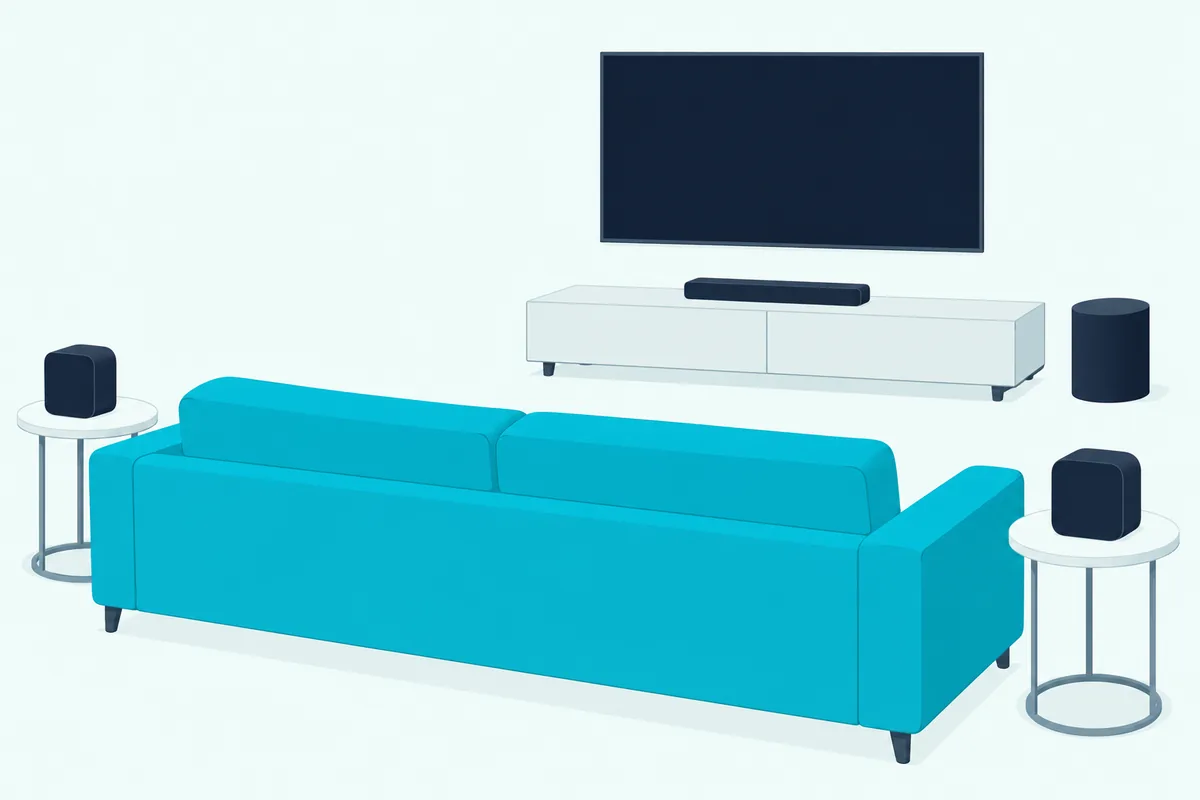
JBL’s Bar 1000MK2 and 1300XMK2 surround speakers dock on the ends of the bar and lift off for movies, and JBL rates them at up to 10 hours of play. JBL’s Bar 1000MK2 owner’s manual says an empty pair recharges in about 4 hours on the bar’s dock or over a USB-C cable you supply.
Undocked, they also do double duty. JBL’s Night Listening mutes the bar and subwoofer so only the speakers you’ve moved beside you play, and Audio Broadcasting sends sound to a detachable speaker carried into the kitchen or another part of the room.
Wireless rears have one cost, though: RTINGS found that Atmos content plays from the Bar 1000MK2’s satellites with a slight but noticeable lag.
Samsung’s HW-Q990F and Q930F include their surround speakers, and Samsung’s guides have you plug each one into an outlet along with the bar and subwoofer. Its Private Rear mode is the counterpart to Night Listening, playing only the rear speakers with the bar and subwoofer silent, though it turns off once Q-Symphony connects.
Samsung’s bigger surround advantage is room to grow. Its 2026 guide shows the optional SWA-9500S kit taking the HW-Q900H to 9.1.4 channels, the Q800H to 7.1.4 and the Q600H to 5.1.4, and the 2025 HW-Q600F takes the SWA-9250S kit.
RTINGS makes the same point about the HW-Q800F and Bar 500MK2, noting you can expand the Samsung with a first-party surround kit. JBL’s Bar 500MK2 manual describes no way to add rear speakers, so with that bar the surround decision is made at checkout.
Think of JBL’s rears as cordless phones and Samsung’s as desk lamps: one moves anywhere and needs charging, the other stays put and never runs flat. Samsung’s support page on rear kits adds that the SWA-9500S speakers are wireless except for a power cord each, while its other kits wire both speakers to a receiver box.
Do Both Brands Use Real Up-Firing Speakers for Dolby Atmos?
Rear speakers handle the sound behind you, and up-firing drivers handle the sound above. Both brands use them, but at different points in the range: JBL puts up-firing drivers in the bar and detachable speakers of its Bar 1000MK2 and 1300XMK2 only, while Samsung’s Q-Series has up-firing channels from the 3.1.2-channel HW-Q600F upward.
JBL’s Bar 500MK2 and Bar 300MK2 create height with processing instead. The Bar 500MK2 manual describes a Virtual Dolby Atmos design that expands 5.1 and 7.1 Dolby Digital audio into a 3D effect, and RTINGS’s verdict is that the Bar 500MK2 lacks up-firing drivers for convincing height cues, where the HW-Q800F has two.
Channel counts at the top are close. Samsung’s 2025 guide shows the HW-Q990F reaching 11.1.4 channels with its subwoofer and surround speakers, the same 11.1.4 that JBL lists for the Bar 1300XMK2, while the Bar 1000MK2 is a 7.1.4-channel system.
DTS:X support is patchier on both sides. JBL’s Bar 1000MK2 and 1300XMK2 manuals name DTS:X alongside Dolby Atmos, while the Bar 500MK2 manual mentions DTS only in its licensing notes.
Samsung’s 2025 guide lists Dolby Atmos and DTS:X input for the HW-Q900F and Q800F, and the HW-Q600F guide lists DTS 5.1 and DTS Virtual:X instead. In the 2026 guide’s output tables, DTS:X appears only for the HW-Q990H, so check the spec sheet of any H model if your discs carry DTS:X.
Height also depends on the source. JBL’s manuals say Dolby Atmos plays from the TV and HDMI inputs but not over Bluetooth, AirPlay or Google Cast, and Samsung’s HW-Q600F listing notes that Dolby Atmos needs Atmos source content.
If your TV has ARC rather than eARC, the extra HDMI inputs earn their keep. JBL’s Bar 1000MK2 manual says to plug the streaming box or player into the bar’s own HDMI inputs, or the Dolby Atmos information can’t pass through to the soundbar.
Which Brand Has Better Dialogue and Night Modes?
Height and bass carry the movie scenes, and dialogue is what you hear every evening. Samsung documents more dialogue tools: its 2026 Q-Series guide lists AVA Pro, which analyzes outside noise to keep voices clear, plus Voice Enhancement, Night mode and Sound Elevation, which makes the sound seem to come from the screen when the bar sits below the TV.
JBL’s answer is PureVoice 2.0, which the Bar 500MK2 spec sheet names without explaining, and on Samsung’s cheaper side the HW-Q600F listing promises a dedicated center channel for clear dialogue. RTINGS’s comparison of the older JBL Bar 5.1 Surround and Samsung HW-Q60T gave the JBL a more balanced default sound, while the Samsung offered a graphic EQ and presets.
Late-night listening splits the same way as surround. Samsung’s Night mode lowers the volume while keeping spoken dialogue clear, and JBL’s Night Listening on the Bar 1000MK2 relies on the detachable speakers instead, muting the bar and subwoofer.
Samsung’s Auto Volume, which keeps the level steady when the content or input changes, has no counterpart in JBL’s MK2 manuals. It can’t run while Q-Symphony is on, according to Samsung’s 2026 guide.
Older JBL bars switched modes for you. The Bar 5.0 MultiBeam’s manual says its Smart mode adds EQ and JBL Surround Sound to TV programs by default for rich sound effects and suggests Standard mode for news and weather, and the steps to enable Smart Sound on a JBL 5.0 soundbar are on a page of their own.
Try this with either brand: put on a talk show at the volume you’d use after the kids are asleep, then switch the night or voice setting on and off. If the words get clearer without the explosions in the next movie getting quieter too, the setting is doing its job.
How Do Room Calibration and the Apps Compare?
Dialogue settings work best once the bar knows the room, and the two brands tune to it differently. Samsung’s SpaceFit Sound Pro runs automatically using the soundbar’s microphone, while JBL’s calibration is a short routine: press CALIBR on the remote, press it again to confirm, and the bar plays a test tone.
The Bar 1000MK2 adds a second pass for its detachable speakers. Its manual has you calibrate once with the speakers beside your seat and again after placing them where they’ll stay.
The apps follow the same split. JBL’s bars run through the JBL One app and stream over Google Cast, AirPlay and Spotify Connect, with Tidal Connect and Roon Ready joining that list in the Bar 1000MK2 and 1300XMK2 manuals, while Samsung’s 2025 Q-Series uses SmartThings with AirPlay, Spotify Connect and Roon Ready, and the 2026 models move to a Samsung Sound app.
One spec favors JBL outright. JBL’s MK2 manuals list Wi-Fi 6 (802.11ax), while Samsung’s 2025 and 2026 guides say the soundbar doesn’t support Wi-Fi 6, and the HW-Q600F’s guide covers no Wi-Fi connection at all.
Which Sounds Better for Music, JBL or Samsung?
Those streaming lists matter most for music, where sound quality and convenience pull the two brands in different directions. JBL suits listeners who stream from a phone and want a good sound out of the box, while Samsung suits anyone who likes to tweak: RTINGS credited JBL’s older Bar 5.1 Surround with a more balanced default sound than Samsung’s HW-Q60T, and Samsung answers with deeper tone controls.
Those controls go further on Samsung’s side. Its remote opens a seven-band EQ from 150 Hz to 10 kHz with six steps up or down, a graphic EQ that RTINGS counted in Samsung’s favor against the JBL Bar 9.1, while JBL offers personalized audio settings in the JBL One app and five bass levels on the remote.
Bluetooth is the most basic route on either brand. Samsung’s 2025 and 2026 guides say the soundbar supports SBC data at 44.1 or 48 kHz, and JBL’s MK2 manuals list Bluetooth 5.3 with the A2DP profile but name no codec.
That makes Wi-Fi the better route for music on either brand. AirPlay works on both brands’ Wi-Fi bars and the JBL bars add Google Cast, while Spotify Connect and Roon Ready cover the flagships of both lines.
A USB stick is another small split. The US versions of JBL’s Bar 500MK2, 1000MK2 and 1300XMK2 play MP3 files from the USB port, while Samsung’s 2025 and 2026 Q-Series guides reserve the USB port for firmware updates.
Each brand’s own multi-room features stay inside its family. Samsung’s 2026 guide adds Group Play for playing 2024-or-newer Samsung audio devices together on a 5 GHz Wi-Fi network, and JBL’s Bar 1300XMK2 lets its detachable speakers join other JBL speakers over Auracast.
AirPlay is the bridge between families. JBL’s Bar 1000MK2 manual says you can add the bar to Apple’s Home app and manage it together with other AirPlay-compatible speakers.
Will a JBL or Samsung Soundbar Fit Under Your Screen?
Music or movies, the bar still has to fit the space under the screen, and widths vary more than the model names suggest. Every bar below is narrower than a 55-inch TV except the Bar 1300XMK2 with its speakers docked: a 16:9 screen is about 87% as wide as its diagonal, so a 55-inch set measures roughly 48 inches across and a 50-inch set about 43.6 inches.
| Model | Bar width | Bar height | Subwoofer (W x H x D) |
|---|---|---|---|
| JBL Bar 300MK2 | 37 in. | 2.0 in. | None |
| JBL Bar 500MK2 | 37 in. | 2.0 in. | 12.8 x 15.7 x 12.8 in. |
| JBL Bar 1000MK2 | 33.6 in. (47.4 in. with speakers docked) | 2.0 in. | 12.8 x 15.7 x 12.8 in. |
| JBL Bar 1300XMK2 | 40.6 in. (55.3 in. with speakers docked) | 2.3 in. | 15 x 19 x 15 in. |
| Samsung HW-Q600F | 40.6 in. | 2.2 in. | 7.2 x 13.5 x 11.6 in. |
| Samsung HW-Q800F | 43.73 in. | 2.38 in. | 9.8 x 9.91 x 9.8 in. |
Samsung’s 2025 Q-Series guide gives no dimensions for the HW-Q990F, so it sits out of the table. The JBL flagships change size with use, so measure for the docked length if the bar lives on a cabinet full time.
Height matters if the bar sits on the same stand in front of the screen. Every bar in the table stands between 2.0 and 2.4 inches tall, and if you wall-mount under a wall-hung set, Samsung’s 2026 guide asks for at least 2 inches of space between the TV and the bar.
The subwoofers differ more than the bars do. The 12-inch subwoofer that ships with the Bar 1300XMK2 is the largest box in the table at 15 by 19 by 15 inches, while Samsung’s HW-Q600F subwoofer is the narrowest at 7.2 inches wide, so it can slide beside a sofa where the JBL boxes won’t.
Which JBL or Samsung Soundbar Should You Buy at Each Budget?
All of that narrows to three matched pairs, from one-piece bars to full surround systems. Pick by your TV first, then by whether you want rear speakers now, later or never.
The descriptions come from the makers’ manuals and spec pages. Every pick met Burton Acoustix’s rating, review and stock checks on 26 October 2026.
Full Surround With Rear Speakers in the Box
For rooms with no outlet behind the sofa, JBL’s Bar 1000MK2 with its two detachable surround speakers and round subwoofer is the pick on any TV, because its surround speakers run on batteries and recharge on the bar.
JBL Bar 1000MK2
Wherever the rear speakers can reach an outlet, Samsung’s HW-Q990F soundbar with its subwoofer and two rear speakers is the stronger system, the one RTINGS rated above the Bar 1000MK2, and on a Samsung TV it adds Q-Symphony and the Wi-Fi link.
Samsung HW-Q990F
Deep Bass Without Rear Speakers
For the most bass in the middle of either range, JBL’s Bar 500MK2 soundbar and its round 10-inch subwoofer suits any TV and streams over Google Cast, AirPlay and Spotify Connect.
JBL Bar 500MK2
On a Samsung TV, Samsung’s HW-Q600F soundbar with its tall wireless subwoofer brings real up-firing channels and Q-Symphony, and it can grow with a rear kit later.
Samsung HW-Q600F
The HW-Q800F, the 5.1.2-channel model RTINGS lined up against the Bar 500MK2, sits one step above the Q600F. It appears, along with the all-in-one HW-S60D, in our Samsung soundbars ranked for every budget.
One-Piece Bars With No Subwoofer
For a smaller room, JBL’s Bar 300MK2 all-in-one soundbar keeps everything in a single 37-inch bar.
JBL Bar 300MK2
Samsung’s closest match is the 5.0-channel HW-S60D, which its user guide shows growing to 5.1 channels with the SWA-W510 subwoofer and 7.1 with the SWA-9200S rear kit. That makes it the better one-piece pick if you might expand later, while JBL’s budget Bar 2.0 All-in-One and Bar 2.1 Deep Bass are covered in our best JBL soundbar picks.
The Bottom Line
Those three pairs come down to two questions: which TV you own, and how you want rear speakers to work. On a Samsung TV, Samsung’s Q-Symphony, Wi-Fi TV link and add-on rear kits make it the safer buy at every budget.
On any other TV, choose JBL for detachable battery rears, Wi-Fi 6 streaming and deeper bass in the middle of the range. Choose Samsung if you’d rather add rear speakers later, want more dialogue tools and a seven-band EQ, or want the flagship RTINGS rated higher.
If you’re still undecided, the HDMI inputs can break the tie. On an ARC-only TV, the Bar 1000MK2’s three inputs keep Dolby Atmos from three sources, such as a streaming box, a console and a disc player, where the HW-Q990F takes two, though RTINGS notes the Samsung’s pair has more bandwidth.
Frequently Asked Questions
Is Samsung Q990B better than JBL Bar 1000?
RTINGS’s lab comparison says yes, overall. It rated the 2022 HW-Q990B better built and louder, with built-in voice assistant support and more sound enhancement features, while noting that the original Bar 1000 still gets quite loud, works with third-party voice assistant devices and has smaller detachable satellites that might suit some living rooms better. Both have newer successors: Samsung’s HW-Q990F (2025) and HW-Q990H (2026) keep an 11.1.4-channel layout, and JBL’s Bar 1000MK2 keeps 7.1.4 channels with detachable speakers rated for up to 10 hours per charge. RTINGS rates the HW-Q990F above the Bar 1000MK2 as well.
Do JBL soundbars work with Samsung TVs?
Yes. JBL’s MK2 bars connect to a Samsung TV like any other TV, over HDMI eARC or ARC or an optical cable, and the Bar 500MK2 manual says your TV remote can control its volume over HDMI-CEC or after the bar learns the remote’s infrared commands. What a JBL bar doesn’t get is Q-Symphony or Samsung’s Wi-Fi TV link: JBL’s MK2 manuals don’t mention Q-Symphony, and Samsung’s compatibility list names only Samsung soundbars. Samsung said at CES 2026 that Q-Symphony would reach JBL and Harman Kardon audio devices, so check a 2026 JBL bar’s spec sheet for it.
Can you add rear speakers to a Samsung soundbar later?
On most models, yes. Samsung’s 2026 guide shows the optional SWA-9500S kit taking the HW-Q900H to 9.1.4 channels, the Q800H to 7.1.4 and the Q600H to 5.1.4, the 2025 HW-Q600F takes the SWA-9250S kit, and the HW-S60D all-in-one pairs with the SWA-9200S kit and the SWA-W510 subwoofer. Samsung’s support page on rear kits says the SWA-9500S speakers are wireless apart from a power cord to each one. JBL’s Bar 500MK2 manual describes no rear-speaker add-on, so JBL buyers who want rears should start with the Bar 1000MK2 or 1300XMK2.
What’s the difference between Samsung’s F and H soundbars?
The letter marks the model year: a CES 2026 preview from ecoustics notes that Samsung’s 2026 soundbars end in H and its 2025 models in F. Model for model, the channel counts carry over, with 11.1.4 for the HW-Q990F and Q990H, 7.1.2 for the Q900F and Q900H, 5.1.2 for the Q800F and Q800H and 3.1.2 for the Q600F and Q600H, so compare spec sheets for features such as DTS:X rather than going by the letter alone.
Which JBL soundbar matches the Samsung Q990F?
By channel count, the Bar 1300XMK2 does: JBL lists it as an 11.1.4-channel system, the same layout Samsung gives the HW-Q990F, with up-firing drivers in the bar and in its detachable surround speakers, and the Bar 1300MK2 pairs the same bar with twin 8-inch subwoofer drivers instead of one 12-inch driver. Against the 2026 HW-Q990H, RTINGS found both flagships superb, with the Samsung better for gaming thanks to lower latency and stronger HDMI passthrough. The two systems still differ in the details that drive this comparison: JBL’s surrounds run on batteries for up to 10 hours and the bar has three HDMI inputs, while Samsung’s rear speakers plug into the wall and the HW-Q990F adds Q-Symphony with compatible Samsung TVs.
Which is louder, JBL or Samsung?
It depends on the pair. RTINGS found Samsung’s 2022 HW-Q990B louder than JBL’s original Bar 1000, but in the mid-range it found the Bar 500MK2’s subwoofer about as loud as the HW-Q800F’s, with the JBL louder on center and surround content. JBL also publishes maximum power at 1% distortion, 750 W for the Bar 500MK2 and 960 W for the Bar 1000MK2, while Samsung’s user guides list no output power, so watt figures can’t settle a cross-brand comparison.