Best Soundproof Foam: What Helps, What Doesn’t, and the Top Picks
The best soundproof foam is acoustic foam for echo control, and Auralex says thicker acoustic foam is better at absorbing low frequency sounds.
| Product | Size | Shape |
|---|---|---|
Best for Home Studios 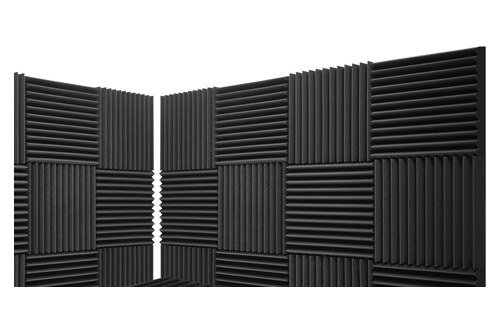 | 12x12 in | Not listed |
Best Overall 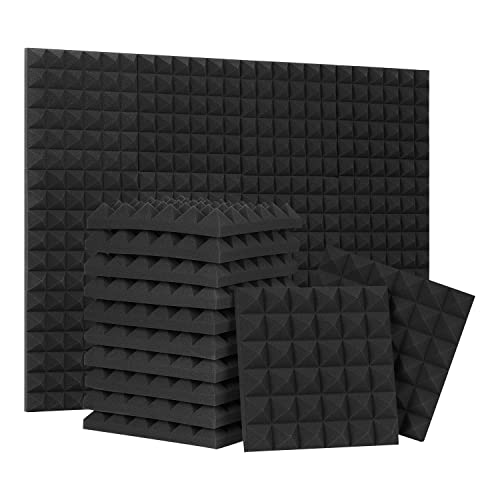 | 12 × 12 inches | Pyramid |
Best for Corners 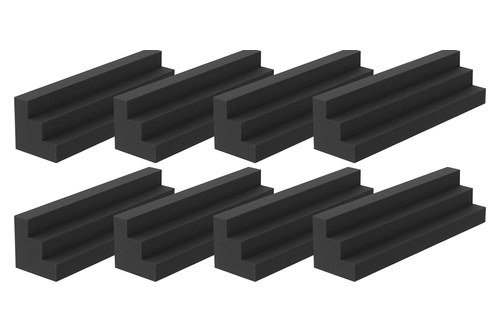 | Not listed | Wedge |
Best Starter Pack 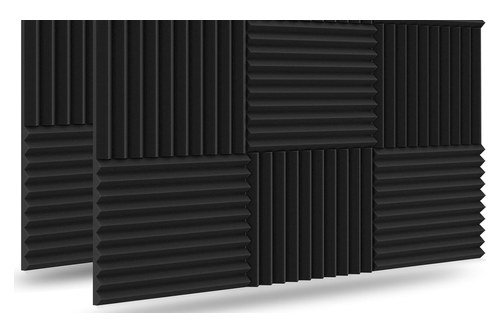 | 12 × 12 inches | Not listed |
- ✓ High-density pyramid foam, 2 inches thick
- ✓ 24 tiles cover 24 square feet
- ✓ Sold as studio foam corner bass traps
- ✓ 16 foam columns, each 12 x 3 x 3 inches
- ✓ Wedge-cut, high-density polyurethane foam
- ✓ Average NRC over 0.8
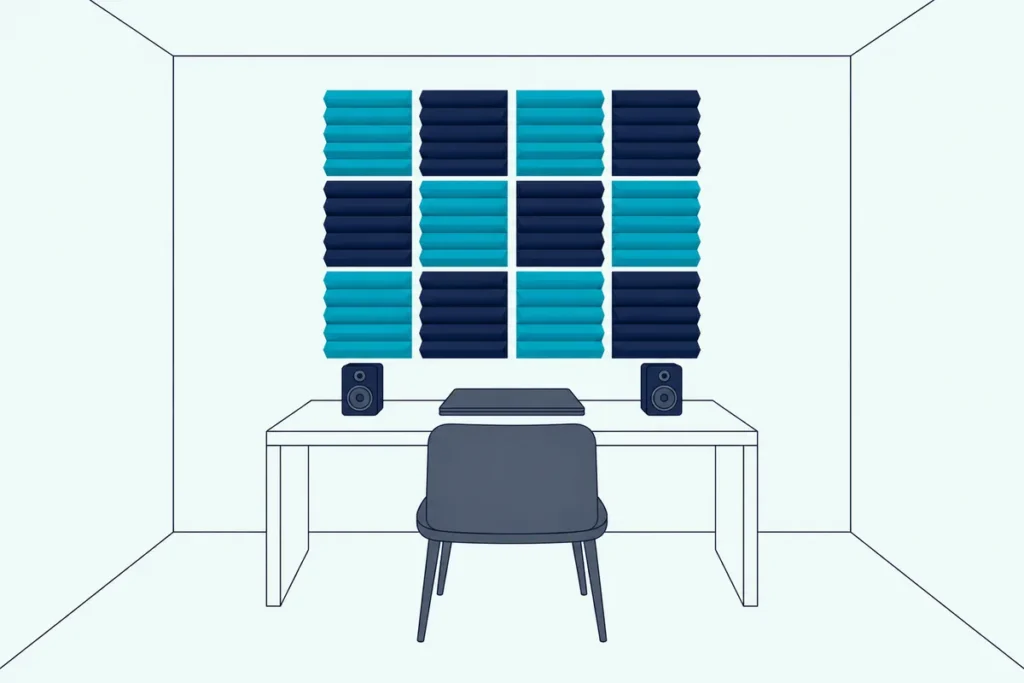
Best soundproof foam is a misleading name, but that does not mean foam is useless. The picks below are acoustic foam, which Auralex, a foam maker, says is not going to soundproof your room, though it absorbs ambient, reflected sound.
That gap matters for neighbor noise or TV bleed: Auralex’s Acoustics 101 says acoustic foam contributes some sound isolating properties, mostly at high frequencies, but is not sufficient by itself to keep sound in or out of a room.
Below, you’ll see which foam products fit which rooms and when to switch to soundproofing materials instead.
Foam still will not block much wall noise, bass, or outside sound on its own.
The descriptions come from the makers’ manuals and spec pages.
Every pick met Burton Acoustix’s rating, review and stock checks on 8 November 2026.
Before You Buy: What Foam Can and Cannot Do
The soundproofing myth
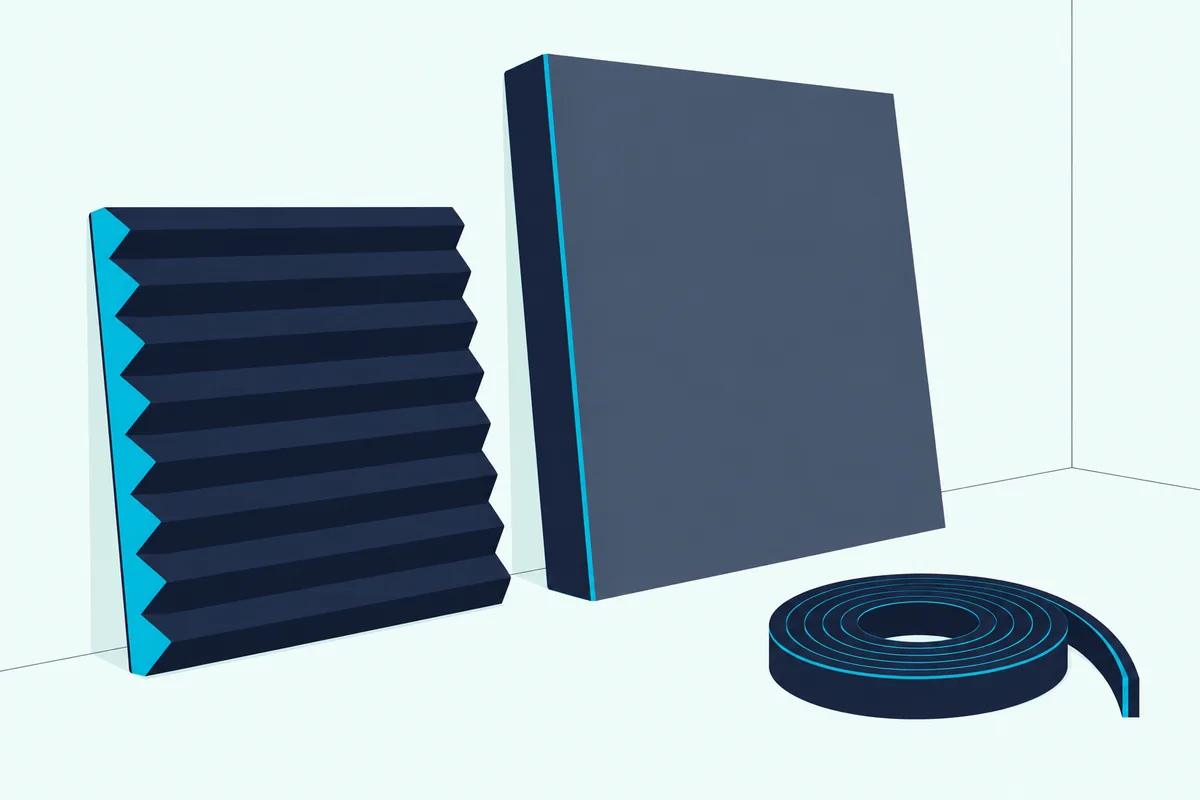
Foam doesn’t soundproof a room. It absorbs sound energy inside the room, but Auralex’s Acoustics 101 names mass and decoupling as the two components most effective at stopping sound moving from one space to a neighboring one.
That means foam can make a recording space sound cleaner while a neighbor’s TV, barking through drywall, or bass from the next room still gets through. If your goal is blocking transmission, start with mass and seals instead.
If the leak is a weak opening rather than room echo, start with soundproof interior doors or better seals before buying foam.
What foam does well
That lack of blocking ability does not make foam useless: Auralex calls acoustic foam an extremely effective absorber of ambient, reflected sound that helps make rooms sound better.
Soundproofing materials do a different job. Products like heavier soundproofing panels, better seals, layered wall upgrades, and window inserts aim to reduce sound passing between spaces rather than changing the sound inside one room.
If you are trying to improve a weak opening before rebuilding a room, start with door sweep upgrades: Auralex’s Acoustics 101 calls a poor seal at the floor or the frame the weakest link in most door systems.
Where foam fits
Those two jobs, echo control and noise blocking, decide where foam fits: rooms that need a cleaner sound without construction work.
That covers streaming, podcast, practice and gaming rooms, and rentals, where the problem is echo rather than isolation.
The Best Soundproof Foam Products
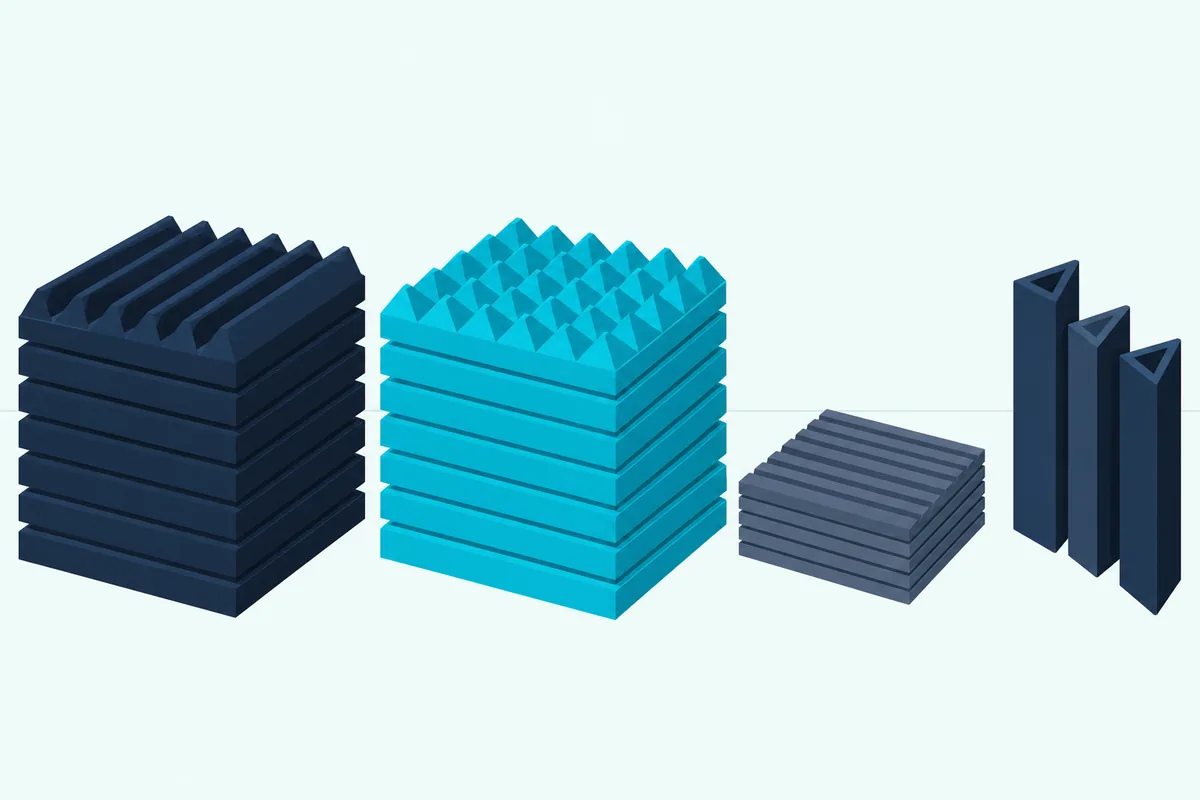
Start with the room problem, not the foam shape. Once you know whether you need a starter set, broader coverage, a small test pack, or a corner add-on, the sections below take each in turn.
For broader coverage, there is the 50-pack of 2-inch foam panels.
Knightsacoustic 2-Inch Foam Panels (50 Pack)
The 24 Pack Pyramid Acoustic Foam Panels is the overall pick, the JBER 16 Pack Column Acoustic Wedge is the corner option, and the JBER 12 Pack Acoustic Foam Panels 1 Inch is the starter test pack.
SODOCT Pyramid Acoustic Foam (24 Pack)
That is also why pack size matters. A 12-pack of 12 x 12-inch tiles covers 12 square feet, enough for a desk corner or the wall behind a mic, not a full bedroom wall.
None of these picks should be judged by the same standard as a mass-loaded barrier or rebuilt wall assembly. Compare them on reflections, ease of setup and the problem you’re trying to solve.
2-Inch Foam For Echo And Reverb
In a drum room described in its Acoustics 101, Auralex advised 2-inch foam for the walls instead of 4-inch, since slap echo and excessive reverb called for more coverage, not thicker foam. Both the 50-pack and the 24-pack of pyramid foam below are 2-inch foam.
If you need to stop sound through a wall, move toward heavier temporary barriers or heavier wall upgrades instead.
Best Foam For Home Studios
Once you know the room needs broader coverage, count tiles: each 12 x 12-inch tile covers one square foot. The 50-pack of 2-inch acoustic foam gives you 50 of them, 50 square feet in all.
That is enough for the first reflection points, where Auralex’s home-studio guide says acoustic treatment should go, without covering every wall in foam.
Best Starter Soundproof Foam
If you are still diagnosing the room, start with a small 1-inch pack. JBER 12 Pack Acoustic Foam Panels 1 Inch is the starter pick when the goal is learning what foam can do before buying more.
JBER 1-Inch Acoustic Foam Panels (12 Pack)
Treat starter foam as a test, not a final room-treatment plan. If a small starter layout calms the room, the next step is thicker 2-inch foam or better placement, and Auralex’s home-studio guide suggests trying different placements and listening to the results.
Best Overall: Mid-Size 2-Inch Foam
Between the 1-inch starter pack and the 50-pack sits a mid-size 2-inch option. 24 Pack Pyramid Acoustic Foam Panels gives you 24 panels of 2-inch pyramid foam.
Choosing the Right Foam: Shape, Thickness, and Coverage
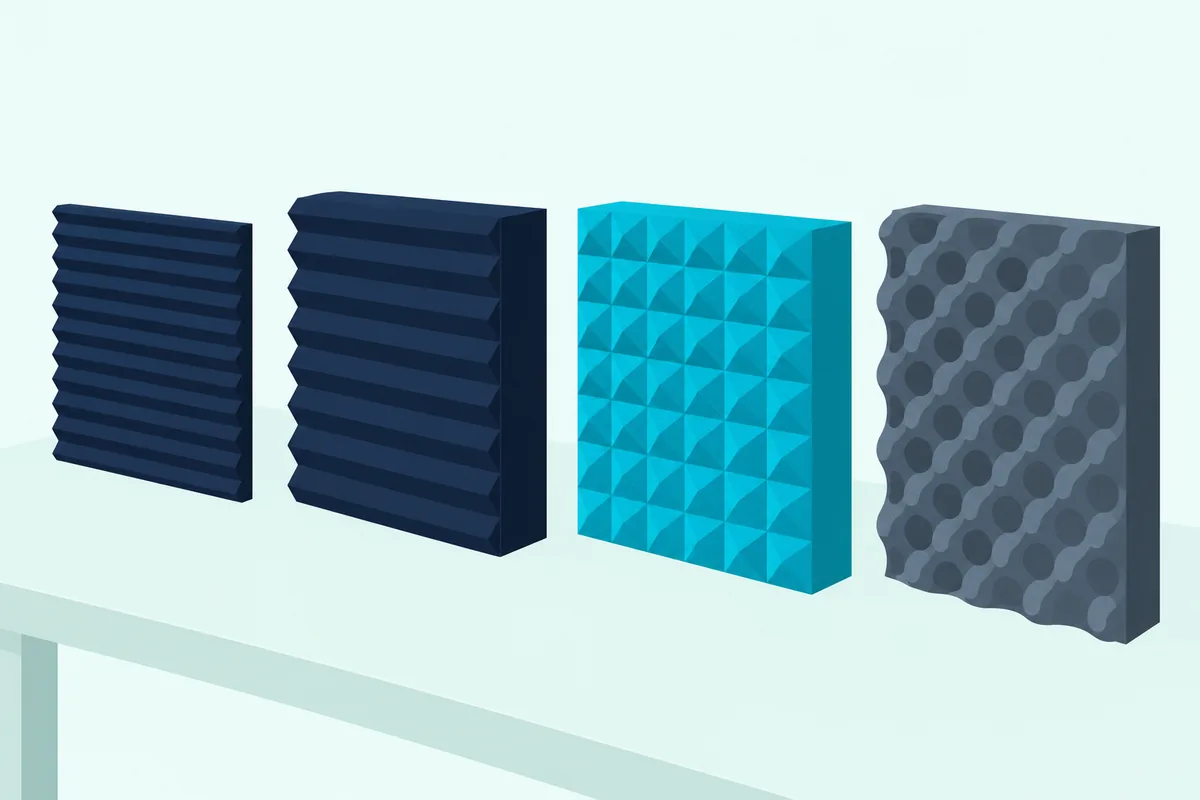
Wedge vs pyramid vs egg-crate
Not by shape alone, because Auralex’s Acoustics 101 ties low-frequency absorption to foam thickness, which is why the pyramid-style 24-pack and the 50-pack are both 2-inch picks here.
So compare thickness and placement before pattern: Auralex’s home-studio guide puts acoustic treatment at the first reflection points.
Thickness vs shape
Yes, by the Auralex line above. The JBER 1-inch pack is the lighter treatment, while the 24-pack of pyramid foam and the 50-pack are 2 inches thick.
How much coverage you need
Start smaller than a full wall. A small desk setup may only need a starter pack at the first reflection points.
That can mean the wall directly behind the mic or speakers, the nearest side reflection, or the single surface that throws the most obvious slapback. Auralex’s home-studio guide finds the side points with a mirror: from the mix position, mark where it shows the monitors.
A fuller hobby-studio setup may call for a larger pack like the 2-inch 50-pack, while the JBER 16-pack of corner columns adds foam to the room’s corners.
JBER Column Acoustic Wedge (16 Pack)
Treat the first-reflection areas, the wall behind the mic or speakers, and the harshest bare surfaces before buying more.
When Foam Is Not the Right Tool
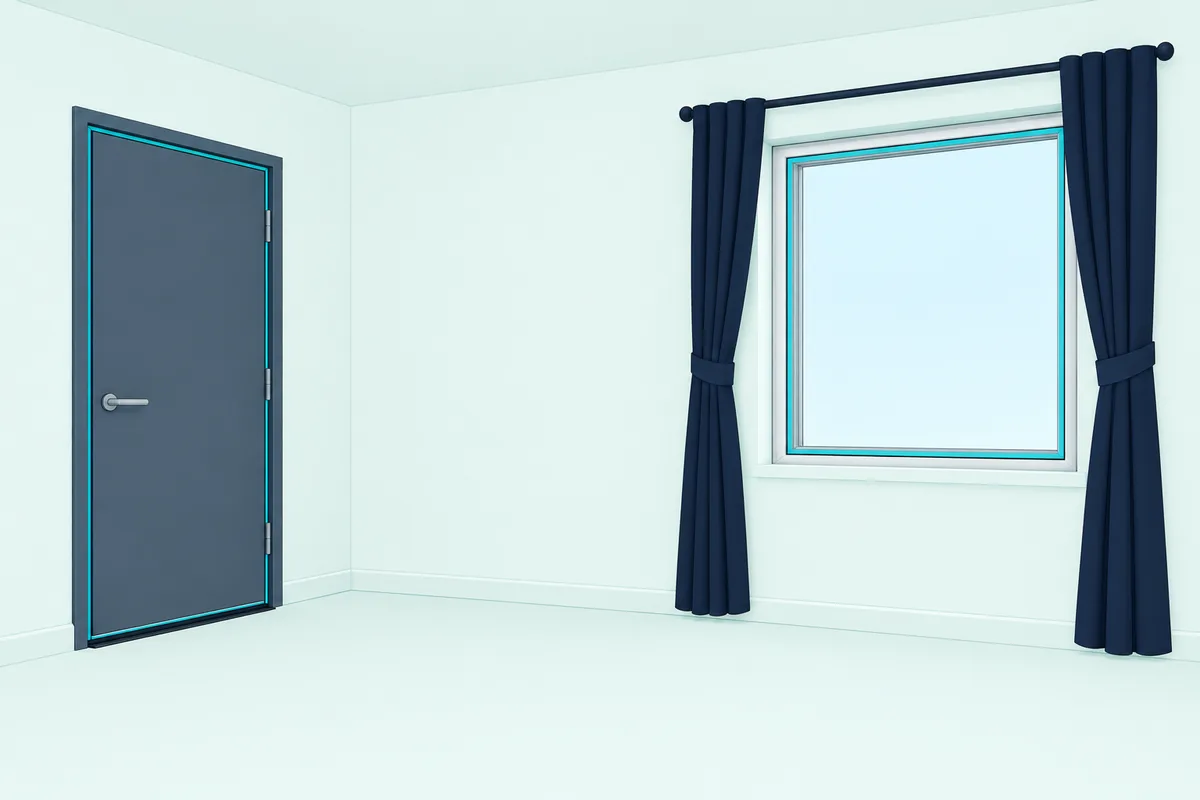
Neighbor noise through walls
Skip foam as the primary answer. Neighbor noise, TV bleed, traffic through weak windows, and rumble from outside point you toward better soundproof windows, heavier curtains, window inserts, or even better soundproofing materials rather than more foam.
Foam may make your own room sound less harsh while the noise still comes straight through the wall.
Bass-heavy problems make that mismatch even worse: Auralex says foam’s sound isolating properties are mostly at high frequencies, and PABCO’s sound design guide calls the low frequencies the difficult ones for noise control. Subwoofer rumble, shared-wall thump and low-end vibration call for the wall and door upgrades below.
Better wall or door isolation
A wall or door that leaks sound needs mass and airtightness first. That can mean better seals, a more solid door, layered upgrades, or products like door sweeps and soundproof interior doors.
The same rule applies to thin shared walls. If the core problem is the assembly itself, skip foam and move toward heavier wall-focused solutions or more complete room-treatment plans.
For window-heavy rooms, look at window inserts next, not more absorption foam on the wall beside the glass.
If the noise is clearly strongest at a door edge, window perimeter, or another obvious gap, foam is solving the wrong problem. Seal the leak first, then use absorption only if the room still sounds harsh after the isolation basics are handled.
When foam is still the right tool
Despite those limits, foam is the right choice when the room itself sounds worse than the noise outside it. That includes bright gaming rooms, vocal corners, desktop production setups, and content rooms where reverb control matters more than isolation.
That is where the picks above fit: rooms that are too lively but do not need heavier soundproofing products.
If you know the room needs blocking rather than cleaner tone, start with better soundproofing materials before buying more foam.
The Bottom Line
The best soundproof foam is acoustic foam for echo control, and the 24-pack of 2-inch pyramid foam is the overall pick.
If you need broader coverage, the 50-pack foam kit is the home-studio pick, while the JBER 12-pack is the starter pack if you are still diagnosing the room.
Frequently Asked Questions
What kind of foam is best for soundproofing?
No foam is the answer for soundproofing between rooms: Auralex, which makes acoustic foam, says it is not sufficient by itself to keep sound in or out of a room. Thick acoustic foam is for echo control, while soundproofing needs mass, sealing, damping, or decoupling.
Does soundproof foam really work?
Yes, but only for the job foam is built for: Auralex calls acoustic foam an extremely effective absorber of ambient, reflected sound, and says it is not going to soundproof your room.
How to block out 100% of noise?
Light retrofit materials won’t block all of it. The closest approach is a heavily isolated room shell: Auralex’s Acoustics 101 names mass and decoupling as the two components most effective at stopping sound between spaces, and calls airtight construction a key concept.
Does spray foam provide soundproofing?
Spray foam can help with sealing and insulation in some assemblies. For isolation, look to airtight detailing plus heavier wall or window upgrades.