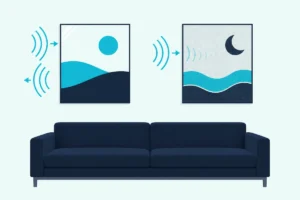
In a gym, prioritize ceiling baffles and clouds over the noisiest zones, then add panels high on the walls, above head and impact height, to stop wall-to-wall slap and flutter echo.
Where to place acoustic panels in gym sounds like a simple “cover the walls” problem. Yes, but gyms keep echoing unless you treat the ceiling and upper wall reflection paths first.
If coaching cues get lost, music sounds muddy, or every dropped plate rings through the building, you are hearing long reverberation plus early reflections. High ceilings, hard surfaces, and large open volume make those reflections pile up faster than they do in a typical room.
With the right placement, acoustic panels make instructions clearer and workouts feel less chaotic without making the space dead. The order below goes after the loudest reflections first instead of guessing.
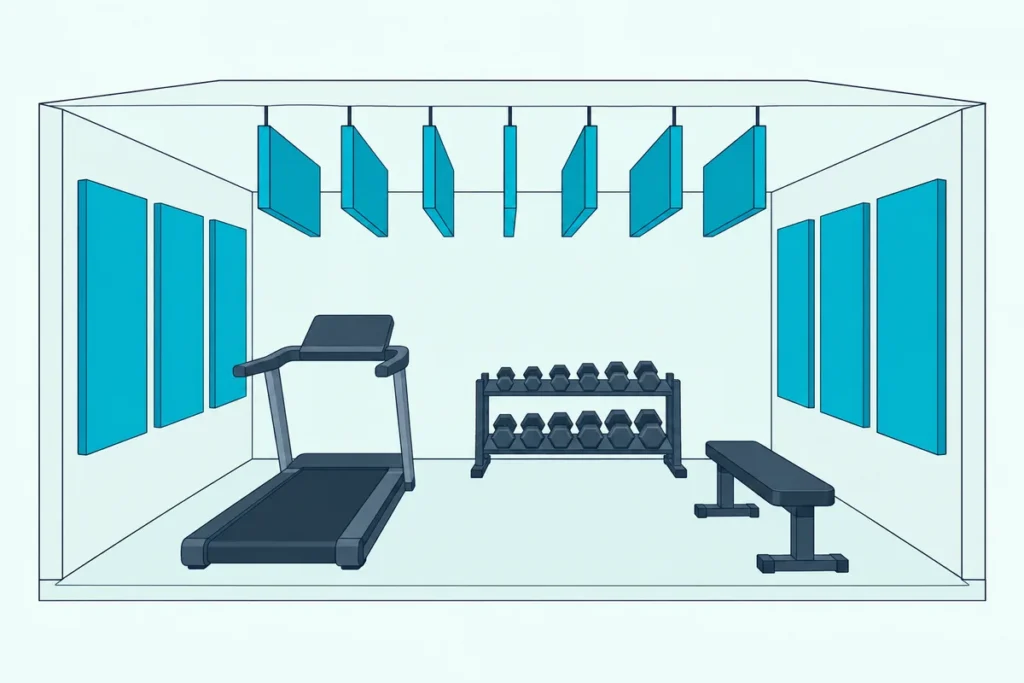
Start with overhead treatment above the loudest zones and panels on upper wall sections near first reflection paths. Next up: wall, ceiling, corner, and phasing priorities for commercial gyms, school gyms, and home gyms.
Finish with corner and edge treatment for low-end buildup and use durable, easy-clean materials.
Why Are Gym Acoustics So Difficult to Treat?
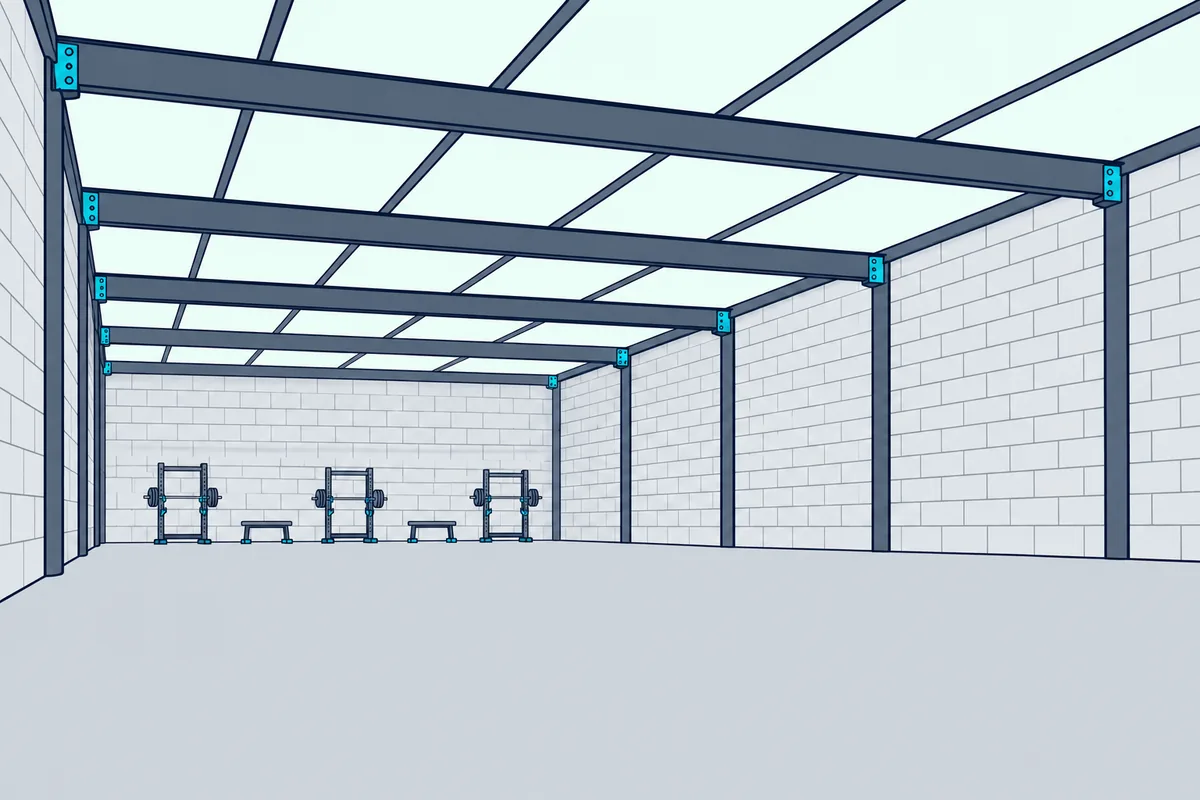
Most acoustic treatment advice assumes you are working with a standard room. Gyms break all those assumptions because of three factors: ceiling height, surface hardness, and room volume.
The problems start with ceiling height. In a gym with 20-30 foot ceilings, sound travels much further before it hits any surface.
That extra distance stretches reverberation time and creates more reflection paths. The fix is strategic placement that intercepts reflections before they build up.
High Ceilings Multiply Echo Problems
Ceiling height is the biggest factor because it controls how far sound travels before bouncing back. Sound moves at about 1,130 feet per second, so in a standard room reflections return to your ears within milliseconds.
In a gym with 25-foot ceilings, that same sound takes noticeably longer to return. This delay creates the “gymnasium echo” that blurs speech and makes dropped weights ring out.
The solution is not simply more panels — it is strategic placement that intercepts sound before it has time to build up. That is why ceiling treatment matters more in gyms than almost any other space.
Hard Surfaces Everywhere
Concrete walls, rubber flooring, and metal equipment create a perfect storm for sound reflection. Unlike offices with carpet and cubicle dividers, gyms offer almost nothing to absorb sound naturally.
Each hard surface acts like a mirror for sound waves. When you have parallel concrete walls, sound bounces back and forth many times before it dies away, which gives that muddy, boomy quality.
The floor presents a particular challenge. Rubber gym flooring is there to protect equipment and joints, not to absorb sound.
Large Open Volumes Need Different Strategies
A 50×80 gymnasium has about 33 times the floor area of a 10×12 home studio (4,000 against 120 square feet), so the panel counts by room size climb with it, and placement becomes more important.
In large spaces, you cannot treat every surface. The key is identifying the positions where panels will intercept the most problematic reflections.
Where Should You Place Acoustic Panels in a Gym?
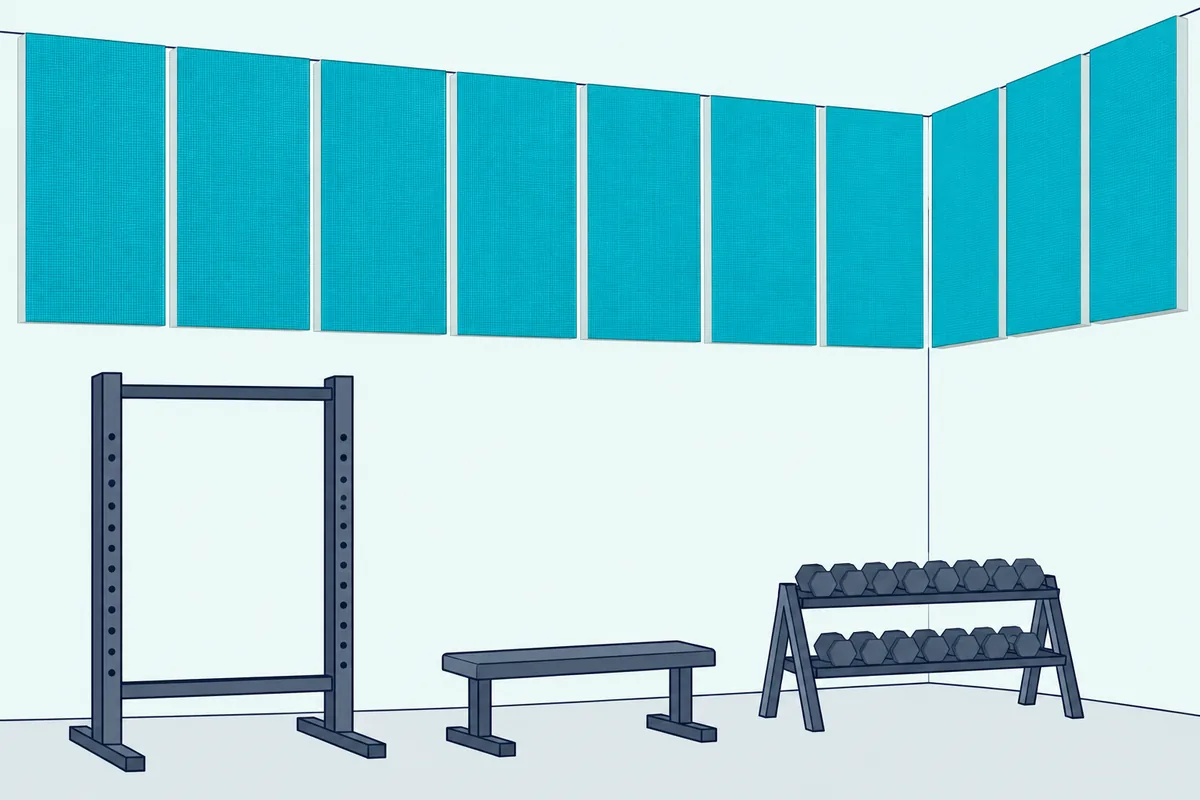
Wall placement in gyms differs fundamentally from smaller rooms. Three zones matter most: the upper walls, the walls behind loud equipment, and corners where bass collects.
If you want a baseline process for finding first reflection points, start with the guide on where to place acoustic panels. Then scale the same approach up for higher ceilings and longer reflection paths.
Upper Wall Sections
In gyms, wall panels go on the upper wall sections, from above head and impact height up to where the wall meets the ceiling.
This zone matters for two reasons. First, it is where many ceiling-to-floor reflections intersect the wall.
Second, panels placed here are protected from impact damage, which matters in any gym environment. You get strong acoustic impact without putting panels where equipment or athletes can hit them.
Place panels along the upper perimeter, as a continuous absorption zone that catches sound before it can bounce between the ceiling and floor multiple times.
Behind Equipment and High-Impact Areas
Sound does not just come from voices and music. Weight drops, cardio machines, and equipment collisions generate heavy noise that radiates in all directions.
Panels only calm what bounces around the room, so if those drops are also thudding into the rooms below, our guide on how to soundproof a home gym covers the floor layers that deal with impact.
Position panels on walls directly behind the loudest equipment — typically the free weight area and any Olympic lifting platforms. This intercepts the initial sound burst before it can spread throughout the space.
For home gyms, this might mean treating the wall behind your squat rack or the area adjacent to your treadmill. The principle remains the same: get absorption close to the source.
Corner Treatments for Bass Control
Gym acoustics often suffer from bass buildup in corners. The low-frequency sounds from dropped weights and heavy music systems accumulate where walls meet, creating muddy, boomy spots.
Thickness decides how much a panel does at low frequencies: Owens Corning lists its 703 board at 0.15 at 125 Hz at 2 inches thick and 0.56 at 4 inches, so put the thickest bass traps in the corners, mounted as Burton Acoustix’s mounting guide shows.
Position these in at least the four main corners of the space, starting at floor level. In smaller home gyms, treat the corners closest to the loudest equipment first.
This corner treatment works alongside your wall panels to create a more balanced sound throughout the gym.
What About Ceiling Treatment?
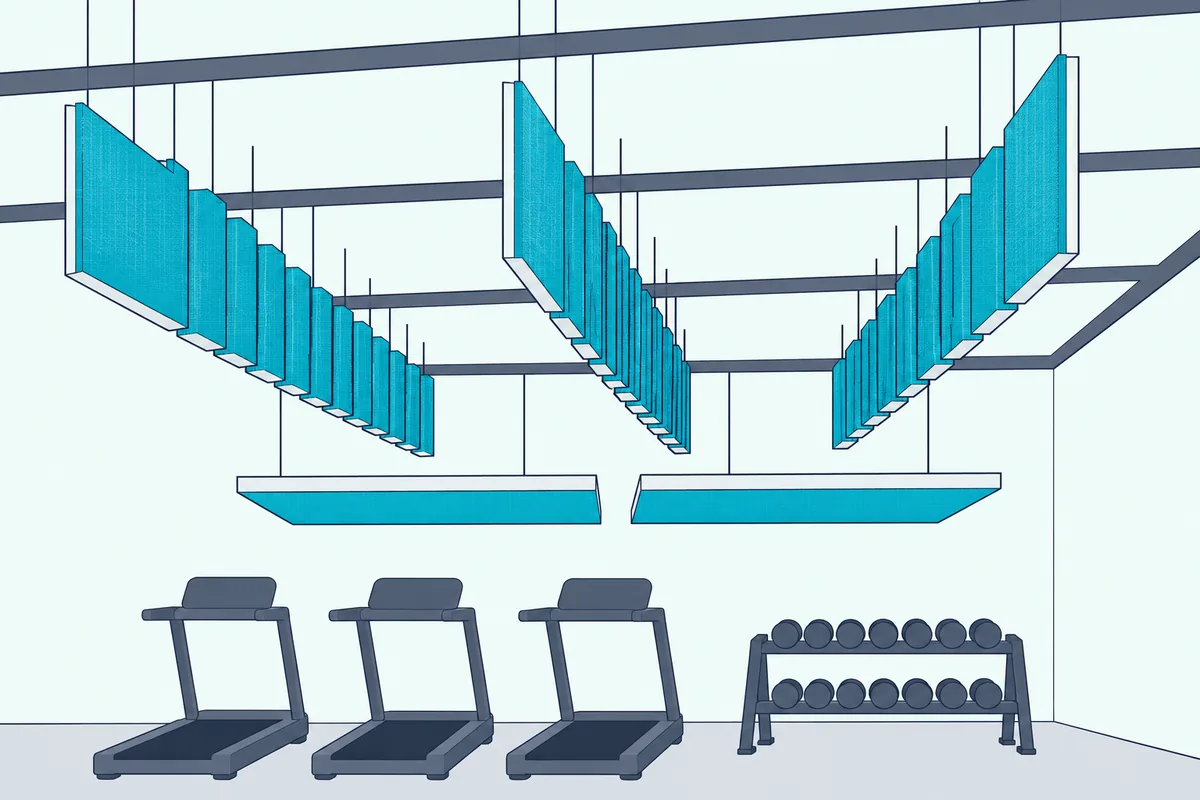
Ceiling treatment is where gym acoustics diverge most sharply from standard rooms. Three options cover most gyms: suspended baffles, direct-mount panels, and hybrid coverage calculated by ceiling height.
Ceiling Baffles and Clouds
Suspended acoustic panels — often called baffles or clouds — hang from the ceiling structure to intercept sound in the vertical dimension.
Baffles typically hang vertically in rows, creating absorption zones that sound must pass through as it travels up and down. Clouds hang horizontally, parallel to the floor, catching sound before it reaches the high ceiling.
In a gym, baffles are less visually intrusive and can be spread through the space.
Direct-Mount Ceiling Panels
If your gym has a standard ceiling height you can reach from a ladder, direct-mount ceiling panels become viable. Screw each one up through its own wooden frame, with every screw in a joist: overhead, drywall anchors can easily pull out.
Home gyms often fall into this category. A garage conversion or basement gym with 8-10 foot ceilings benefits from ceiling panels placed directly above workout areas.
Focus coverage over the loudest zones — weight lifting areas, cardio sections, and any space where you need clear communication.
Coverage Calculations for Ceilings
The ceiling presents your largest single surface in most gyms. A simple formula covers coverage needs:
For high ceilings (20+ feet), space suspended baffles to create overlapping absorption zones.
For standard ceilings, place direct-mount panels over workout stations rather than walkways or storage areas.
How Do You Fix Echo and Reverberation in a Gym?
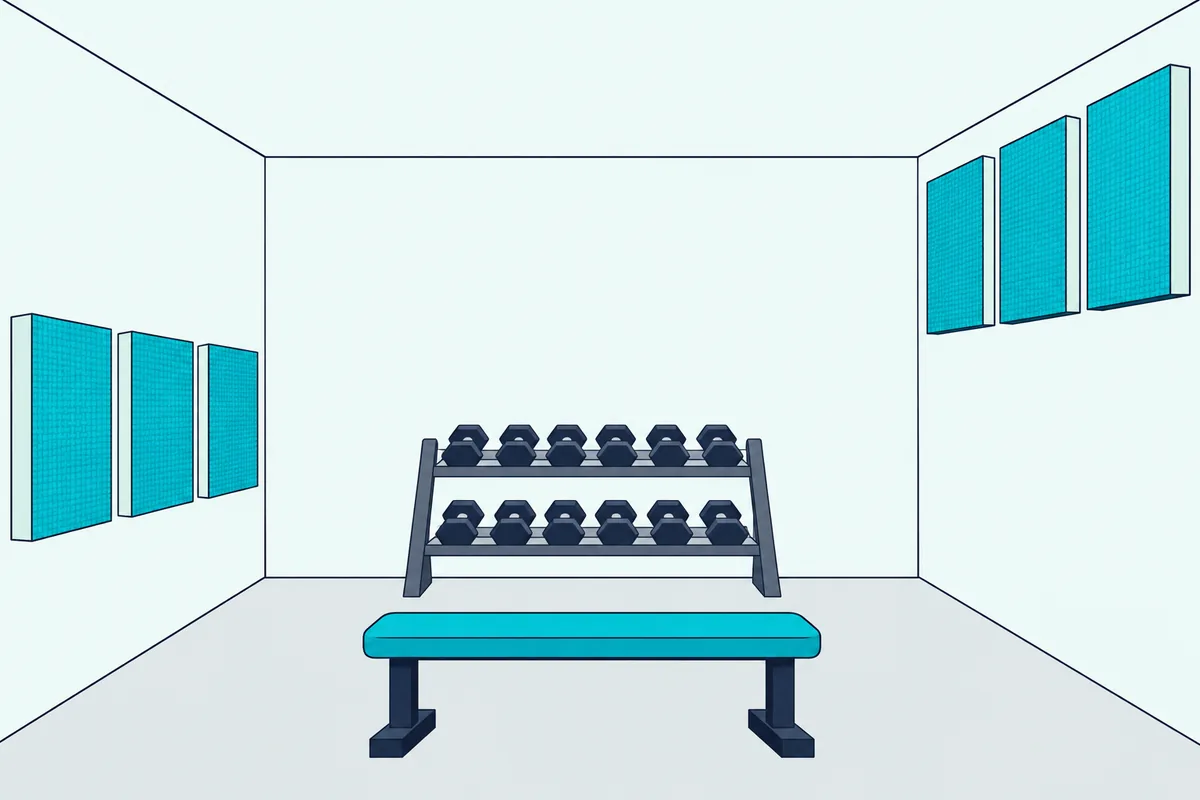
Echo and reverberation are related but distinct problems. Three steps cut through both: locating reflection points, breaking up parallel surfaces, and treating corners where bass collects.
Identifying Reflection Points
Flutter echo — that rapid, metallic sound you hear when clapping in an untreated room — comes from parallel surfaces. In gyms, this typically happens between opposing walls and between floor and ceiling.
Stand in the center of your gym and clap sharply. If you hear a distinct “ringing” afterward, you have flutter echo that needs treatment.
The fix involves breaking up at least one of the parallel surfaces. Panels on upper wall sections address wall-to-wall flutter, while ceiling treatment handles floor-to-ceiling flutter.
If you can only treat one surface in a big space, treat the ceiling first. Then add upper-wall panels to stop the wall-to-wall slap that keeps speech muddy.
Parallel Wall Solutions
When opposing walls create flutter echo, you do not need to treat both surfaces completely: start by breaking up one wall, then clap again.
Strategic placement matters here. Position panels at ear height on one wall and at different heights on the opposing wall.
This staggered approach prevents sound from bouncing cleanly between surfaces. It is a practical way to reduce flutter echo without covering both walls completely.
For home gyms, this might mean a lower band of panels on one wall and a higher band on the opposite wall.
Corner and Edge Treatments
Sound collects and amplifies in corners and along the edges where surfaces meet. These areas benefit from thicker treatment — either dedicated bass traps or doubled-up standard panels.
The four vertical corners and the upper perimeter where walls meet ceiling deserve special attention.
What Materials Work Best for Gym Environments?
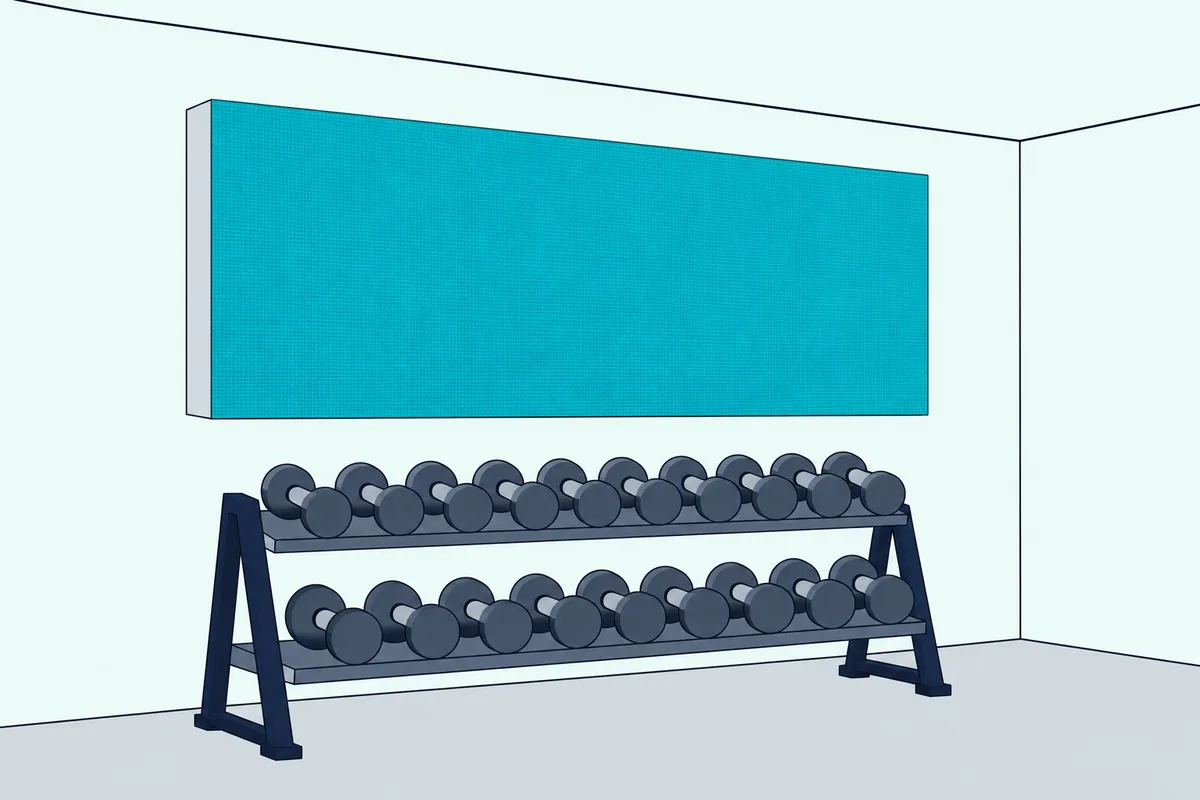
Gym environments punish flimsy materials. Three factors separate panels that last from panels that fall apart: impact resistance, moisture tolerance, and ease of cleaning.
Impact-Resistant Options
Standard acoustic panels use fabric wrapping that can tear or puncture on impact. For gyms, look for panels with either reinforced fabric or protective facings.
Some manufacturers offer “gymnasium grade” panels with reinforced fabric or perforated metal facings over the absorptive core, made for ball impacts and accidental contact.
The 2” Thick Fiberglass Panels with Hanging Hardware come two to a pack, each 47.2 by 23.6 inches.
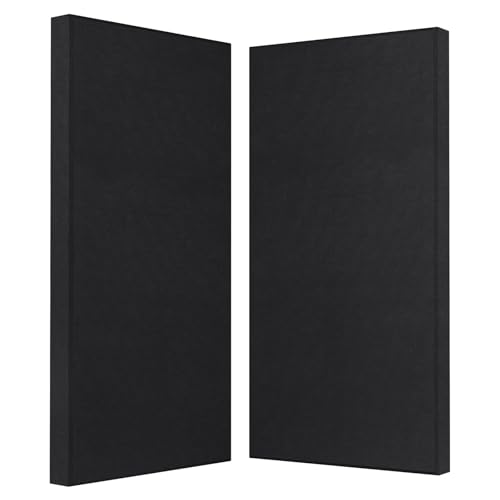
2” Thick Fiberglass Panels with Hanging Hardware
Moisture and Humidity Considerations
Gyms generate heavy humidity from perspiration and climate control challenges. ROCKWOOL gives its Comfortboard 80 stone wool board a water vapor sorption of 0.2 vol% and says it passed the ASTM C1338 fungi resistance test.
Owens Corning gives its 700 Series fiberglass board under 5% water vapor sorption by weight at 120°F and 95% relative humidity (ASTM C1104), a different unit, so the two sheets do not rank one material above the other.
The fabric covering matters too.
A fabric that resists moisture and wipes down easily suits a gym. Ask manufacturers specifically about humid-environment suitability before you buy.
Easy Maintenance Requirements
Gym panels accumulate dust, sweat vapor, and airborne particles faster than panels in cleaner environments. Choose materials that can be vacuumed or wiped down without damage.
Avoid panels with loose fabric wrapping that can snag or collect debris. Tight-wrapped or faced panels clean more easily and maintain appearance longer.
How Should You Install Acoustic Panels in a Gym?
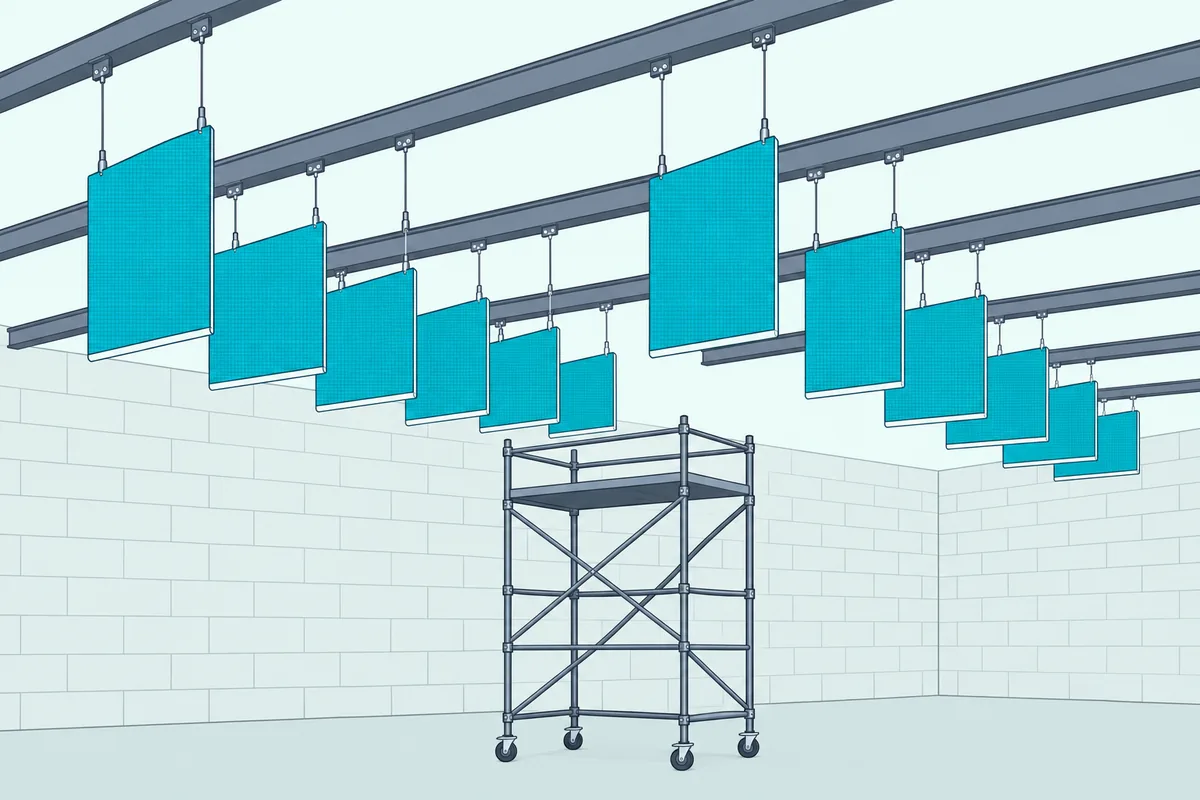
Gym installation differs from residential work in three ways: whether you need a pro or can DIY, how high and secure the mounts must be, and which fire ratings local codes require.
Professional vs. DIY Installation
Ceiling installations in high-ceiling gyms require scaffolding, lifts, or other equipment that most DIY installers do not have access to. For ceiling work beyond a ladder’s safe reach, professional installation makes sense.
Wall panels you can reach from the floor in home gyms are simple DIY projects. Standard mounting hardware works fine for most applications.
Height and Safety Considerations
Panels must be mounted securely to prevent falling during vibration or impact. This matters especially in gyms where dropped weights create strong vibration.
Use appropriate mounting hardware for your wall material. Drywall anchors work for lighter panels, but concrete anchors become necessary for masonry walls common in commercial gyms.
Overhead, use only hardware made for ceilings and rated for the panel’s weight, with every fixing in a joist, a beam or a rated anchor, never in the drywall alone and never on wall clips. Have a trained, accredited professional test an old ceiling for asbestos before anyone drills it.
In a gym open to the public, your own code and fire official have the final say.
Fire Rating Requirements
A gym open to the public is a place of assembly in codes such as New York City’s, so its wall and ceiling finishes have fire classes to meet; ask for each panel’s ASTM E84 fire test report. Intertek’s ASTM E84 page gives the classes for interior finishes: Class A for a flame spread index of 0-25, Class B for 26-75 and Class C for 76-200.
Intertek’s page on ASTM E84 gives Class A as a flame spread index of 0-25, and Owens Corning gives its unfaced 700 Series board a flame spread index of 5. Verify certifications before purchasing for any commercial application.
Where Do Panels Go First in a Gym?
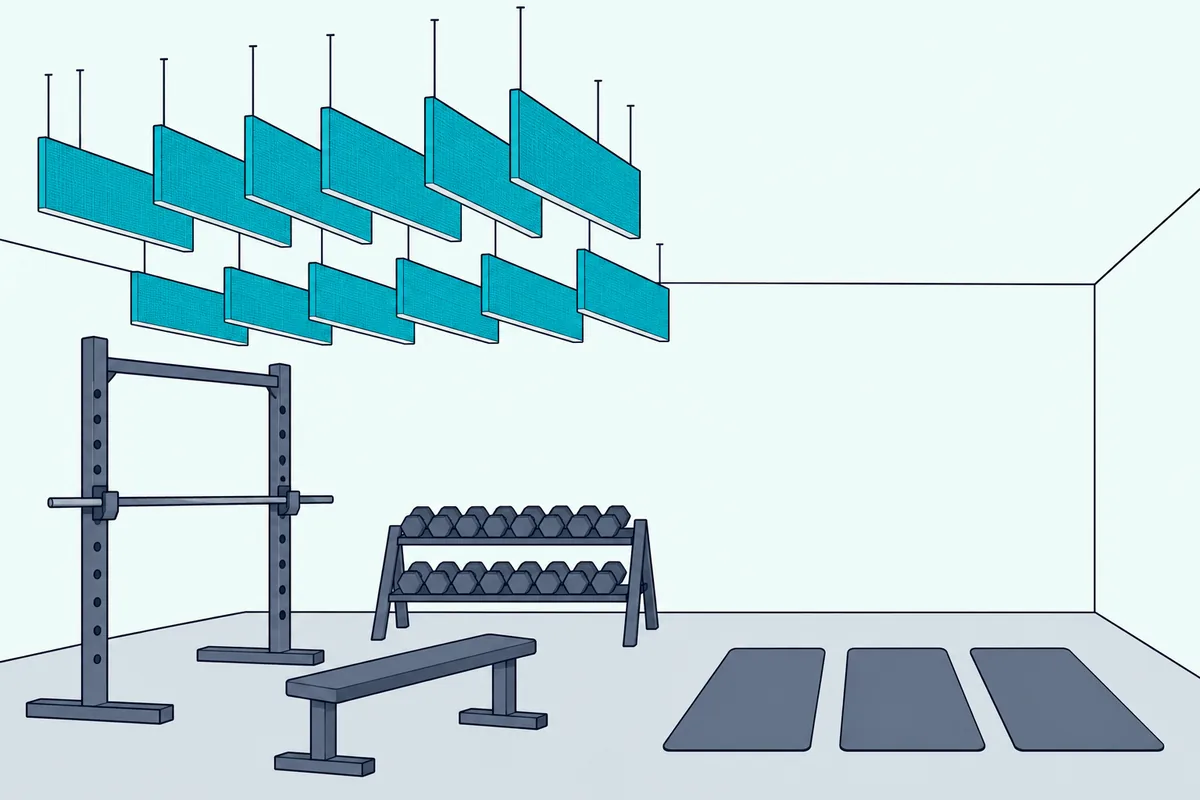
Full acoustic treatment of a large gym takes many panels. Three steps set the order: phasing the install, targeting priority zones first, and choosing products that suit the room.
Phase Your Installation
You do not need to treat everything at once. Start with the highest-impact zones and add treatment over time.
Phase 1 should target the ceiling — either baffles in high-ceiling spaces or direct-mount panels in standard-height rooms.
Phase 2 addresses upper wall sections and corners. This builds on your ceiling treatment to create full sound control.
Phase 3 covers secondary areas and fine-tuning. Once the main treatment is in place, you can identify remaining problem spots and address them specifically.
Priority Zones vs. Complete Coverage
Identify the zones that generate the most noise and prioritize treatment there.
Weight areas, cardio sections, and group fitness spaces typically need the most attention. Stretching zones, walkways, and storage areas can often go untreated without noticeable acoustic penalty.
For home gyms, this might mean treating only the workout area while leaving storage or entry zones untreated.
Match Panels to the Room
If you are treating a home gym, start with durable panels that mount securely and cover real surface area. Smaller decorative tiles often underperform in large, reflective spaces.
Choose panels with specific ratings when the room needs them: high NRC ratings, fire certification, or impact resistance.
What Results Can You Expect?
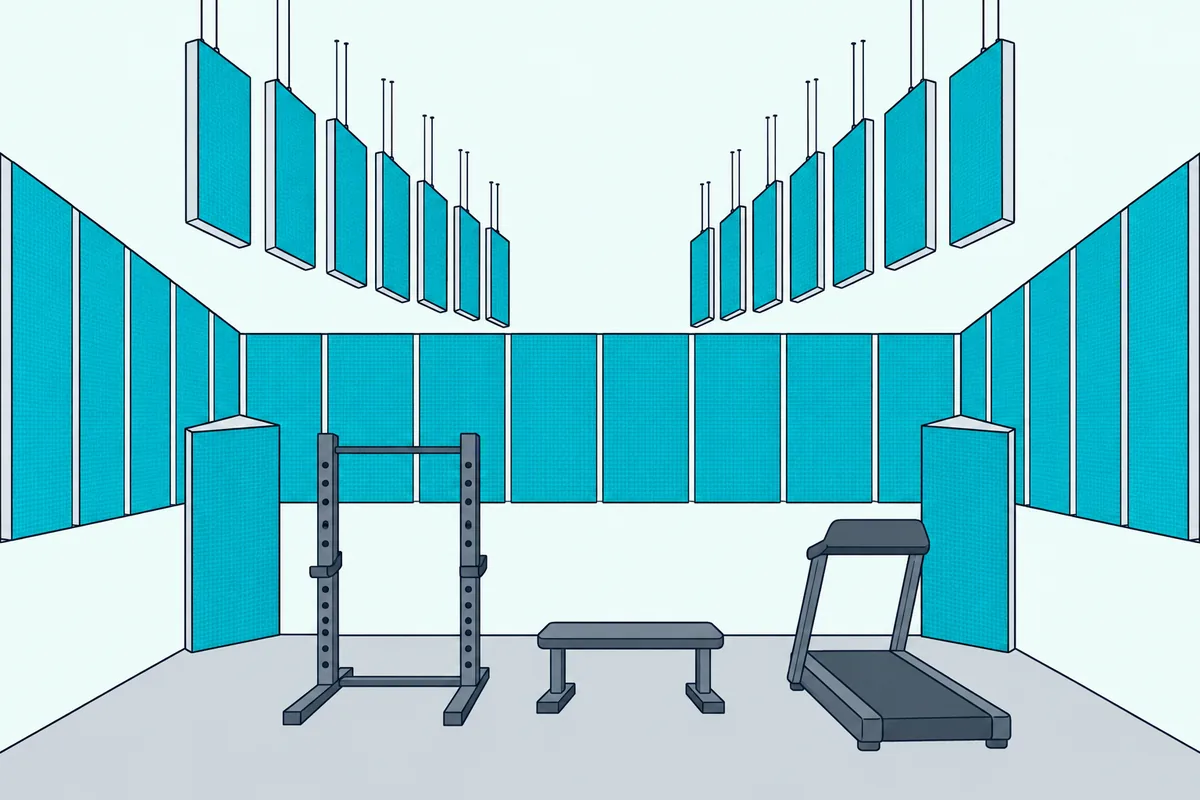
Acoustic panels transform gyms from echoey chaos into spaces where you can coach, train, and communicate. The biggest change is that speech becomes clearer and the room stops “ringing” after each impact.
If you start with ceiling treatment over the loudest zones, you will usually hear the improvement immediately. Upper-wall panels and corner/edge treatment then smooth out the remaining slap and low-end buildup.
A quick way to gauge progress is the clap test: stand in the center, clap once, and listen for the tail. That tail is the reverberation, and the EBU defines reverberation time as the time taken for the sound to decay to 60 dB below its initial level.
After ceiling and upper-wall treatment, clap again and listen for a shorter tail.
The Bottom Line
Where to place acoustic panels in gym starts with the ceiling and upper walls, then moves to the reflection paths that keep speech muddy. Start with overhead treatment above the loudest zones, then add high wall panels and corner/edge treatment to balance the room.
Treat in phases so you can hear what each step fixes, and choose durable, easy-clean materials that survive impacts and humidity. For more installation and placement help, browse the acoustic panels resource hub.
Frequently Asked Questions
How many acoustic panels does a gym need?
The answer depends on ceiling height and room volume, so work it out from the surfaces: a 2×4-foot panel covers 8 square feet.
In a 2,000 square foot gym, every 10% of the ceiling is 200 square feet, or 25 panels.
Can acoustic panels soundproof a gym?
No — acoustic panels reduce echo and reverberation inside the space, but they do not prevent sound from traveling through walls to adjacent areas.
Soundproofing requires mass, decoupling, and sealing. Panels improve clarity inside the gym without blocking noise transmission to neighbors.
What is the difference between gym panels and studio panels?
Gym panels prioritize durability and impact resistance over maximum absorption. Studio panels often use softer materials, so a gym panel is chosen for durability under impacts, humidity, and daily wear.
Do I need ceiling treatment in a home gym?
In a home gym, ceiling treatment reduces the floor-to-ceiling flutter echo.
Start with panels directly above your primary workout area. Then add wall panels behind you and at side reflection points if the room still feels harsh.