Why Are Acoustic Panels Shaped the Way They Are? [2026]

Why are acoustic panels shaped the way they are—wedges, pyramids, hexagons, and “3D” patterns—when a flat rectangle seems like it should do the job? The truth is that complex shapes are mostly for show, but buyers assume those aggressive ridges are what actually absorb the sound.
If you’ve ever covered a wall with budget foam pyramids and still heard an awful flutter echo or a boxy resonance on your recordings, you’ve discovered the trap: the shape on the surface barely matters compared to the density of the material underneath it.
Once you stop prioritizing the surface pattern and start looking at the core material and mounting placement, you can actually buy fewer panels and get a noticeably cleaner-sounding room without wasting your budget.
Below you’ll find every common panel shape, what each one handles best, and how to pick the right structural option for your specific room. First, you’ll look at exactly why manufacturers use wedges and pyramids instead of flat blocks.
Shape is mostly aesthetics; material, thickness, and placement drive performance. Flat fabric-wrapped fiberglass or mineral wool panels beat shaped foam in most rooms, especially once you treat first reflection points.
Why Do Acoustic Panels Come in Different Shapes?
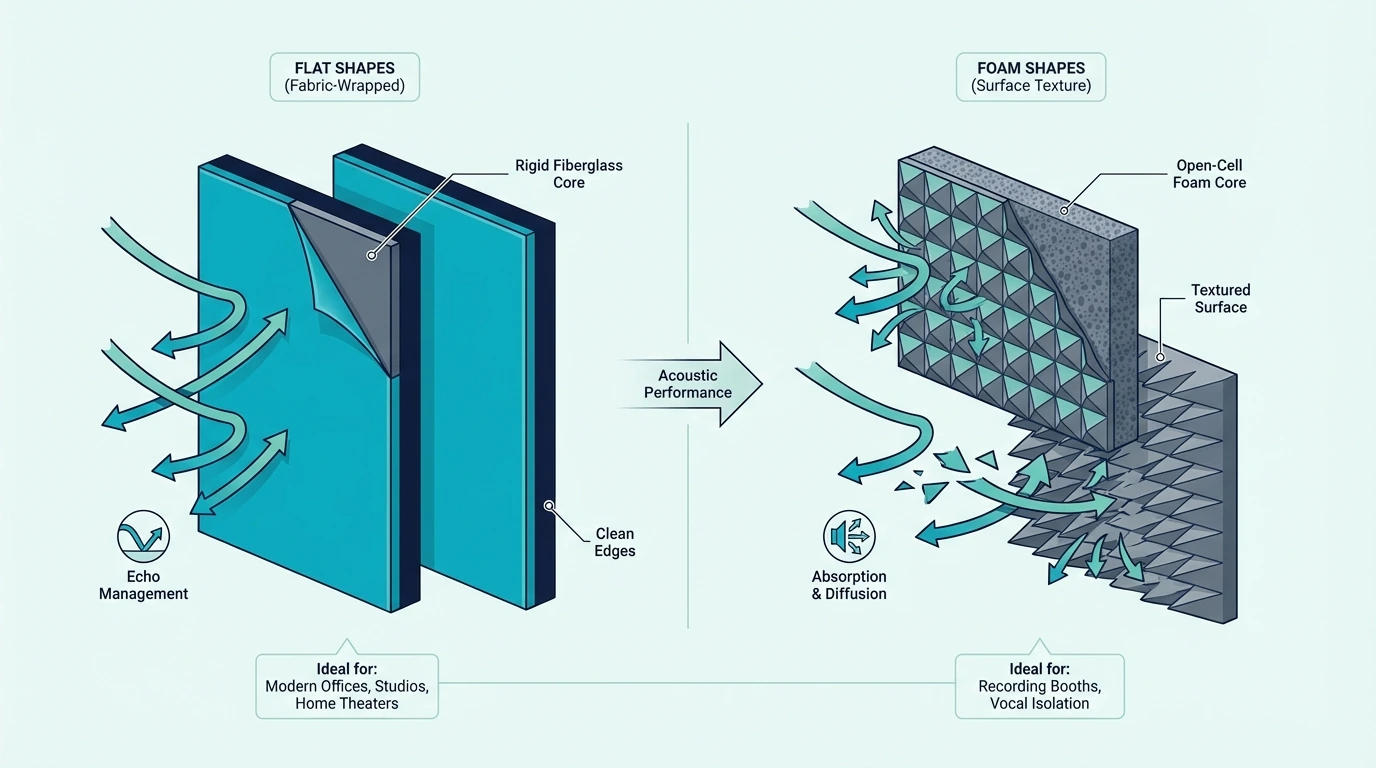
The market for acoustic panels evolved from two completely different philosophies: performance-first professional treatment and consumer-grade foam designed specifically to look “acoustic” on a wall.
What Determines Acoustic Panel Shape?
For the vast majority of consumer foam, manufacturing efficiency and marketing drive the shape far more than actual acoustic theory.
The wedges, pyramids, and egg-crate patterns emerge simply from how massive blocks of polyurethane are molded and sliced. Manufacturers know that a heavily textured surface looks convincingly “acoustic” and professional to amateur buyers, making it much easier to sell than a plain, flat slab of foam.
By contrast, flat professional panels require a completely different manufacturing process involving a dense, rigid core and a tightly stretched fabric wrap. The material inside that wrap matters infinitely more than the exterior shape; a 2-inch flat fiberglass panel will absorb more sound energy across more frequencies than a 2-inch pyramid foam panel every single time.
Shape only becomes a relevant acoustic variable when comparing identical core materials. Two fiberglass panels of equal thickness and density will perform nearly identically, regardless of whether one happens to have a sculpted or beveled surface.
How Did Foam Shapes Become Popular?
The home recording boom of the late 1990s and 2000s created a massive sudden demand for affordable room treatment. Foam manufacturers immediately responded with products that looked visually impressive on camera but cost pennies to produce.
Those iconic pyramid and wedge shapes offered visual proof to the buyer that something highly technical was happening on their walls. The textured surfaces photographed perfectly in magazines and made makeshift bedroom studios look like professional control rooms in marketing materials.
Crucially, those complex shapes also solved a massive practical problem for the manufacturers: hiding imperfect production. Heavily sculpted surfaces brilliantly mask the density inconsistencies and visual flaws that would be immediately obvious on a perfectly flat sheet of cheap foam.
How Do Panel Shapes Affect Sound Absorption?
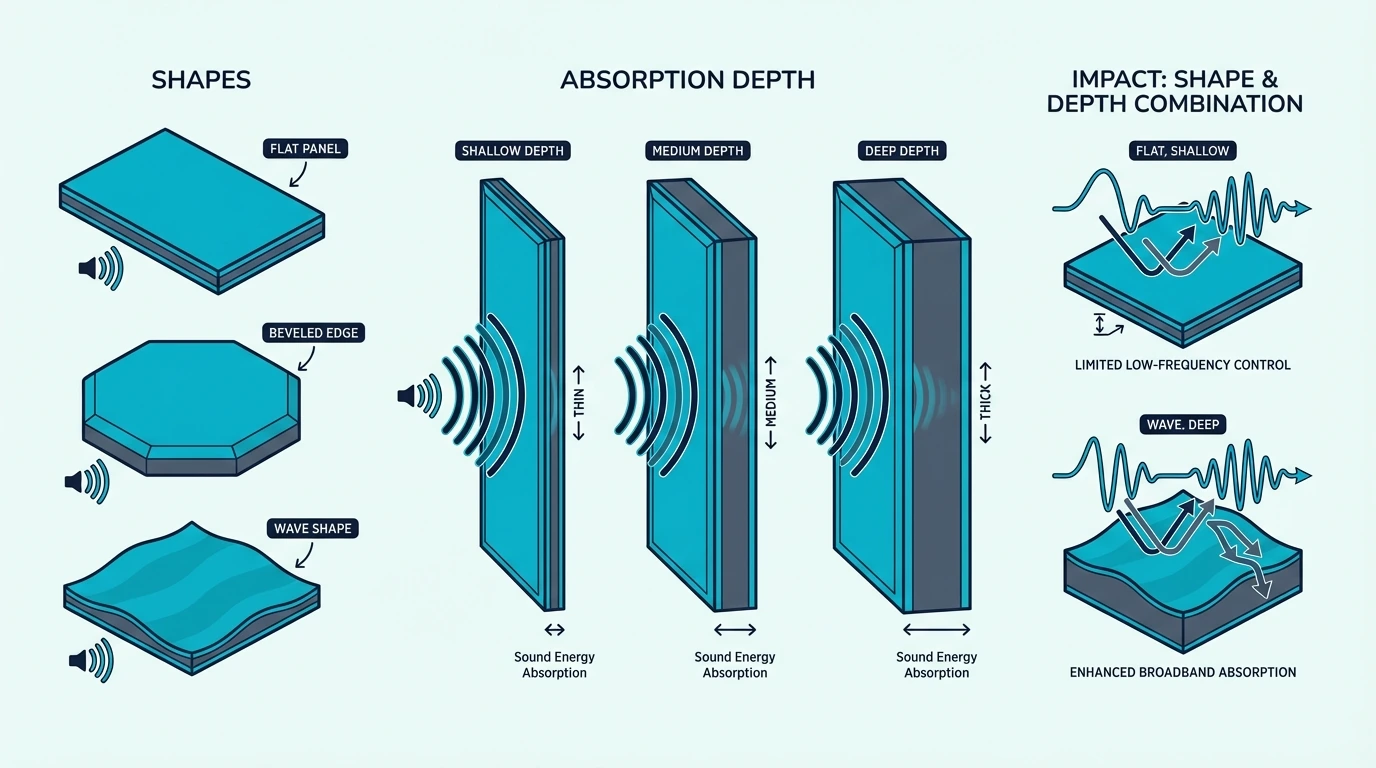
Sound absorption occurs when acoustic energy physically enters a porous material and converts to heat through friction. The geometric shape of that entry surface plays a remarkably minor role compared to what happens deep inside the core.
Does Surface Area Matter for Absorption?
Mathematically, a pyramid face has far more surface area than a perfectly flat tile of the same width and height. That increased area theoretically creates more “entry points” for sound waves to penetrate the material, which many manufacturers aggressively tout as an acoustic advantage.
However, this theoretical advantage completely disappears once the sound actually enters the foam. The true metric that dictates performance is absorption depth — how far the sound wave must physically travel through dense material before bouncing off the drywall behind it.
A 2-inch flat panel and a 2-inch pyramid panel share the exact same maximum absorption depth. The pyramid’s extra entry surface area cannot compensate for the fact that the valleys between the pyramids are paper-thin, rendering the panel almost useless for absorbing lower frequencies. For true broadband absorption that handles both voice and music frequencies, panels with adequate, consistent thickness are the absolute baseline requirement.
Why Does Material Matter More Than Shape?
The physics of friction dictate that denser materials absorb more energy. Fiberglass and mineral wool have much higher density than standard polyurethane foam, creating far more resistance as sound waves attempt to pass through the fibrous matrix.
That density gap is why a flat ATS Acoustics fiberglass panel can achieve an NRC of 1.0, absorbing nearly 100% of the mid-range sound that hits it. By contrast, the absolute best pyramid foam on the market rarely exceeds an NRC of 0.65 because the material itself lacks the mass to stop the wave. The NRC rating guide explains exactly what that number captures and what it deliberately misses.

ATS Acoustics fiberglass panel
That 35% difference in absorption efficiency translates to a night-and-day difference in room acoustics. One properly treated corner using flat professional fiberglass panels will noticeably outperform an entire wall covered end-to-end in shaped foam pyramids.
Get Studio Tips Weekly
Join 5,000+ creators getting acoustic treatment advice every week.
No spam. Unsubscribe anytime.What Are Common Acoustic Panel Shapes?
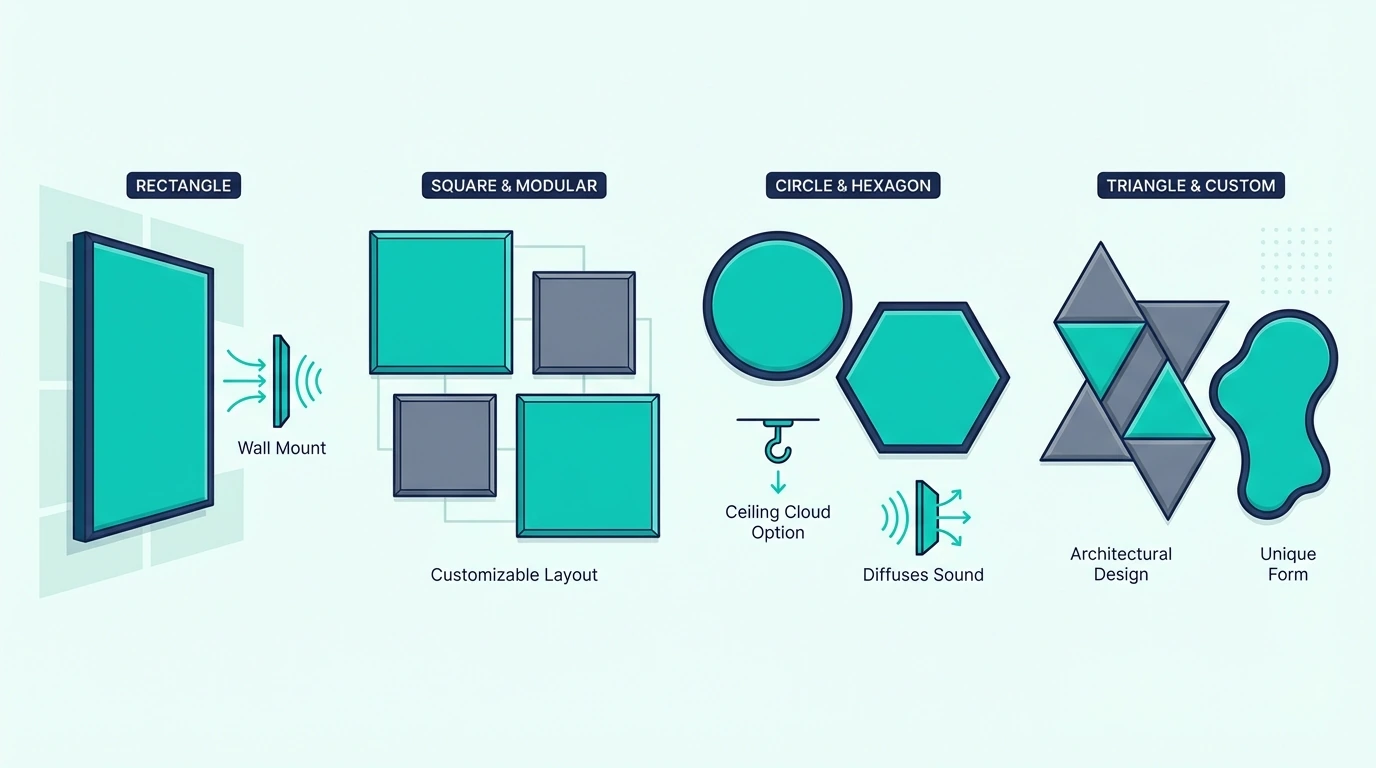
While the acoustic treatment market offers dozens of unique shape variations, almost all of them fall into three basic categories with highly predictable performance limits.
How Does Wedge and Pyramid Foam Perform?
Wedge and pyramid shapes completely dominate the budget acoustic foam market, appearing in countless YouTube studio tours and Amazon listings. The angled surfaces are designed to theoretically scatter incoming high-frequency reflections while the foam body absorbs the mid-to-high frequencies.
This dual-action approach works reasonably well above 500Hz, where the short audio wavelengths actually interact with the surface texture. However, the moment you drop below 500Hz, wedge and pyramid foam becomes almost acoustically transparent, allowing bass frequencies to pass through the thin material as if it wasn’t even on the wall.
For isolated voice recording in a small vocal booth, wedge foam can reduce flutter echo and harsh reflections quite affordably. But for full music mixing or accurate room treatment, those severe low-frequency limitations quickly become dealbreakers. The fiberglass panel guide puts the real NRC test data side-by-side so you can see the exact performance gap between foam wedges and rigid panels.
Does Egg Crate Foam Actually Work?
Egg crate foam—named for its obvious resemblance to cardboard egg cartons—offers the absolute maximum surface area of any common foam shape. The deep valleys and dramatic peaks create complex reflection patterns across the wall.
Unfortunately, that visual complexity provides almost zero functional acoustic benefit. Because the total absorption power is dictated by the thinnest point of the material, and the egg crate valleys are typically paper-thin, the sound waves punch right through to the drywall.
These patterns work best as pure visual elements in spaces where an aggressive industrial appearance matters more than acoustic precision. They have become iconic in recording studio photography, but their actual effectiveness is highly debatable.
Why Do Studios Use Flat Panels?
Given all these geometric options, flat fabric-wrapped panels remain the undisputed professional standard for serious acoustic treatment. Recording studios, broadcast facilities, and high-end concert halls worldwide rely almost exclusively on this simple rectangular design.
The flat shape is absolutely not a limitation—it is a massive advantage. It guarantees predictable absorption coefficients, delivers consistent performance across every square inch of the panel surface, and provides a clean, mature aesthetic that integrates perfectly with modern interior decor.
Professional flat panels typically use dense, rigid fiberglass or mineral wool cores wrapped tightly in acoustically transparent fabric. The UMIACOUSTICS fiberglass panels perfectly exemplify this no-nonsense construction approach.
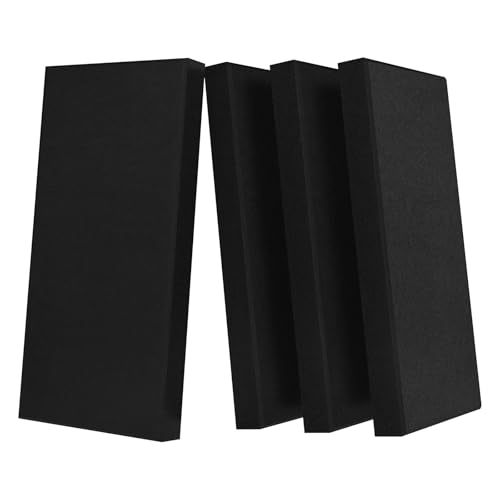
UMIACOUSTICS fiberglass panels
How Do Sculptural and 3D Panels Work?
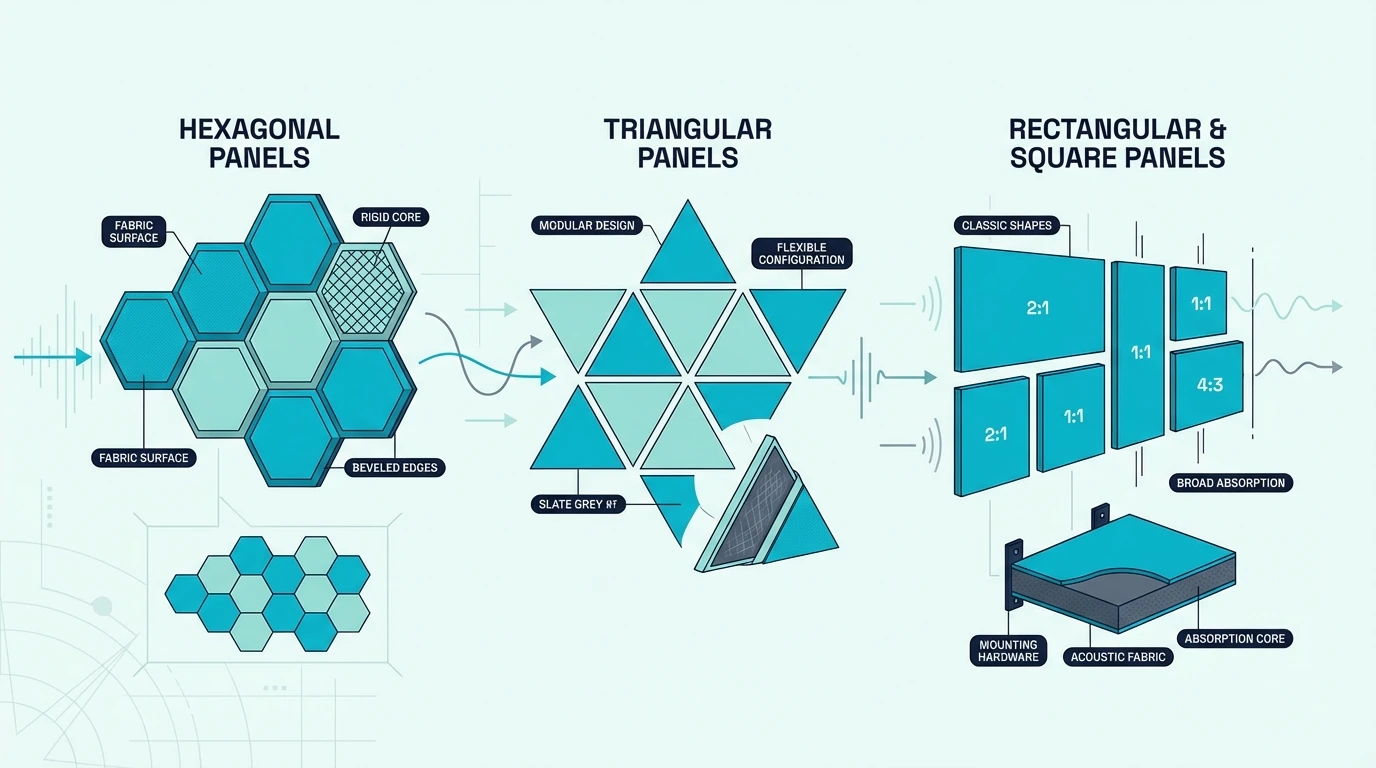
The high-end acoustic panel market has completely moved beyond basic shapes and into complex sculptural designs that blur the line between room treatment and architectural art.
What Are 3D Sculptural Panels?
These premium sculptural panels use three-dimensional geometric patterns—sweeping waves, interlocking hexagons, or aggressive asymmetrical cuts—molded directly from dense acoustic materials like PET felt or fiberglass.
The massive advantage of a 3D surface is that it provides both heavy absorption and active diffusion simultaneously. When sound waves hit the deeply angled surfaces, the energy scatters in multiple directions across the room rather than reflecting directly back at the listener’s ear.
This dual-action combination makes sculptural panels highly versatile for hybrid environments. They excel in spaces where pure, flat absorption would create an uncomfortably “dead” acoustic environment, such as living rooms, corporate lobbies, or high-end restaurants.
The Art3d Wood Slat Panels represent the most popular hybrid approach on the market—rigid wood slats mounted over an absorptive felt backing, providing both a stunning visual focal point and legitimate acoustic function. The slat panel guide covers these wood-over-absorber designs in exhaustive detail.
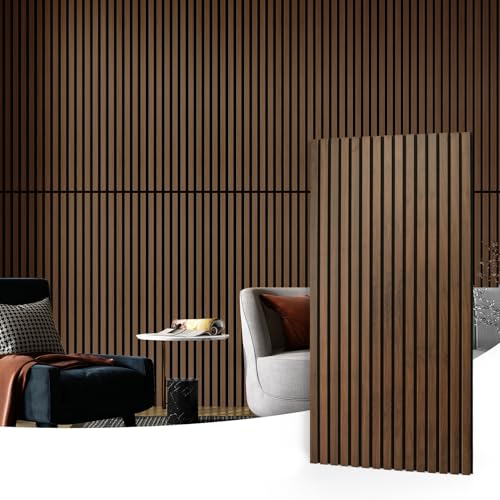
Art3d Wood Slat Panels
Do Hexagon Panels Work Better Than Rectangles?
Because they look so futuristic, hexagonal panels have become massively trendy for home studios and streaming setups, allowing users to build visually interesting honeycomb patterns across their walls.
However, acoustically speaking, hexagons perform absolutely identically to basic rectangles of the exact same size and material. A 24-inch felt hexagon will absorb the exact same frequencies as a 24-inch felt square cut from the same factory sheet.
The advantage of the hexagon is entirely aesthetic and modular. Hexagons tessellate in unique ways that rigid rectangles cannot, allowing for highly creative wall arrangements and organic-looking installations that don’t look like a standard corporate office grid.
If you are currently calculating how many panels you need to fix your room, remember that shape does not change the math—only the total square footage of the surface area and the specific mounting placement actually matter.
Which Panel Shape Is Best for Your Space?
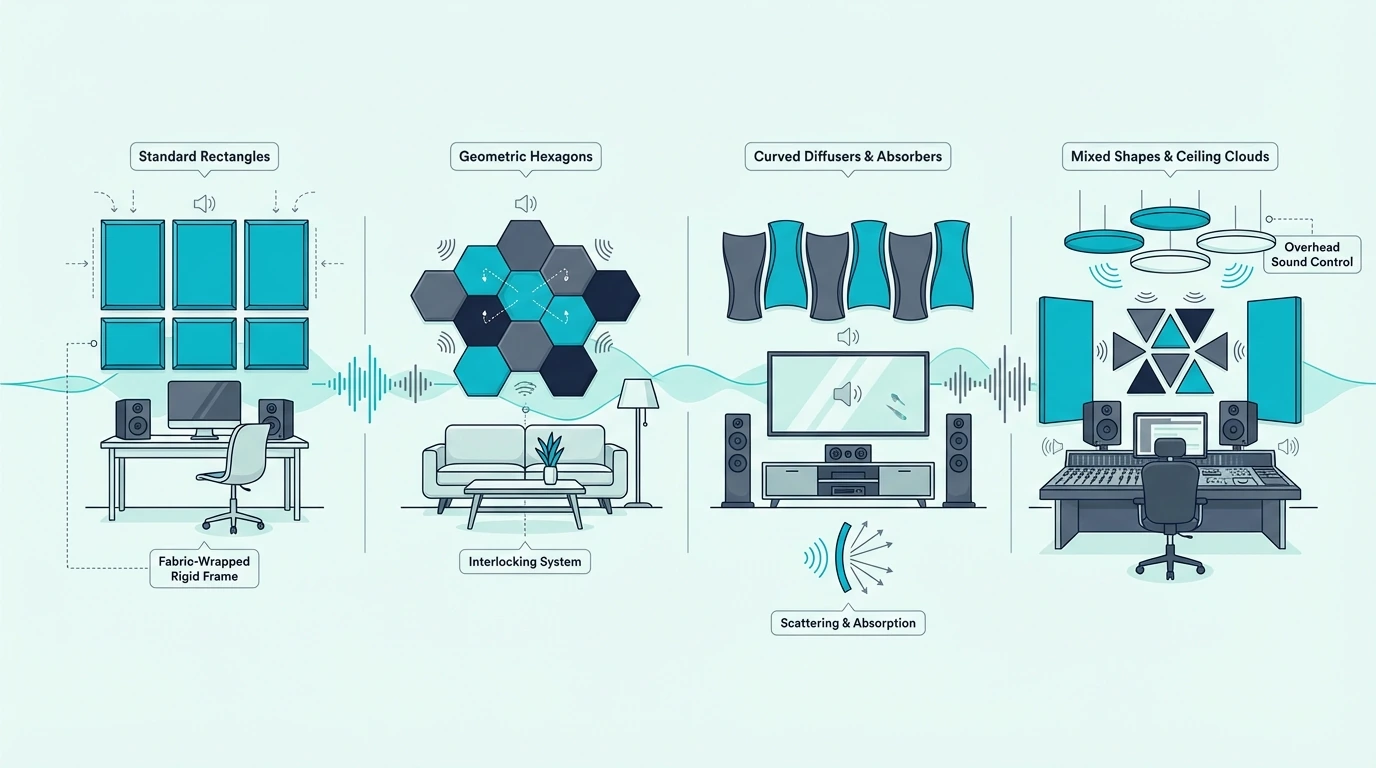
The right shape ultimately depends entirely on the room’s specific purpose and whether you are optimizing strictly for audio performance or balancing it with visual appearance.
When Should You Choose Flat Panels?
You must choose flat fiberglass or mineral wool panels whenever acoustic performance is the absolute priority. Critical environments like music production suites, voiceover booths, podcast studios, and high-end home theaters require the highly predictable, broadband absorption that only a flat, dense core can provide.
These flat panels also become mandatory when you need to hit specific reverberation decay targets in a professional space. By using air-gap mounting, you can easily extend their low-frequency reach without ever needing to change the panel’s physical shape.
Surprisingly, the budget also strongly favors flat panels. While a professional fiberglass board costs more per square foot than shaped polyurethane foam, you need much less wall coverage to achieve the exact same acoustic results.
When Should You Choose Shaped or Sculptural Panels?
You should pivot to shaped panels only when the visual impact of the room matters exactly as much as the acoustic improvement. Modern living rooms, open-plan offices, busy restaurants, and hotel lobbies need echo treatment, but they absolutely cannot look like a claustrophobic recording studio.
In these specific environments, sculptural 3D panels shine because complete, deadening absorption would feel unnatural and oppressive to guests. The physical combination of absorption and surface diffusion maintains the room’s natural liveliness while successfully controlling the harsh echoes.
The panel density guide thoroughly explains why the raw material and the physical thickness will always predict performance far better than any surface pattern ever could.
| Panel Shape | Best Use Case | Absorption Range | Cost Level |
|---|---|---|---|
| Flat Fiberglass | Studios, theaters, critical listening | 125Hz–8000Hz | Mid-High |
| Wedge/Pyramid Foam | Vocal booths, budget treatment | 500Hz–8000Hz | Low |
| Egg Crate Foam | Visual appeal, light treatment | 1000Hz–8000Hz | Low |
| Wood Slat | Living spaces, offices | 250Hz–4000Hz | Mid-High |
| 3D Sculptural | Design-focused spaces | 500Hz–6000Hz | High |
| Hexagon | Creative arrangements | Varies by material | Mid |
Conclusion
Panel shape ranks low on the list of factors that determine acoustic treatment success. Placement, coverage percentage, and material quality all matter more.
A room with properly placed flat panels will always outperform a room covered in poorly positioned sculptural panels — regardless of how impressive the shapes look.
Start with the basics: identify your room’s acoustic problems, calculate the coverage you need, and choose materials that address your specific frequency issues. Then select shapes that fit your aesthetic preferences.
For rooms with persistent bass problems, no panel shape compensates for inadequate thickness.
If you’re fighting boom, corner bass trap mounting addresses the frequencies that no flat panel can reach.
The most effective approach combines different panel types: flat absorption panels at first reflection points, diffusion or sculptural panels on rear walls, and bass traps in corners. This layered treatment addresses the full frequency spectrum.
The placement guide maps out where each panel type works best once you’ve chosen your shape.
Frequently Asked Questions
Why Are Acoustic Panels Shaped the Way They Are?
Most panel shapes are a manufacturing and marketing story, not a physics breakthrough.
Foam wedges and pyramids add a little surface area, but the core material still determines most absorption.
Studios stick with flat panels because the performance is predictable and broadband.
Does Panel Shape Affect Sound Absorption?
Shape affects absorption a bit at the very top end, but material and thickness dominate.
A 2-inch flat fiberglass panel can beat 2-inch pyramid foam by a wide margin on NRC, and the gap grows as you move lower in frequency.
What Is the Best Acoustic Panel Shape?
For pure acoustic performance, flat fabric-wrapped panels with fiberglass or mineral wool cores are the best default.
For living spaces and offices where you care about aesthetics, sculptural 3D panels or wood slat designs can be a good compromise.
Use wedge foam only for high-frequency flutter echo on a budget, and don’t expect it to fix low-mids or bass.
Are Pyramid Panels Better Than Flat Panels?
Pyramid foam panels aren’t better than flat fiberglass panels.
They’re less expensive, but also less effective—especially below 500Hz.
The shape adds surface area, but it can’t compensate for low-density foam and limited depth.
Professional studios choose flat panels because the performance difference is wide and measurable.