Bose Soundbar vs Vizio Soundbar: Premium Polish or Better Value? [2026]

The Bose soundbar vs Vizio sound bar comparison seems like a straightforward premium-versus-value decision, but it actually reveals a deeper tradeoff that affects daily listening more than the price tag alone. Bose focuses on refined tuning, exceptional dialogue clarity, polished build quality, and cleaner long-term ownership, while Vizio packs more channels, wireless subwoofers, and Dolby Atmos into aggressively priced packages that deliver more hardware per dollar.
That does not automatically make Bose the better buy. Bose’s compact bars often sound cleaner for dialogue, music, and smaller rooms, but their lower-priced models can feel light on bass and surround hardware compared with what Vizio bundles at the same price. Vizio’s 5.1 systems can feel much more cinematic in medium and larger rooms where surround coverage and subwoofer output matter more than refinement.
Understanding which brand philosophy matches your room size, viewing habits, and priorities helps you make a confident decision. You can avoid overpaying for Bose polish when Vizio’s value approach better fits your space, or chasing Vizio’s spec sheet when what you really wanted was clearer voices, cleaner tuning, and better day-to-day reliability.
Below, we’ll compare Bose and Vizio across audio quality, feature value, room fit, and long-term ownership so you can pick the brand that matches your actual priorities and budget.
Choose Bose if you prioritize refined dialogue clarity, balanced tuning, premium build quality, and better software support. Bose soundbars excel in small-to-medium rooms where dialogue-heavy content and music matter most.
Choose Vizio if you want maximum channels, Dolby Atmos, and a wireless subwoofer at the lowest possible price. Vizio-style multi-channel systems deliver stronger surround coverage and deeper bass for movies and gaming at prices that significantly undercut Bose.
How Do Bose and Vizio Differ in Audio Quality and Feature Value?
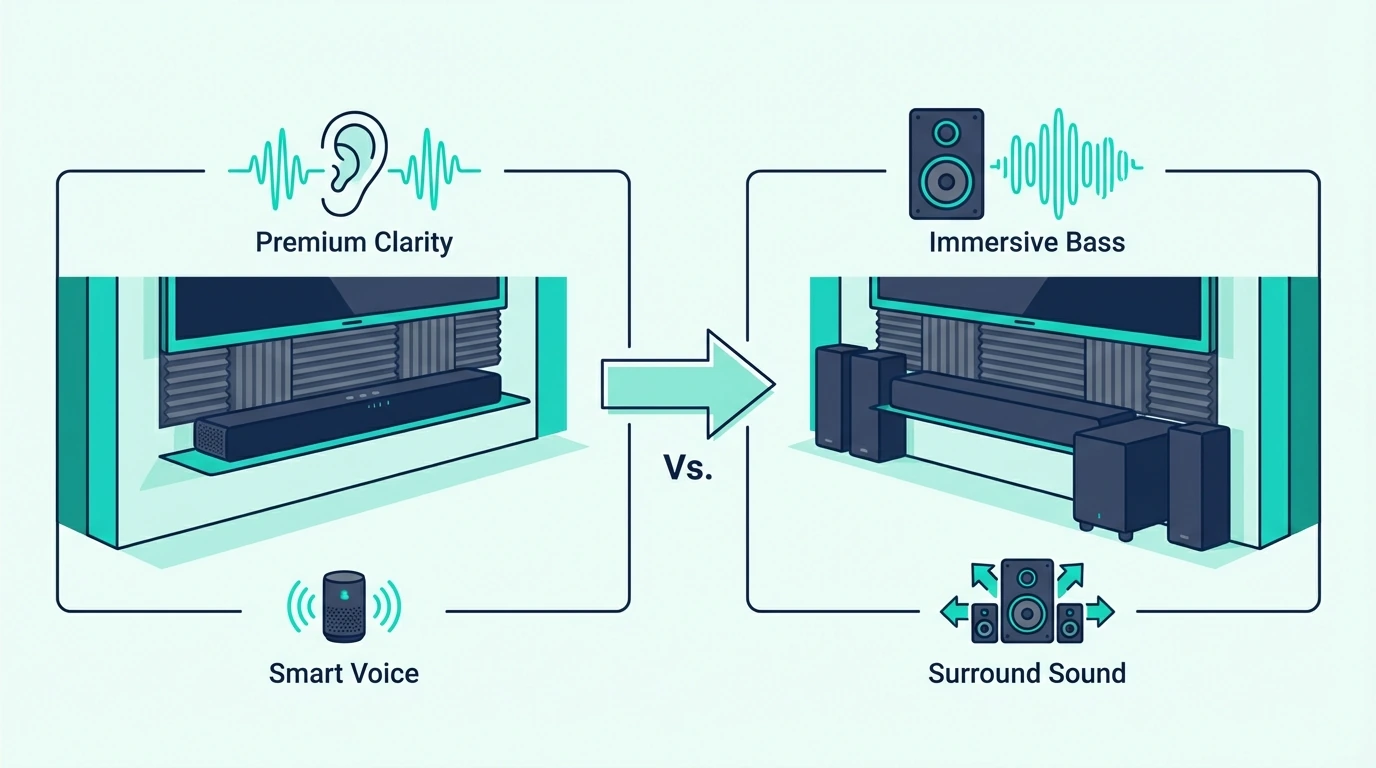
The core difference between Bose and Vizio is not just price. Bose tends to spend the budget on tuning, processing, and polish, while Vizio tends to spend it on more channels, bigger bundles, and stronger spec-sheet value. Knowing which approach matters more to you prevents the common mistake of buying the wrong kind of soundbar, not just the wrong model.
Bose: Premium Tuning, Compact Design
Bose soundbars are engineered for audio refinement above all else. Their signal processing delivers balanced frequency response, strong dialogue intelligibility, and room-filling sound from compact enclosures that often sound bigger than they look.
That polish extends beyond raw sound. Bose software support, app stability, and the general day-to-day feel of the product are usually more consistent than what you get from cheaper value brands, which matters more over a few years of ownership than a spec sheet suggests.
The tradeoff is that Bose’s lower-priced models ship as simpler front bars without the wireless subwoofer-and-rear package Vizio often includes at similar prices. Stepping up to Bose systems with more cinematic scale usually means paying a meaningful premium.
A current example is the Bose Smart Soundbar 600, which fits the brand’s cleaner, smarter, and more refined side of the comparison.
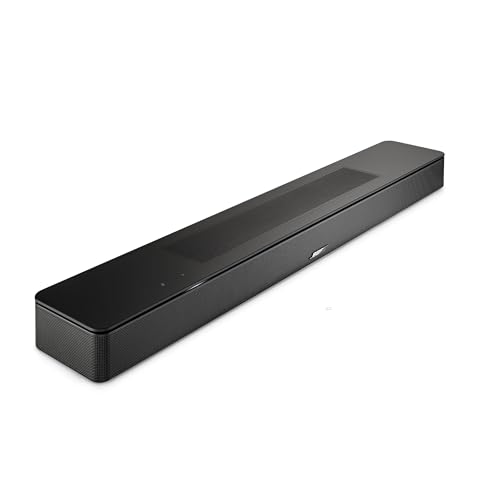
Bose Smart Soundbar 600
For dialogue-heavy viewing in small rooms, Bose’s compact bars punch well above their size. For movie immersion in larger rooms, the lack of included subwoofer and surrounds at lower price points limits the experience.
That is why Bose often feels like the “nicer” brand even when the hardware sheet looks less aggressive. You are paying for a smoother day-to-day experience, more polished dialogue tuning, and a product that usually feels more premium in a bedroom, apartment living room, or mixed TV-and-music setup where outright theater scale is not the priority.
Our Sonos vs Bose soundbar comparison covers how Bose stacks up against another premium brand, and our Bose vs Samsung soundbar guide compares Bose with Samsung’s mid-range approach.
Vizio: Maximum Features Per Dollar
Vizio takes the opposite approach: maximum features per dollar. The brand is far more willing to include a wireless subwoofer, surround channels, and Atmos branding at prices where Bose is still selling a cleaner but simpler front bar.
That makes Vizio especially compelling if your room is large enough to benefit from more hardware. A good 5.1 package can throw a wider, more enveloping field than a compact premium bar, even if the tonal balance and software polish are not as refined.
A current example is the VIZIO 5.1 Soundbar SE, which fits the exact more-hardware-for-the-money argument better than Vizio’s cheaper bar-only models.
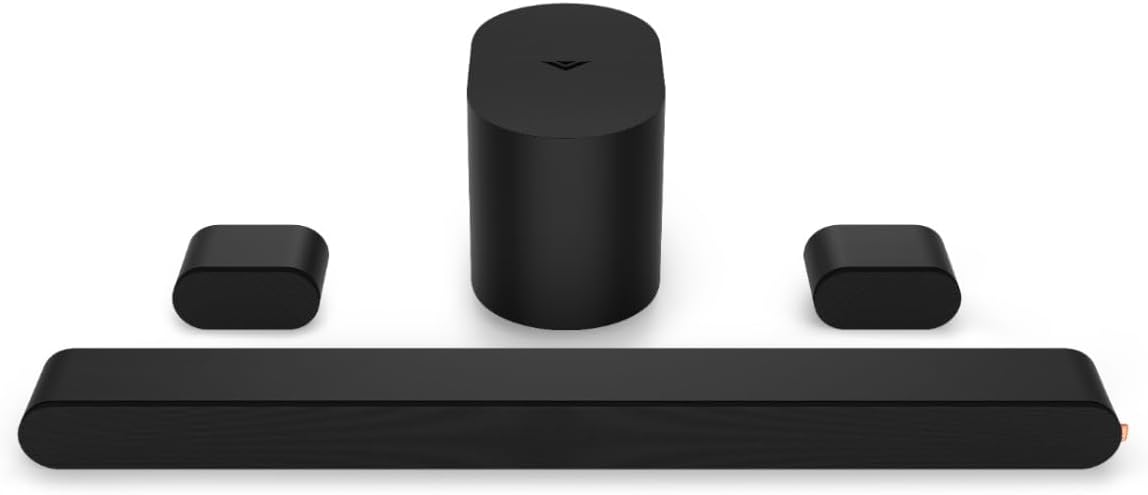
VIZIO 5.1 Soundbar SE
The tradeoff is that Vizio’s tuning can sound less balanced than Bose’s processing. Dialogue is not always as clean in dense soundtracks, bass can feel looser, and the software ecosystem has historically been less consistent over time.
Vizio also asks you to be honest about setup tolerance. More channels, a separate subwoofer, and rear speakers can absolutely produce a bigger movie experience, but they also mean more pieces in the room, more placement variables, and a higher chance that the system feels cluttered if you really wanted a compact, low-fuss upgrade.
Our Samsung vs Vizio soundbar comparison covers how Vizio competes with Samsung’s value approach, and our what soundbar channels mean guide explains the channel configurations both brands offer.
Which Brand Fits Your Room and Long-Term Priorities Better?

Beyond audio quality and feature differences, Bose and Vizio suit different room sizes, viewing habits, and ownership expectations. Those practical factors often matter more than raw audio performance once you live with the system every day.
Small Rooms and Dialogue: Bose Excels
For bedrooms, offices, and small living rooms under 200 square feet, Bose’s compact soundbars make a stronger case. The balanced tuning and dialogue focus can make TV audio feel fuller and clearer without needing a subwoofer to do all the work.
For this type of smaller, dialogue-first setup, a current example is the Bose Smart Ultra Soundbar, which shows what Bose does best at the premium end. Even without winning on raw hardware count, it demonstrates how Bose prioritizes clean vocal presence, polished processing, and easy daily use over spec-sheet bulk.
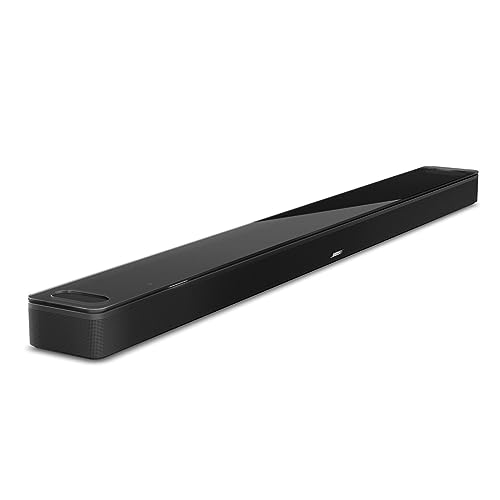
Bose Smart Ultra Soundbar
Bose also tends to age better as an ownership experience. More reliable firmware, better support, and sturdier materials matter if you want one soundbar to last for years instead of just looking good on day one.
That long-term angle matters more than many buyers expect. A soundbar is one of those purchases where you stop thinking about the spec sheet after the first week and start caring about whether the app stays stable, the remote behaves predictably, and the product still feels dependable after months of nightly use.
Our best Bose soundbar guide breaks down the lineup, and our soundbar vs speakers comparison explains when dedicated speakers outperform either brand.
Large Rooms and Movies: Vizio Delivers More Coverage
For medium-to-large living rooms where you want surround immersion for movies and gaming, Vizio’s bundled 5.1-style systems usually make more sense. A wireless subwoofer and rear channels do more to fill a 300-plus-square-foot room than a cleaner but simpler front bar.
That is where Vizio’s value thesis becomes real rather than theoretical. You are not just saving money — you are often getting the kind of hardware layout that better suits the room and the content you watch most.
If movie immersion and gaming surround are your primary use cases, Vizio’s approach means a more complete audio system for large-room entertainment at price tiers where Bose still expects you to pay extra for bass and expansion.
That does not mean Vizio wins every large room automatically, but it does mean the brand often starts closer to the hardware layout those rooms actually need. If your couch sits far from the TV or you want action scenes to feel broader and heavier without building a full receiver-based setup, Vizio’s bundle-first strategy is usually easier to justify.
Our best Vizio soundbar guide shows the brand’s strongest value options, and our soundbar vs home theater comparison covers the full surround-sound upgrade path.
Build Quality and Software: The Hidden Difference
One factor that rarely appears on spec sheets but often affects satisfaction is software polish. Bose soundbars use better materials, more stable wireless behavior, and generally cleaner app and firmware support, which makes the product feel more finished over time.
Vizio can still be the smarter value, but its software ecosystem has historically been less consistent. That does not erase the value proposition, yet it matters if you want a set-it-and-forget-it experience instead of the most hardware at the lowest price.
Our HDMI vs optical guide explains connection options for both brands, and our soundbar to TV connection guide covers setup for any soundbar system.
Get Studio Tips Weekly
Join 5,000+ creators getting acoustic treatment advice every week.
No spam. Unsubscribe anytime.The Bottom Line
Choose Bose for small-to-medium rooms, dialogue-focused viewing, music listening, and long-term ownership where refinement and reliability matter most. Bose delivers premium audio polish from compact designs that reward buyers who care more about clean tuning than raw channel count.
Choose Vizio for larger rooms, movie-heavy viewing, gaming surround, and budget-conscious buyers who want maximum channels, a wireless subwoofer, and stronger immersion per dollar. Vizio delivers more cinematic hardware at the same price tiers where Bose often expects you to pay extra for bass and expansion.
Our do you need a soundbar for smart TV guide helps evaluate whether either brand upgrade makes sense, and our best soundbar guide shows where both brands fit in the broader market.
Frequently Asked Questions
Is Vizio better than Bose?
Vizio offers more features per dollar (more channels, included subwoofers, Dolby Atmos at lower prices), but Bose delivers superior audio tuning, dialogue clarity, build quality, and long-term software support. Vizio is “better” for budget-conscious buyers wanting maximum surround coverage; Bose is “better” for buyers prioritizing audio refinement and premium reliability.
Does Vizio have good soundbars?
Yes — Vizio makes some of the best value-oriented soundbars available, offering 5.1 surround systems with wireless subwoofers and Dolby Atmos at price points that significantly undercut premium brands like Bose and Sonos. For budget-conscious buyers who want maximum features per dollar, Vizio’s M-Series and V-Series represent excellent choices.
What brand has the best soundbars?
No single brand is “best” for everyone — Bose and Sonos lead in premium audio quality and build, Vizio and Samsung offer the best features-per-dollar value, and Sony and JBL bridge the gap with premium audio at competitive prices. The best brand for you depends on whether you prioritize audio refinement, feature count, price, or long-term ecosystem support.