How to Soundproof a Room Cheaply, Starting With the Gaps
If you want to know how to soundproof a room cheaply, start with the air gaps around the door and window, because a federal noise guide shows a crack 16 inches long can cut a good wall’s rating by 10 points.
You stuck foam squares on the wall, hung a blanket over the window, and you can still hear every word of the TV next door.
Spend the first money on seals instead, and the same wall, door and window start blocking the sound they were built to block.
This guide covers the low-cost fixes that work and why, what each one costs at a named seller, and the cheap tricks that don’t block anything.
Start with the leak test below, then work down the list until the room is quiet enough or the next fix stops being cheap.
Cheap soundproofing works when it closes gaps: a door sweep, weatherstripping on the door stop, caulk at trim and window frames, and keeping the windows shut and locked. HUD and National Bureau of Standards figures show how much a small gap costs a wall, and each of those fixes costs under $20 at the sellers below. Rugs and curtains only cut echo, and foam, egg cartons and blankets add almost no weight, so they don’t stop sound coming through. If voices still get in after sealing, the next step is mass, such as a solid-core door, and that’s where cheap ends.
How to Soundproof a Room Cheaply, Step by Step
That takeaway comes down to one rule: block the air paths first, because sound gets through a gap far more easily than through a solid wall. To soundproof a room cheaply, find where the noise leaks in, seal the gap under and around the door, caulk the cracks at trim and window frames, keep windows closed and locked, and only then pay for mass where the room is still weakest.
Here’s the order, with the figure HUD or the National Bureau of Standards (NBS) gives for each step:
| Step | What you do | The figure behind it | Rough cost |
|---|---|---|---|
| 1 | Find the leaks by ear and by light | A 1-inch-square hole drops an STC 50 wall to STC 40 (HUD) | Free |
| 2 | Seal under and around the door | A hollow-core door in a STC 48 wall leaves the wall at STC 24 (HUD) | A sweep and a roll of seal |
| 3 | Caulk trim, outlets and window frames | NBS says to seal or caulk every opening through the walls | A tube of sealant |
| 4 | Close and lock the windows | A casement window rated STC 17 unlocked and 31 sealed (NBS data) | Free |
| 5 | Move the bed and use soft furnishings | A bedroom on the quiet side of the house is about 10 dB quieter (NBS) | Free |
| 6 | Add mass at the weakest opening | A sealed solid-core door with carpet left the same wall at STC 33 (HUD) | Where cheap ends |
Steps 1, 4 and 5 cost nothing, and steps 2 and 3 come to under $50 at the sellers listed below. Think of the room as a bucket with holes in it: a thicker bucket won’t hold water until the holes are plugged.
Where Is Sound Getting Into Your Room?
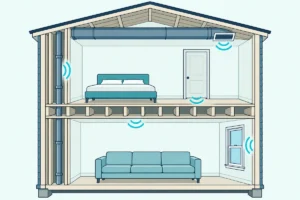
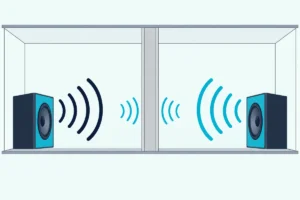
That bucket picture explains why the first step is finding the holes rather than buying anything. Sound gets into most rooms through the gaps around and under the door, the window frame, and openings in the walls, and HUD’s Noise Guidebook shows how much a small one costs: a one-inch-square hole, or a crack 1/16 inch wide and 16 inches long, will reduce an STC 50 wall to STC 40.
STC is the lab rating for how well a wall, door or window blocks airborne sound. On the NBS privacy scale, STC 50 means shouting next door is barely audible, and STC 40 means loud speech comes through, just not clearly.
The NBS handbook on quieting a home names the usual weak points inside a home: thin hollow-core doors, open air spaces under doors and light interior walls.
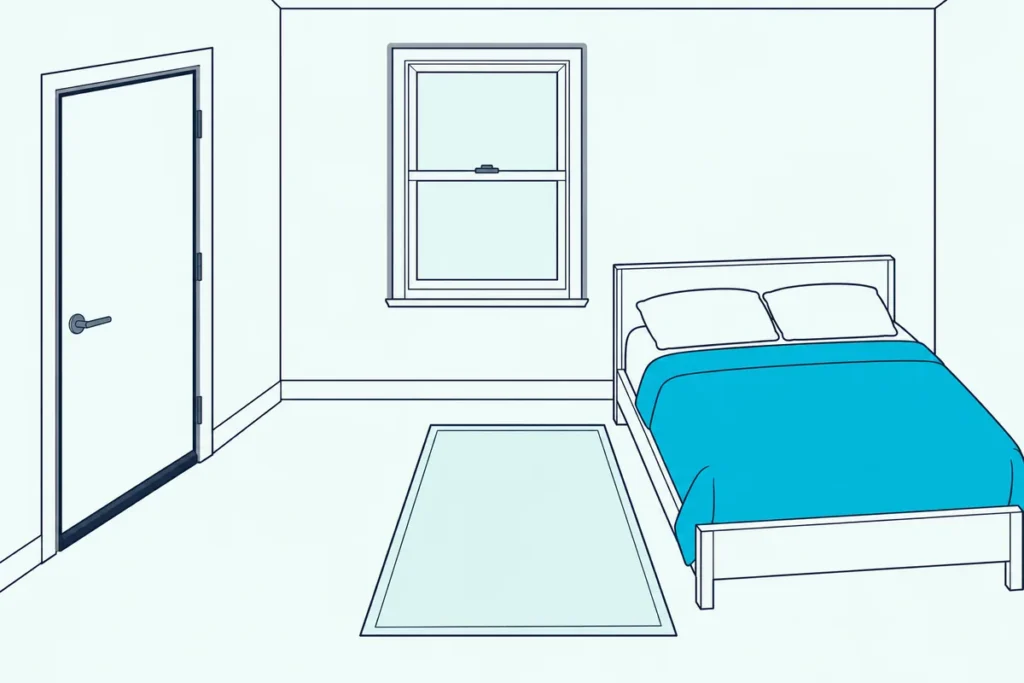
Here’s a five-minute test. Turn off the room lights while the hall is lit and look for light under the door, around its edges and at the window frame, because where light gets through, air and sound do too.
Then, while the noise is going, put your ear close to the door edges, the window frame, the outlets and the baseboard. Wherever it’s loudest is where your first few dollars go.

Get Studio Tips Weekly
Join 5,000+ creators getting acoustic treatment advice every week.
No spam. Unsubscribe anytime.How Do You Seal a Door Cheaply?
That light test usually points at the door first, so the door is the first place to spend. HUD’s guidebook calls doors even weaker than windows: a common hollow-core wood door rates STC 17, and filling about 20% of a wall rated STC 48, it brings the whole wall down to STC 24.
The cheapest fix is to close the gap under the door. A door sweep, a strip of rubber, vinyl or brush fixed to the bottom of the door, is the quickest and easiest seal to install, according to the weatherstripping maker Frost King’s door sweep guide.
Frost King says most sweeps go on the inside face of the door, since most doors swing in, and that a sweep shouldn’t drag across the threshold as the door moves. It also says to add weatherstripping to the top and sides of the frame, not just a sweep at the bottom.
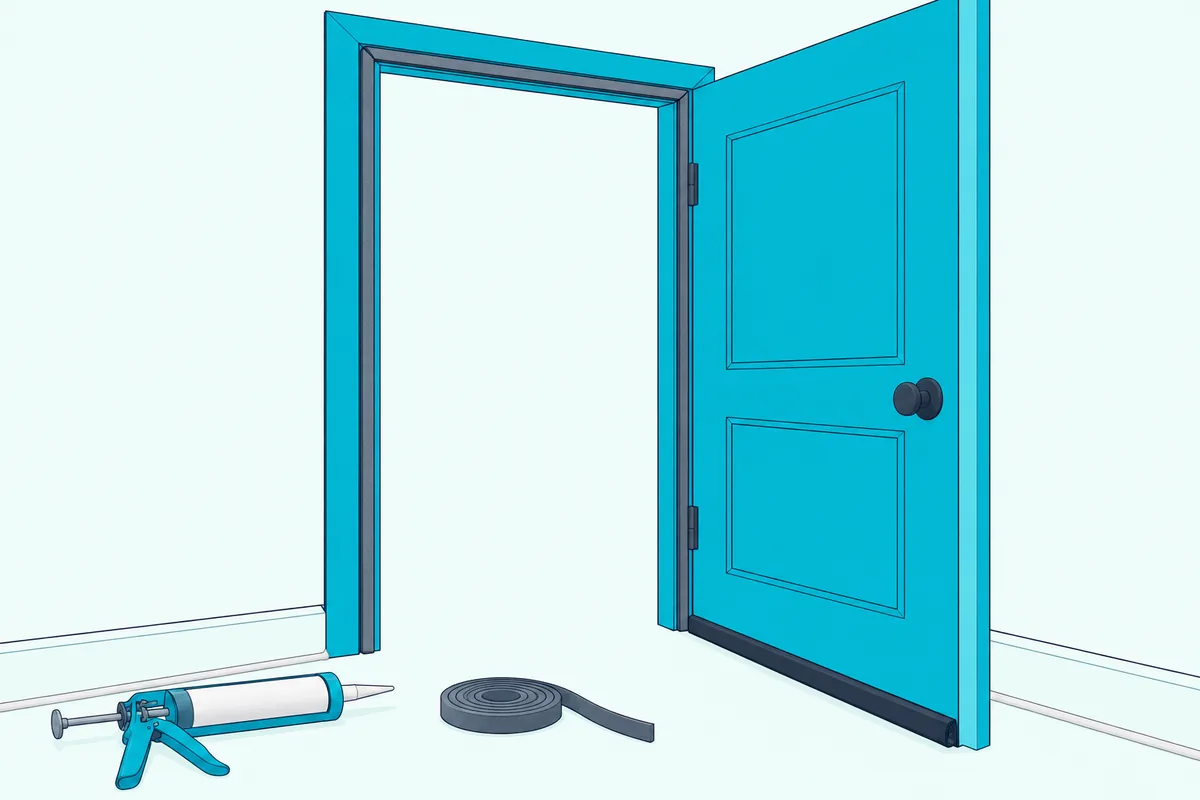
For the sides and top, a self-adhesive strip pressed onto the door stop seals the edges when the door closes. The 33 ft self-adhesive weather stripping for doors and windows is sold for exactly that job, 0.35 inch wide and 0.2 inch thick.
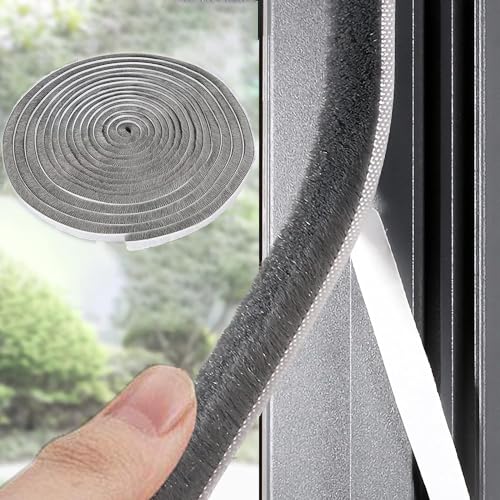
33 ft self-adhesive weather stripping for doors and windows
For the bottom, a sweep or a slide-on draft stopper closes the gap you saw light through. The HomeProtect 36 inch under-door draft stopper is one; every product on this page had at least 4.0 stars and 50 reviews on Amazon and was in stock on 20 October 2026, and prices aren’t shown because they change.
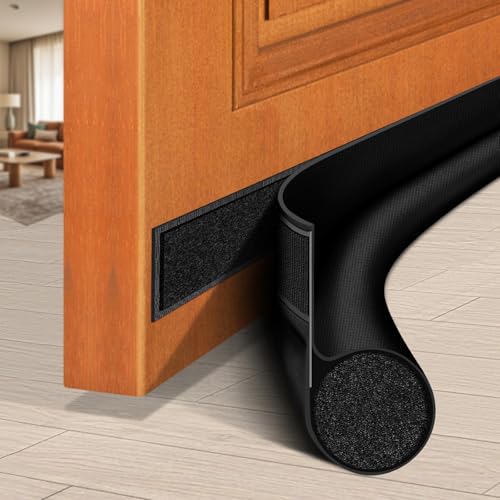
HomeProtect 36 inch under-door draft stopper
HUD’s guidebook says a solid-core wood door with a vinyl seal around its edges and carpet on the floor leaves that same wall at STC 33, nine points better. Part of that is the heavier door, but no door performs while its gaps are open, and the how to soundproof a door guide covers the heavier seals and slabs.
What Should You Caulk, and What Does It Cost?
That same rule, no light and no air, carries on past the door to the rest of the room. The NBS handbook’s list for keeping noise out says to seal or caulk all openings through the walls, particularly around water and gas pipes, electrical cables and refrigerant lines, and to cover mail slots and fit hinged covers on dryer, bath and kitchen vents.
Inside the room, the usual targets are the joints where trim meets the wall or floor, gaps around window frames, and the edges of outlet boxes on a wall you share.
The 29 oz acoustical caulk tube is listed as Green Glue’s acoustical sealant for sealing gaps, which is the job here. Installing it takes a caulk gun and an afternoon.
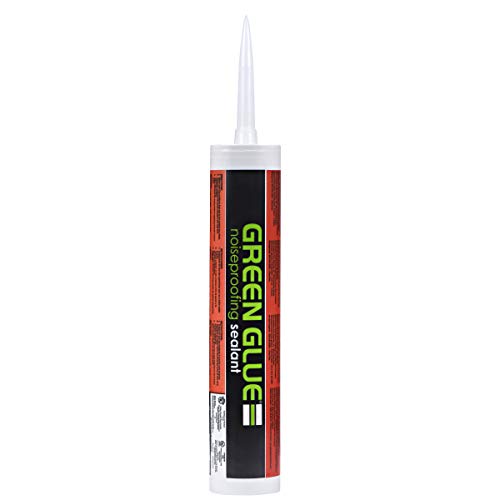
29 oz acoustical caulk tube
That HUD crack from earlier, 16 inches long and 1/16 inch wide, is the kind of gap you find along a stretch of baseboard. The how to soundproof a wall guide covers outlet boxes and added layers once the gaps are done.
Do Closed Windows Block More Noise Than You Think?
Those caulked frames lead straight to the window, which the NBS handbook calls the weakest barrier in the outside walls of most homes. NBS figures in Owens Corning’s assembly guide show an aluminum casement window rated STC 17 unlocked, 21 locked and 31 sealed, so simply locking it and sealing its frame was worth 14 points.
A wood double-hung window in the same tables rated STC 23 unlocked and 29 sealed. Locking costs nothing, which makes it the cheapest soundproofing in the house.
The NBS handbook gives the next steps up: locked double-hung windows cut outside noise by about 18 dB, a storm window raises that to about 24 dB, and caulking both the window and the storm window improves the high frequencies about 3 dB more. Indow, a maker of interior inserts, listed its noise-blocking Performance Grade at $44 per square foot MSRP, “just $470 for an average window”, on 15 October 2026.
If traffic is your main problem, see how to block outside noise and how to soundproof windows.
Which Free Fixes Actually Make a Room Quieter?
That 14-point gain from locking a window was free, and a few more fixes cost nothing but some moving around. The biggest free one comes from the NBS handbook: a bedroom on the side of the house away from the noise can be about 10 dB quieter, and one on a partly shielded side about 6 dB quieter.
You may not be able to swap bedrooms, but the same idea works inside one room. Move the bed or desk away from the door, the window or the wall the noise comes through, but expect a small gain: NBS says that indoors, past the area right next to the source, each doubling of distance cuts only 1 or 2 dB.
Closets and hallways help too. HUD’s guidebook describes “dead” spaces such as closets and corridors as buffer zones between noisy and quiet rooms, so a closet along the noisy wall works in your favor.
Background sound is the last free trick. The GSA, the US government’s buildings agency, lists masking noise with non-disruptive background sound beside blocking and absorbing it, so a running fan can cover what still leaks in, in a bedroom or a home office.
Do Rugs, Curtains and Soft Furniture Help?
That background-sound trick covers noise, and soft furnishings work a different way: they soak up sound inside the room. The NBS handbook says carpets, drapes and acoustic tile can reduce the noise level in most rooms by about 5 to 10 dB for high-pitched sounds, but only 2 or 3 dB for low-pitched ones.
That cut applies to sound bouncing around inside your room, not sound arriving through the wall. The same handbook warns that sound-absorbing materials are light and porous and shouldn’t be used with the sole intention of stopping sound reaching the next room, and compares them to blotting paper, which no one would build a swimming pool from.
Rugs are the exception for one kind of noise. If you’re the one upstairs, a thick carpet and pad on your floor muffle footsteps well: in NRC Canada’s figures, a concrete slab rates IIC 28 bare and 75 to 85 with carpet and underlay, where IIC 50 is the usual minimum for satisfied occupants.
Owens Corning adds the catch: carpet and pad greatly improve a floor’s impact rating but change its airborne STC very little, because they add almost no weight. So a rug helps the neighbor below you, and it won’t stop voices coming up.
Curtains help darken and soften a room, not stop street noise. For footsteps from above, see how to soundproof a ceiling and how to soundproof a floor.
Why Don’t Foam, Egg Cartons or Blankets Block Sound?
That rug catch, no weight and no change in STC, is the same reason the most popular cheap tricks fail. Foam, egg cartons and blankets absorb some sound inside the room, but they add almost no weight and close no gaps, and Owens Corning’s guide says every doubling of a wall’s weight adds only about 5 to 6 dB of sound transmission loss.
A moving blanket shows the scale. VocalBoothToGo lists its 72 x 80 inch moving blanket at about 5 pounds, which works out to roughly 0.13 pound per square foot, while the solid-core door in Owens Corning’s tables weighs 3.9 pounds per square foot.
So a blanket weighs about 3% as much per square foot as that door, nowhere near the doubling that buys 5 or 6 dB. For the full numbers, see what moving blankets really stop and why egg trays won’t quiet a room.
Foam works the same way: it’s an absorber, so it cuts echo and harsh reflections inside the room and does little for noise coming through. Our page on the job acoustic foam really does covers where foam is worth it.
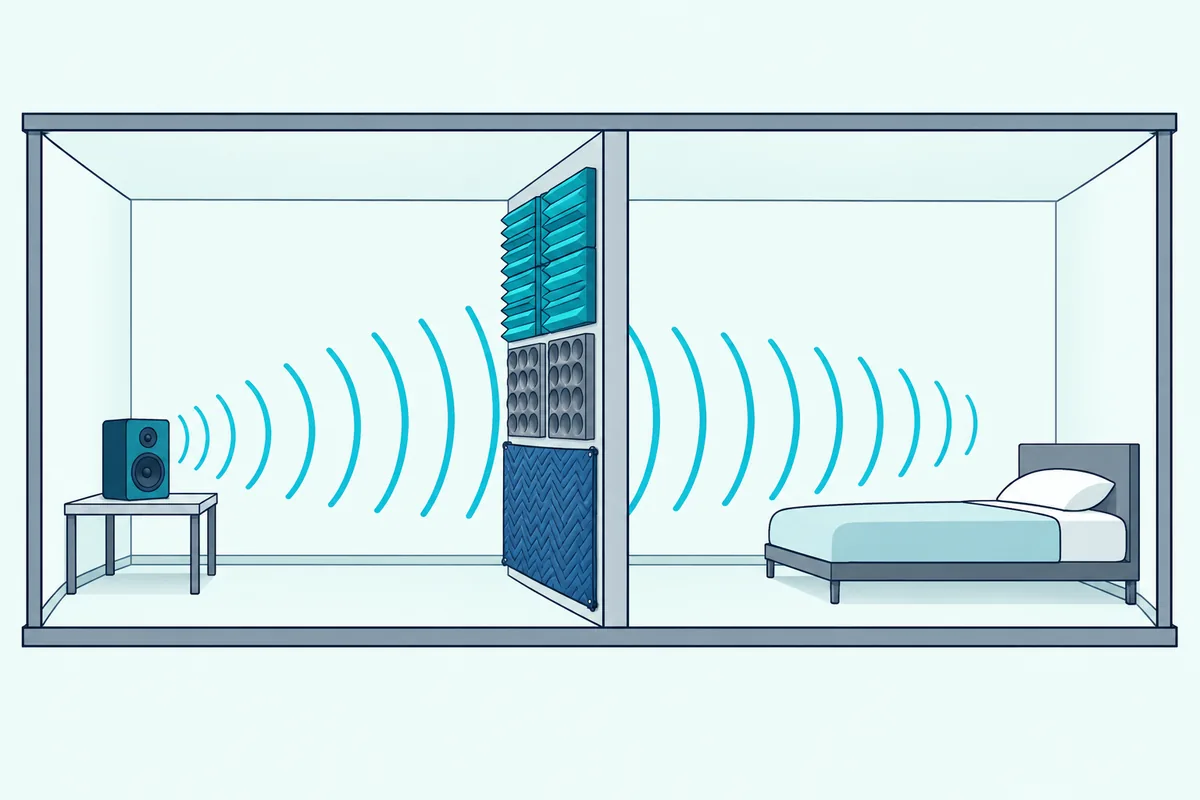
Coatings and wall coverings fail the same weight test. For paint, one coating moved a bare steel-stud wall only 2 to 3 STC points in an accredited lab, as our answer to does soundproof paint work explains, and Burton Acoustix’s soundproof wallpaper breakdown shows felt wallpaper adds under 1 dB of blocking to 5/8-inch drywall.
Can You Soundproof a Room Without Damaging the Walls?
Those failed tricks are popular with renters because they look reversible, but most of the fixes that do work are reversible too. A slide-on draft stopper, self-adhesive weatherstripping, closed and locked windows, moving the bed, a rug and background sound all come off or move out with you.
Caulk and a screwed-on sweep change the building, so in a rental they’re worth asking about first.
Open rooms are harder. If your room has an open doorway or arch with no door at all, that opening is the biggest hole in the bucket, and no seal can close it, so the cheap fix stops at furniture placement and background sound until a door goes in.
For more renter-safe ideas, see these fixes for a rental room and the guide on how to soundproof an apartment.
How Much Does Cheap Soundproofing Cost?
That renter list is mostly free, and the paid steps start small. These are the sellers’ own listed prices, read on 15 October 2026, plus one named cost survey’s ranges; they change, so check before you buy.
| Fix | Example | Price and source |
|---|---|---|
| Door sweep, 36 in. | Frost King UDB77 slide-on sweep | $18.99, Alpers True Value Hardware |
| Door and frame weatherseal, 17 ft | Frost King V25WA EPDM rubber | $11.99, Alpers True Value Hardware |
| Acoustical sealant, 28 oz tube | IsoStore acoustical sealant | $18 per tube, IsoStore |
| Automatic door bottom, 36 in. | PDB surface-mount | $120, IsoStore |
| Interior window insert | Indow Performance Grade | $44 per sq ft MSRP, about $470 a window (Indow) |
| Professional soundproofing, existing room | Contractor, labor included | $10 to $30 per sq ft (Fixr, updated 31 Jan 2025) |
The first three rows come to under $50 for one door and its frame, and the rest are the step up. Fixr’s survey puts installed door soundproofing at $20 to $4,000 and windows at $15 to $1,500, seals at the bottom and new units at the top; the full breakdown is in how much it costs to soundproof a room.
When Do Cheap Fixes Stop Working?
Those price ranges jump for a reason: once the gaps are closed, the only way to block more is mass or separation. Cheap fixes stop working when the noise is bass, footsteps or music through a sealed wall, which is why a room for music practice needs a real build.
The door is still the best value step up. HUD’s guidebook calls a sealed solid-core wood door “relatively inexpensive”, and its example shows it taking a wall from STC 24 with a hollow door to 33; the guidebook adds that gasketed stops or a drop-bar threshold closer at the bottom raise that further.
For walls, a second layer of drywall or a decoupled layer is construction, not a weekend DIY job. The how to soundproof a room guide ranks those builds, and the best soundproofing material and best insulation for soundproofing pages compare what goes into them.
Low-pitched sound is the hardest case. NRC Canada’s acoustician Warnock writes that low frequencies pass through walls much more easily than high ones, and that leaks usually let through only high-frequency sound, so sealing won’t touch a neighbor’s subwoofer and absorbers cut low sounds by only 2 or 3 dB, per NBS.
The Bottom Line
The cheapest way to soundproof a room is to stop air from getting in: seal under and around the door, caulk the gaps, and close and lock the windows.
HUD and NBS figures show gaps can cost a wall 10 STC points and an unlocked window 14.
Rugs and curtains cut echo, not noise from outside the room, and foam, egg cartons and blankets add too little weight to block anything.
When the noise still wins, put the next money into one heavier door or window, not more accessories.
Frequently Asked Questions
How do you block noise from a shared wall?
Start at the edges and openings, not the wall itself. Seal the baseboard gaps and outlet box edges on the shared wall with acoustical caulk, and check the door and window, because a leak there can sound like it’s coming through the wall. HUD’s Noise Guidebook shows a crack 16 inches long and 1/16 inch wide can drop an STC 50 wall to 40. Then move the bed away from the wall and add background sound. If voices still come through, the wall needs mass or a decoupled layer, which is construction.
How do you soundproof a room for snoring?
Snoring is airborne sound, so it reaches you the same way voices do: under and around the door, and through a hollow door. A sweep under the bedroom door and weatherstripping on its frame close those gaps, and HUD rates a common hollow-core door at only STC 17, so the door is the place to start. Background sound from a fan can cover what’s left, which the GSA lists as a way to deal with noise alongside blocking it. Earplugs are the cheapest option of all if the snorer is in the same room, since no seal helps then.
How do you soundproof a room that’s already built?
Work on what you can reach without opening walls. Seal the door with a sweep and weatherstripping, caulk the trim and window gaps, and keep windows locked, since NBS rated a casement window STC 17 unlocked and 31 sealed. Add rugs for echo and footsteps and move furniture away from the noisiest side. After that, the next steps for a finished room are a solid-core door, a window insert or a second layer on one wall.
How do you block sound between rooms?
Treat the door first, because HUD says any door reduces the insulation of the wall around it. NBS lists thin hollow-core doors and open gaps under doors among the reasons rooms in a home lack privacy. A sweep and weatherstripping close the gaps, and a solid-core door adds mass if you need more. Then caulk any back-to-back outlets and the trim on the shared wall, and keep the noisy room’s door shut.