Samsung puts a subwoofer in the box and links to Samsung TVs, while Bose sells one-piece bars that leave bass and rears for later.
Products in this guide
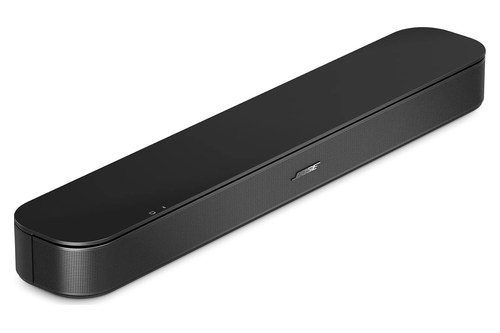
- HDMI cable in the box, with HDMI-CEC for your TV remote
- A 23.47-inch bar with nothing else to place
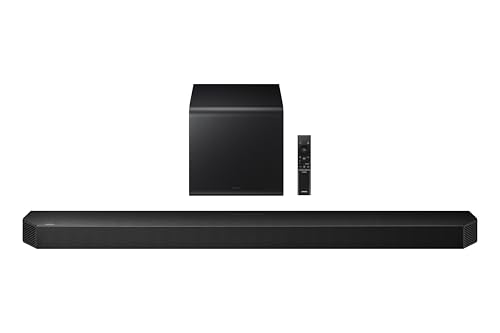
- Subwoofer in the box for 5.1.2 channels
- Q-Symphony with a compatible 2020-2025 Samsung TV
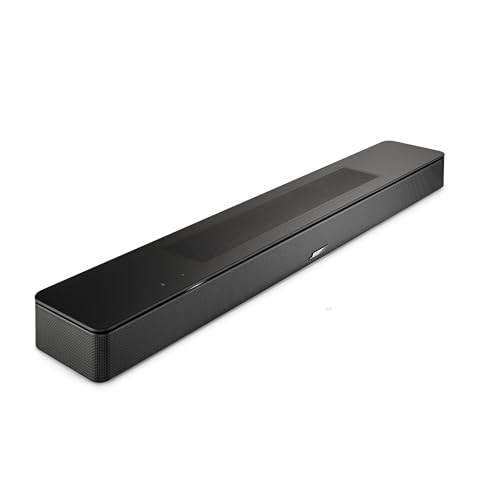
- Up-firing speakers, with Dolby Atmos over HDMI eARC or ARC
- Alexa built in, plus AirPlay 2, Chromecast built-in and Spotify Connect
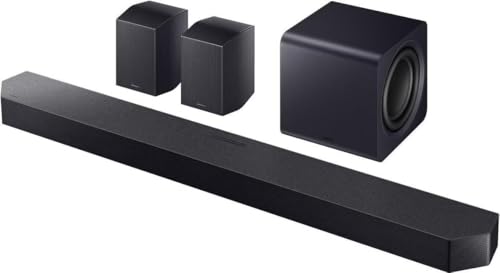
- Subwoofer and two surround speakers in the box for 11.1.4 channels
- Two HDMI inputs that list 4K at 120 frames a second
Choosing a Bose vs Samsung soundbar by reputation misses the split the makers’ own pages show: Samsung puts a subwoofer in the box with its Q-Series bars and saves Q-Symphony for Samsung TVs, while every Bose bar leaves the subwoofer out.
Go by the badge and the surprises show up at home, when your console has nowhere to plug in or a headline feature needs a TV you don’t own.

Match the range to your TV and your room, and either maker documents a path from a simple TV upgrade to Dolby Atmos height.
The short answer and two tables come first, then the bars paired by size, from Bose’s TV Speaker and Samsung’s HW-B400F up to the Lifestyle Ultra and HW-Q990F.
The buying section ends with four picks by room and TV, and what each choice leaves you to add later.
Are Bose Soundbars Better Than Samsung?
That split is where the answer starts. Bose soundbars aren’t better than Samsung’s across the board, or worse: Samsung offers more channels, an HDMI input on its Q-Series and a link to its own TVs, while Bose offers one-piece bars from 23.38 to 43.28 inches that leave the bass and rear speakers for later.
RTINGS, the lab behind more than 250 soundbar tests, draws a similar line on its Bose page. It says Samsung’s bars tend to have more customization features and more physical inputs for video, while Bose’s use signal processing to carry sound past the edges of the bar.
Neither maker’s manuals can settle which has the better sound quality. A scene you know, played at your usual volume in your own room, is the test that answers that part.
The descriptions come from the makers’ manuals and spec pages. Bose’s home theater page lists five soundbars: the TV Speaker, the TV Speaker (2nd Gen), the Smart Soundbar, the Smart Ultra Soundbar and the Lifestyle Ultra Soundbar.
Samsung’s spec sheets split its range into the Q-Series, S-Series and B-Series, and its guides run from the HW-B400F, with 20 W per channel, to the 11.1.4-channel HW-Q990F. So the choice comes down to three questions: does your TV say Samsung, do you want every speaker in one box, and do your console and streaming box plug into the TV or the bar?
How Does a Bose vs Samsung Soundbar Compare Side by Side?
Those three questions map onto a short list of differences you can check on each maker’s own pages. A Bose vs Samsung soundbar comparison comes down to what’s in the box, the TV link, the inputs, room tuning and the apps, as the table shows brand by brand.
| Feature | Bose: TV Speakers, Smart Soundbar, Smart Ultra, Lifestyle Ultra | Samsung: HW-Q990F, Q930F, Q800F, Q600F, S-Series, B-Series |
|---|---|---|
| Subwoofer in the box | None; Bass Module 500 or 700 or Lifestyle Ultra Subwoofer sold separately | HW-Q990F, Q930F, Q800F, Q600F, S800D, B750F, B550F |
| Rear speakers in the box | None; sold separately or in Bose’s sets | HW-Q990F, Q930F |
| Dolby Atmos | Smart Soundbar, Smart Ultra, Lifestyle Ultra | Q-Series, S-Series; not the HW-B750F, B550F or B400F |
| DTS | Not named in Bose’s owner’s guides | DTS:X on the Q990F and Q800F; DTS Virtual:X or DTS on the others |
| Sound shared with the TV | None in Bose’s owner’s guides | Q-Symphony, with a supporting Samsung TV |
| Wireless link to the TV | None in Bose’s owner’s guides | Wi-Fi, on a Samsung TV only |
| TV connection | HDMI eARC or ARC; optical on all but the Lifestyle Ultra | HDMI eARC or ARC; optical on all but the S800D and S700D |
| HDMI input for other sources | None on the Smart Ultra; Bose’s FAQ sends sources to the TV | Two on the Q990F; one on the Q930F, Q800F, Q600F and B750F |
| Room calibration | ADAPTiQ on the Smart Ultra, CustomTune on the Lifestyle Ultra | SpaceFit Sound Pro on the Q990F, Q930F and Q800F |
| Dialogue tools | Dialogue mode, A.I. Dialogue Mode, SpeechClarity | AVA Pro, Voice Enhance |
| App | Bose app; none for the original TV Speaker | SmartThings on the Q990F, Q930F and Q800F; Samsung Sound on the 2026 bars |
| Built-in voice assistant | Alexa on the three Wi-Fi bars | Alexa on the Q800F’s spec sheet; none on the B750F’s |
| Remote in the box | Yes, except the Lifestyle Ultra | Yes |
| Warranty | 1 year | 1 year parts and labor in the US manual for the B750F |
Read down Samsung’s column and the case is about hardware in the box and the link to its own TVs. Read down Bose’s and it’s about one cable to the TV, a short range and the software around the bar.
Which Bose and Samsung Soundbars Match Up by Size?
That brand table hides how far apart the individual bars are. Sorted by width, the two ranges interleave from 23.38 to about 48.5 inches, with Bose’s bars standing alone and most of Samsung’s bringing a subwoofer.
| Bar | Width | The maker’s own count | Subwoofer in the box | Dolby Atmos |
|---|---|---|---|---|
| Bose TV Speaker | 23.38 in | 3 speakers | No | No |
| Bose TV Speaker (2nd Gen) | 23.47 in | Full-range speakers | No | Not named by Bose |
| Samsung HW-B400F | 25.2 in | 20 W per channel, two channels | No | Not listed |
| Bose Smart Soundbar | 27.34 in | 5 speakers and a center tweeter | No | Yes |
| Samsung HW-B550F | 33.8 in | 2.1 channels | Yes | Not listed |
| Samsung HW-Q600F | 40.6 in | 3.1.2 channels | Yes | Yes |
| Samsung HW-B750F | 40.6 in | 5.1 channels | Yes | No |
| Bose Smart Ultra | 41.14 in | 9 speakers and a center tweeter | No | Yes |
| Bose Lifestyle Ultra | 43.28 in | 9 speakers and a center tweeter | No | Yes |
| Samsung HW-Q800F | 43.73 in | 5.1.2 channels | Yes | Yes |
| Samsung HW-Q990F | 48.5 in | 11.1.4 channels, with two rears | Yes | Yes |
Those counts aren’t like for like. Samsung counts channels, so 5.1.2 on its Q800F spec sheet means five main channels, one subwoofer and two up-firing channels, while Bose mostly counts speakers, and our what soundbar channels mean guide breaks down what each of those numbers means.
Bose also suggests a room for most of its bars: 8 ft x 8 ft for the TV Speaker, 10 ft x 12 ft for the Smart Soundbar and 12 ft x 14 ft for the Smart Ultra, with the Lifestyle Ultra listed for all spaces. Samsung’s 2025 Q-Series guides give no room size, so use the TV’s width instead.
Measure the screen before anything else. A 43-inch TV is about 37.5 inches wide, a 50-inch about 43.6 and a 55-inch about 47.9, so the Smart Ultra fits under a 50-inch set, the Q800F runs just past one and the Q990F runs just past a 55-inch.
If Samsung wins that match-up for you, the best Samsung soundbar for each budget narrows its long lineup to seven picks. If Bose does, Bose’s range, bar by bar does the same job for its side.
How Does the Bose TV Speaker Compare With Samsung’s Small Bars?
The narrowest bars in that table answer the simplest question: better TV sound with one cable. The Bose TV Speaker is the simpler choice, at 23.38 inches with three speakers, no subwoofer and no app, while Samsung’s 25.2-inch HW-B400F is a two-channel bar with HDMI ARC and optical ports and its HW-B550F adds a wireless subwoofer.
None of the three lists Dolby Atmos. Bose’s comparison table says No for the TV Speaker, and Samsung’s B400F and B550F manuals list Dolby Audio and DTS.
The TV Speaker connects by optical, with the cable in the box, or by HDMI ARC with a cable you supply. Its remote has Bluetooth, bass and Dialogue mode buttons, and Bose’s TV Speaker FAQ says it takes a Bass Module 500 or 700 by wire and no surround speakers.
The TV Speaker (2nd Gen) keeps the formula at 23.47 inches, with an HDMI cable in the box and the optical cable left out, and Bose says it supports no voice assistants. Amazon’s listing title for it says Dolby Atmos, but Bose’s owner’s guide names Dolby Audio and its store page names neither, so don’t count on height sound.
Samsung’s B550F gives you more to place: a 33.8-inch bar rated at 80 W and a subwoofer rated at 220 W that stands 13.5 inches tall. Its SWA-9250S rear kit, sold separately, takes it to 4.1 channels.
The HW-B750F goes further, with three front and two side-firing channels plus a subwoofer for 5.1 in a 40.6-inch bar. Its spec sheet still reads Dolby Atmos: No, along with Wi-Fi: No and Voice Assistants: No.
Older models turn up in the same comparisons. The Bose Solo Soundbar Series II’s guide offers optical and coaxial connections, RTINGS lists the Solo line as discontinued, and Bose’s home theater page doesn’t list it.
Under a small screen, our comparison of what stepping up from the TV Speaker adds covers the rest of Bose’s ladder.
Should You Pick the Bose Smart Soundbar or Samsung’s HW-Q600F?
One size up, Dolby Atmos height arrives on both sides, in very different shapes. Pick the Bose Smart Soundbar for a 27.34-inch bar with Wi-Fi, built-in Alexa and no other boxes, and pick the Samsung HW-Q600F for a 40.6-inch bar with a subwoofer in the box, an HDMI input and 3.1.2 channels.
Bose’s owner’s guide says the Smart Soundbar uses up-firing and side-firing speakers, and it ties Dolby Atmos to the TV’s HDMI eARC or ARC port, with an optical cable giving what it calls spacious and life-like sound instead. Bose’s TrueSpace processing upmixes stereo and 5.1 content to add a sense of height.
Samsung’s HW-Q600F guide gives 3.1.2 channels for Dolby Atmos with the subwoofer and 5.1.2 with the separately sold SWA-9250S rear kit. It lists DTS Virtual:X rather than DTS:X, and its Q-Symphony link runs over an HDMI or optical cable.
Music is the sharpest split between these two. The Smart Soundbar plays over Wi-Fi with AirPlay 2, Chromecast built-in and Spotify Connect, while the Q600F’s guide has no Wi-Fi setup and uses SmartThings only for Tap View and Tap Sound.
Samsung’s closest match to the Smart Soundbar’s one-piece idea is its S-Series. The HW-S60D’s guide shows a bar with no subwoofer in the box, HDMI (eARC) and optical ports, plus Wi-Fi and Alexa, and it adds an SWA-W510 subwoofer and SWA-9200S rear kit, both sold separately.
The HW-S800D ships with a subwoofer for 3.1.2 channels, and its guide connects the TV through an HDMI to Micro HDMI cable. Our guide to Samsung’s Q, S and B series, side by side sorts out those lines.
Which Is Better, the Samsung Q990 or the Bose Smart Ultra?
At the top of both ranges, the in-the-box split is at its sharpest. The Samsung HW-Q990F is the more complete system out of the box, with a subwoofer and two surround speakers for 11.1.4 channels, while the Bose Smart Ultra is a single 41.14-inch bar with nine speakers that you build on later.
Samsung’s 2025 user guide for the HW-Q990F, Q930F, Q900F and Q800F lists surround speakers in the box only with the Q990F and Q930F, the latter at 9.1.4 channels. Samsung’s Australian page gives the Q990F’s bar as 1,232 mm (about 48.5 inches) wide, with 23 speakers in the set.

Bose’s store page counts nine total speakers on the Smart Ultra, two of them upward-firing, along with Dolby Atmos, A.I. Dialogue Mode and ADAPTiQ room calibration. It takes one or two matching wireless bass modules, Bose’s Surround Speakers 700 connect to it wirelessly, and Bose’s home theater page sells that combination as a set.
The neighbors keep the same shape. Samsung’s 2024 guide gives the HW-Q990D 11.1.4 channels, and its 2026 guide lists surround speakers in the box only with the HW-Q990H and Q930H, so a Q990D vs Bose Smart Ultra question comes out the same way.
Between the Q990F and the Smart Ultra sits the HW-Q800F, with three front, two side-firing and two up-firing speakers plus a subwoofer in a 43.73-inch bar. Samsung’s HW-Q800F spec sheet calls that 5.1.2, and the guide says its optional SWA-9500S rear kit takes it to 7.1.4.
Where Do the Bose 900 and Lifestyle Ultra Fit Against Samsung’s Q990?
Two more Bose names turn up beside those flagships. The Bose Soundbar 900 sits just below the Smart Ultra and the Lifestyle Ultra above it: Bose says the 900 has the Smart Ultra’s features without A.I. Dialogue Mode and calls the Lifestyle Ultra its most powerful and immersive soundbar yet.
The 900 isn’t among the bars on Bose’s home theater page, and its old store address opens Bose’s soundbars category. Against a Q990 it makes the same trade as the Smart Ultra, a bar alone against a full set in one box.
The Smart Soundbar 600 and 700 are in a similar spot. Bose says its current Smart Soundbar is similar in many ways to the 600, adding A.I. Dialogue Mode and Personal Surround, and its 700 page showed a Notify me button in place of a cart on 25 October, so see the 600 and 700 side by side if you’re shopping either one.
The Lifestyle Ultra, which Bose’s 2026 announcement put on sale from May 15, is where Bose comes closest to Samsung’s full-system idea. Bose says that with a pair of Lifestyle Ultra Speakers and a Lifestyle Ultra Subwoofer it supports 7.1.4-channel audio, against 11.1.4 on the Q990F, though you add each piece yourself or buy one of Bose’s sets.
Its add-ons are its own. Bose says it isn’t compatible with the older Surround Speakers or Surround Speakers 700, and it takes a Bass Module 700 only by wire.
It also leaves out the remote the Q990F packs. Bose’s FAQ says the box has no IR remote, because the bar uses your TV’s remote over CEC, and it connects over HDMI eARC, with ARC as the fallback.
Does a Samsung TV Change the Samsung vs Bose Answer?
All of those bars end up under a TV, and here the documents lean one way. It does if your TV is a Samsung: Samsung’s 2025 guide says Q-Symphony plays sound from the bar and a supporting Samsung TV at the same time, over HDMI, optical or Wi-Fi, and Samsung’s TV e-Manual describes it as linking Samsung speakers to the TV’s speakers.

The Q800F’s spec sheet narrows the TVs: Q-Symphony requires a compatible 2020-2025 Samsung TV, and Wireless Dolby Atmos a 2022-2025 one. Smaller bars keep it on a cable, with the Q600F and B750F guides supporting it over HDMI or optical.
The Wi-Fi link is Samsung-only too. The guide says a Wi-Fi connection is only available on a Samsung TV, where you pick Soundbar Q-series (Wi-Fi) under Sound Output, and some Samsung TVs can also switch on room tuning through their own Adaptive Sound+ menu.
If you own a compatible Samsung TV, Samsung’s bars start with a link Bose’s guides don’t offer, though Burton Acoustix’s Bose-on-Samsung setup guide shows a Bose bar can still share the TV’s remote.
Bose’s guides ask for the TV’s HDMI eARC or ARC port if you want your TV remote to run power, volume and mute. Our soundbar to TV connection guide covers the cable steps for either maker.
What If You Don’t Own a Samsung TV?
Take the Samsung TV away and those extras drop off Samsung’s side of the table. Either brand still connects over HDMI eARC or ARC, and most bars over optical, but Q-Symphony and the Wi-Fi link are gone, so the choice narrows to the hardware in the box.
Samsung’s bars still take other brands’ TV remotes. Its guide lists VIZIO, LG, Sony, Sharp, PHILIPS, PANASONIC, TOSHIBA, Hisense and RCA under the ALL-TV REMOTE setting for IR remotes, and it doesn’t support Bluetooth remotes that need pairing.
Bose says the TV Speaker is designed for almost any TV with an optical output or HDMI ARC, and HDMI-CEC lets your own remote keep running the volume. Its page also calls the TV Speaker Roku TV Ready, with setup and sound settings in the Roku TV menu, and the Smart Soundbar’s box includes a Roku ready insert sheet.
If compatibility is the worry, our does a soundbar work with any TV guide and our HDMI vs optical guide cover the ports to look for.
Do Bose Soundbars Come With a Subwoofer Like Samsung’s?
Those ports cover the TV, and the next gap is in the box itself. No: Bose’s soundbars don’t include a subwoofer, while Samsung’s HW-Q990F, Q930F, Q800F, Q600F, S800D, B750F and B550F all come with one.

Bose’s Smart Soundbar and Smart Ultra pair wirelessly with a Bass Module 500 or 700, and the Smart Ultra’s FAQ allows two, as long as both are the same model. The TV Speaker takes either module by wire, and the Lifestyle Ultra takes its own subwoofer, wired or wireless.
Plan floor space on either side. Bose’s FAQ wants a bass module on the floor against the same wall as the TV, with an outlet nearby, and Samsung lists the Q800F’s subwoofer at 9.8 x 9.91 x 9.8 inches.
Rear speakers follow the same pattern. Samsung sells the SWA-9500S for the Q800F and the SWA-9250S for the Q600F, B750F and B550F, which reach 5.1.2, 7.1 and 4.1 channels, while Bose sells surround speakers for its Smart bars.
Neither brand’s rears are cable-free. Bose says its Surround Speakers 700 need no wire from the front of the room but each receiver needs power and a speaker wire, and Samsung’s B750F spec sheet says its rears connect to each other by wire.
Bose has one extra route. Personal Surround pairs Bose Ultra Open Earbuds with the Smart Soundbar or Smart Ultra as rear speakers for one listener, and Bose says it can’t be used by more than one person.
Our 2.1 vs 5.1 soundbar comparison helps explain why that extra hardware matters more in some rooms than others, and our soundbar vs surround sound guide explains when more channels call for the extra boxes.
Do Both Brands Play Dolby Atmos and DTS?
Speakers set the layout, and formats decide what plays through it. Both play Dolby Atmos on some bars, Bose on the Smart Soundbar, Smart Ultra and Lifestyle Ultra and Samsung on its Q-Series and S-Series, but only Samsung names DTS, with DTS:X on the HW-Q990F and Q800F and DTS Virtual:X on the Q600F, S-Series, B550F and B750F.
Bose’s owner’s guides for those three bars don’t name DTS, and RTINGS’s Bose page says Sonos supports DTS content, unlike Bose’s soundbars. So if your disc collection leans on DTS, check it against the Samsung list.
Content in other formats gets processed on both sides. Bose’s TrueSpace upmixes stereo and 5.1, and Samsung’s Q990F table sends a two-channel signal to all 11.1.4 channels in its Surround, Game Pro and Adaptive Sound modes.
The cable decides whether you get any of it. Bose’s Lifestyle Ultra FAQ says ARC doesn’t support lossless formats and that the Dolby formats over ARC vary by TV, so it recommends eARC, and Samsung’s guide says the ARC and eARC connections both support Dolby Atmos.
Try this before you buy: find the HDMI port on your TV labeled eARC or ARC. If it has neither, most bars fall back on optical, though Bose’s page for the Lifestyle Ultra names no optical input and Samsung’s S800D guide shows none.
Can You Plug a Game Console Into a Bose or Samsung Soundbar?
All of that assumes the sound comes from the TV, and a console raises the other option. You can on Samsung’s Q-Series bars, which have an HDMI input, but Bose’s Smart Ultra FAQ says no: all sources connect to the TV, with one connection from the TV to the bar and no 4K pass-through.
Samsung’s guide lists 4K at 120 frames a second for the Q990F’s inputs, with an Ultra High Speed HDMI cable, while the Q930F and Q800F stop below that, and the Q800F’s spec sheet gives 4K Video Pass: 60Hz. The B750F has an HDMI input too, but its spec sheet reads 4K Video Pass: No.
RTINGS makes the same point about Bose, noting that its bars lack HDMI In ports and can’t act as a hub between a Blu-ray player and your TV. So count your TV’s HDMI ports first: if every source already has a home, Bose’s one-cable design changes nothing.
What App, Remote and Voice Assistant Does Each Brand Use?
With the cables settled, day-to-day control is the last hands-on difference. Bose runs its Wi-Fi bars from the Bose app, while Samsung runs the Q990F, Q930F and Q800F from SmartThings and its 2026 bars from the Samsung Sound app, and both makers put a remote in the box with every bar here except Bose’s Lifestyle Ultra.
Bose’s app, which some of its pages still call the Bose Music app, handles setup, EQ, A.I. Dialogue Mode, grouping and, on the Smart Ultra, ADAPTiQ. Samsung’s 2025 guide says you can control the bar and adjust settings in SmartThings, and Samsung’s App Store listing calls Samsung Sound the official app for its Wi-Fi speakers and soundbars.
Not every bar has an app. Bose’s FAQ says the original TV Speaker doesn’t come with one, and the B750F’s manual doesn’t mention SmartThings.
Alexa is the built-in assistant on both sides. Bose builds it into its three Wi-Fi bars, Samsung’s Q800F spec sheet lists Built-in: Alexa, and Bose says Google commands reach its bars through a separate device such as a Google Mini.
For music, both stream over Wi-Fi with AirPlay, Spotify Connect and Chromecast or Google Cast on those bars, and the US edition of Samsung’s 2025 guide adds Roon Ready. Over Bluetooth, the Smart Ultra’s page lists version 5.0 and the Q800F’s spec sheet 5.3.
Can a Bose or Samsung Soundbar Tune Itself to Your Room?
That app is also where Bose keeps its calibration, and both makers tune some bars to the room. Both can on their bigger bars: Bose’s Smart Ultra has ADAPTiQ and its Lifestyle Ultra has CustomTune, while Samsung’s HW-Q990F, Q930F and Q800F have SpaceFit Sound Pro.
The methods differ. ADAPTiQ takes measurements at several spots through a microphone on a supplied headset and needs 10 minutes of quiet, CustomTune uses your phone’s microphone, and SpaceFit Sound Pro uses the bar’s own microphone and runs automatically.
Smaller bars mostly go without. Bose’s comparison table says No to ADAPTiQ on the Smart Soundbar and TV Speaker, and Samsung’s Q600F guide doesn’t mention SpaceFit.
Either way, judge the result in your own room, on a scene you know.
How Do Bose and Samsung Handle Dialogue?
Room tuning covers the whole soundtrack, and both makers also give spoken words their own control. Bose uses Dialogue mode on the TV Speaker, A.I. Dialogue Mode on the Smart bars and adjustable SpeechClarity on the Lifestyle Ultra, while Samsung uses AVA Pro and Voice Enhance.
Bose says Dialogue mode separates vocals from other audio and amplifies them, and that A.I. Dialogue Mode senses when dialogue is occurring and adjusts the tonal balance. You can switch A.I. Dialogue Mode on and off in the Bose app.
Samsung’s guide says AVA Pro analyzes external noise to keep voices clear, and the B750F’s spec sheet lists Voice Enhance with AVA Pro: No. So check your bar’s own sheet for which one you get.
Those are the makers’ descriptions, and neither compares its tool with the other’s. Play a talky scene at your usual volume with the feature on and then off, and let that settle it.
How Long Is the Warranty on Bose and Samsung Soundbars?
After all those features, the warranty is the easy row to check. Both run one year in the US: Bose’s store pages say its products come with a 1-year warranty from the date of purchase, and Samsung’s US manual for the HW-B750F gives One (1) Year Parts and Labor, or 90 days for commercial use.
Samsung’s term starts on the date of delivery and covers products bought and used in the United States. Its UK manuals give 12 months from purchase, and its Q-Series guide prints no warranty page, so check the paperwork for your bar.
Bose’s limited warranty covers mechanical breakdown and battery failure. Its optional BoseCare plans extend coverage to three years, and one adds accident protection.
Should You Buy Bose or Samsung for Your Room?
With a warranty that doesn’t split them, go back to your TV and your room. Buy by the TV first, since a Samsung set leans Samsung, and any other TV leaves the choice to the bar’s width and what you want in the box.
Every pick met Burton Acoustix’s rating, review and stock checks on 5 November 2026.
A One-Cable Upgrade for a Small TV
For a bedroom or a TV under 43 inches, the Bose TV Speaker (2nd Gen), with its HDMI cable in the box is the simple pick. Samsung’s HW-B550F is the alternative if you’d rather have a subwoofer from the first day and have floor space for it.
Bose TV Speaker (2nd Gen)
A Compact Dolby Atmos Bar for Any TV
For up-firing Dolby Atmos in one box under a smaller screen, the Bose Smart Soundbar, at 27.34 inches wide is the pick. Bose suggests it for a room of 10 ft x 12 ft, and you can add a bass module or surround speakers later.
Bose Smart Soundbar
A Bar and Subwoofer for a Samsung TV
Under a Samsung TV from 2020 to 2025, the Samsung HW-Q800F, with its subwoofer in the box is the pick. At 43.73 inches it runs just past a 50-inch set, and its SWA-9500S kit can add rear speakers later.
Samsung HW-Q800F
Rear Speakers in One Box
For a full set from the first day, the Samsung HW-Q990F, with its subwoofer and surround speakers in the box is the pick. Bose’s route to rears is the Smart Ultra or Lifestyle Ultra plus add-ons, bought one at a time or in one of its sets.
Samsung HW-Q990F
The Bottom Line
Those four picks follow the same logic. Buy Samsung when you own a Samsung TV, since Q-Symphony and the Wi-Fi link only work there, when you want the subwoofer or rear speakers in the box, or when a console needs the bar’s HDMI input.
Buy Bose when you want a one-piece bar for a smaller screen, you’re happy to add bass later and your TV already takes every source. Its bars still connect to a Samsung TV, they just don’t share its speakers.
If you’re not sure you need a soundbar at all, our do you need a soundbar for smart TV guide helps you decide, and our is a soundbar worth it guide frames the tradeoff. Our soundbar setup guide covers what to do once you choose a direction.
Frequently Asked Questions
What brand has the best soundbars?
No brand wins every setup, because the model, the room and the TV decide it. Between these two, a Samsung TV or a wish for everything in one box leans Samsung, and a small screen with every source already on the TV can lean Bose.
Is Samsung better than Bose for Samsung TVs?
On TV features, yes: Q-Symphony and the Wi-Fi link need a Samsung bar on a supporting Samsung TV. Sound quality is a separate question the manuals don’t settle, and a Bose bar still connects to the same TV.
Is a Bose soundbar compatible with a Samsung TV?
Yes, through the TV’s HDMI eARC or ARC port or its optical output. Bose’s guides tie TV-remote control of power, volume and mute to the eARC or ARC connection, and Samsung’s guides and e-Manual call their side of that link Anynet+ (HDMI-CEC).
Which has more channels, the Samsung HW-Q990F or Bose’s Lifestyle Ultra?
Samsung’s HW-Q990F: its 2025 guide gives 11.1.4 channels with the included subwoofer and surround speakers, against 7.1.4 on the Lifestyle Ultra with its speakers and subwoofer, which you add yourself. Both reach four height channels, and the Samsung has four more main channels, 11 against 7.
Can you add a subwoofer to a Bose soundbar later?
Yes on all of the bars here. The Smart Soundbar and Smart Ultra pair wirelessly with a Bass Module 500 or 700, the TV Speaker takes either one by wire, and the Lifestyle Ultra takes the Lifestyle Ultra Subwoofer, or a Bass Module 700 by wire.
How does Sonos fit into a Bose vs Samsung choice?
RTINGS calls Sonos and Bose direct competitors, with similar features and DTS support on the Sonos side. Our Sonos vs Bose soundbar comparison covers that match-up, and how Samsung’s bars compare with Sonos’s covers the other one.