Choose Samsung if you own a Samsung TV and care most about TV-first features like Q-Symphony.
The sonos vs samsung soundbar comparison is really a choice between two completely different product philosophies, more than a simple sound quality contest.

Sonos builds streaming-first soundbars that connect to a TV of any brand through its HDMI ARC or eARC port, or its optical output, and stream multi-room music, while Samsung builds ecosystem-first soundbars whose best features work only with Samsung TVs.
Choosing between them without understanding this fundamental difference means either buying Sonos features you won’t use or missing Samsung ecosystem features for your daily TV audio.The problem is that music-focused households who choose Samsung lose Sonos’s seamless AirPlay 2 multi-room streaming, native Spotify and Apple Music integration. The ability to group soundbar audio with speakers throughout your entire home.
TV-focused Samsung households who choose Sonos lose Q-Symphony (where Samsung TV speakers and soundbar play simultaneously for wider sound) and SmartThings integration.
Because each brand’s core strengths serve completely different primary use cases, choosing based on specs or reviews alone means optimizing for the wrong listening scenario.
Understanding whether your main use case is TV audio or whole-home music streaming is the real first move.
How each brand’s ecosystem serves that priority helps you avoid the wrong pick. That way you can stop comparing channel counts and focus on the features that change your daily listening.
The sections below compare Sonos and Samsung soundbars across streaming capabilities, TV ecosystem features, and model range, so you can pick the brand that fits how you listen at home.
Choose Sonos if music streaming, multi-room audio, and platform flexibility matter more.
Samsung’s bars are built TV-first. Sonos’s are built music-first.
The descriptions come from the makers’ manuals and spec pages.
Every pick met Burton Acoustix’s rating, review and stock checks on 7 November 2026.
Streaming and Ecosystem: The Core Difference

The fundamental difference between Sonos and Samsung soundbars isn’t sound quality or channel count.
Sonos prioritizes being the best music streaming platform in your home. Samsung prioritizes being the best audio extension of your Samsung TV.
Understanding which priority matches your household determines which brand fits your daily listening.
Sonos: Music-First, Platform-Agnostic Design
Sonos’s Arc Ultra uses its own Sound Motion woofer technology, which Sonos says gives it a deeper, more powerful bass response in a smaller package, from a single bar without a separate wireless subwoofer.
Every Sonos soundbar connects the same way to a Samsung, LG, Sony or other TV, through the TV’s HDMI ARC or eARC port or its optical output (the Ray uses optical only), and treats the TV as one of many audio sources.
That flexibility is especially valuable for households that change TVs over time, because the soundbar keeps the same streaming workflow even if the screen brand changes later.
Our Sonos vs Bose soundbar comparison covers how Sonos competes against Bose’s dialogue-first approach, and our soundbar vs speakers guide explains when dedicated speakers outperform soundbar solutions for music listening.
Samsung: TV-First, Ecosystem-Integrated Design
Samsung soundbars are engineered as dedicated TV audio enhancement devices. Some of their features, such as Q-Symphony, work only when paired with Samsung televisions.
A current example is the Samsung HW-B750D, a 5.1-channel bar with a wireless subwoofer.
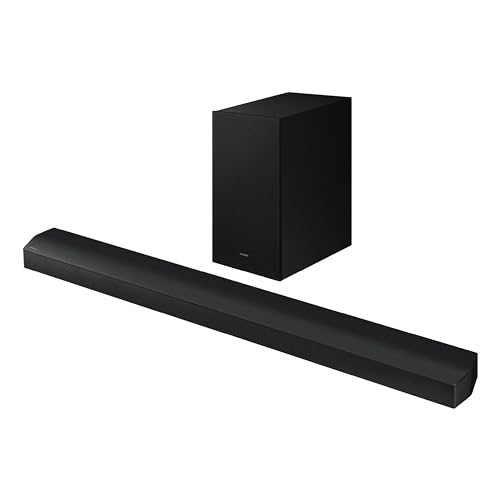
Samsung HW-B750D
Samsung’s HW-Q990D delivers 11.1.4-channel Dolby Atmos. It adds discrete rear speakers, a wireless subwoofer, and SpaceFit Sound room calibration.
Our Bose vs Samsung guide covers Samsung’s strengths against another major brand, and our Samsung vs LG guide explores the ecosystem integration comparison with LG.
Model Range, Software Support, and Surround Expansion

Beyond the streaming-versus-ecosystem divide, Sonos and Samsung also differ in model range, software support, and surround expansion.
These are practical factors that shape years of daily use.
Lineups: Four Sonos Bars vs Samsung’s Full Range
Sonos’s US store lists four soundbars: the compact Ray, the Beam (Gen 2), the Beam Ultra and the Arc Ultra.
Samsung’s lineup spans from basic 2.0-channel bars to the 11.1.4-channel HW-Q990D.
Models in between fill the range from one to the other.
Sonos’s four bars lean on music streaming features and ongoing software support instead.
Our is a soundbar worth it guide covers what a soundbar adds and when TV speakers are enough.
Our 2.1 vs 5.1 soundbar comparison covers when extra channels improve listening over single-bar solutions.
Long-Term Software Support
Sonos’s support page says it delivers new features to its modern players while older S2 devices get essential updates.
On lifespan itself, Sonos keeps even its first soundbars on a stability-update track, as our guide to how long a soundbar lasts explains.
For households that upgrade room by room over several years, that ongoing support can matter as much as the initial sound quality.
A Samsung bar that loses firmware support still plays sound. It just stops gaining features.
Our soundbar fundamentals guide covers what to expect from soundbar technology in general, and our soundbar to TV connection guide explains how both brands connect via standard HDMI eARC for TV audio.
Surround Sound Expandability
Both brands offer surround expansion, but the approaches differ in what each bar ships with.
Samsung includes wireless subwoofers and rear speakers with many of its models out of the box. Sonos requires a separate Sonos Sub and Era 100 surrounds to build a comparable system.
Our soundbar vs surround sound guide explains when surround expansion genuinely improves your listening experience, and our what soundbar channels mean guide covers channel configurations for both brands.
The Bottom Line
Choose Samsung if you own a Samsung TV and primarily want better TV audio.
For TV-focused households, Samsung offers Q-Symphony integration, a model range from 2.0-channel bars up, and bundled surround packages.
Our guide to soundbars for Samsung TVs covers the picks by model tier and Q-Symphony.
Choose Sonos if music streaming is your primary use case.
For music, Sonos offers AirPlay 2, native music service integration, multi-room whole-home grouping, and ongoing software support.
Our best Sonos soundbar guide ranks every current Sonos bar by room size and use case.
Our do you need a soundbar for smart TV guide covers whether your TV genuinely benefits from either brand’s upgrade, and our soundbar setup guide walks through optimal placement and configuration for both Sonos and Samsung soundbar models.
Frequently Asked Questions
Is Sonos one of the best soundbars?
Sonos lists four soundbars, from the compact Ray to the Arc Ultra.
The Arc Ultra is the one Sonos calls its most powerful soundbar, with Dolby Atmos and a Sound Motion woofer that Sonos credits with a deeper, more powerful bass response.
It also offers multi-room music streaming through the Sonos app.
Is Samsung Q990D better than Sonos Arc Ultra?
The Samsung HW-Q990D delivers more surround channels than the Sonos Arc Ultra, at 11.1.4 versus virtual processing. It includes discrete rear speakers and a wireless subwoofer.
Sonos credits the Arc Ultra’s Sound Motion woofer with a deeper, more powerful bass response from a single bar without a separate subwoofer.
It also offers music streaming with AirPlay 2 and multi-room grouping.
What brand is best for soundbars?
No single brand dominates every soundbar use case.
Samsung builds around its own TVs, and Sonos around music streaming and multi-room audio.
The right brand for your specific situation depends on matching your primary use case and TV manufacturer to each brand’s core engineering strengths and ecosystem advantages.