Best 3.1 Soundbar: 8 Picks With a Real Center Speaker
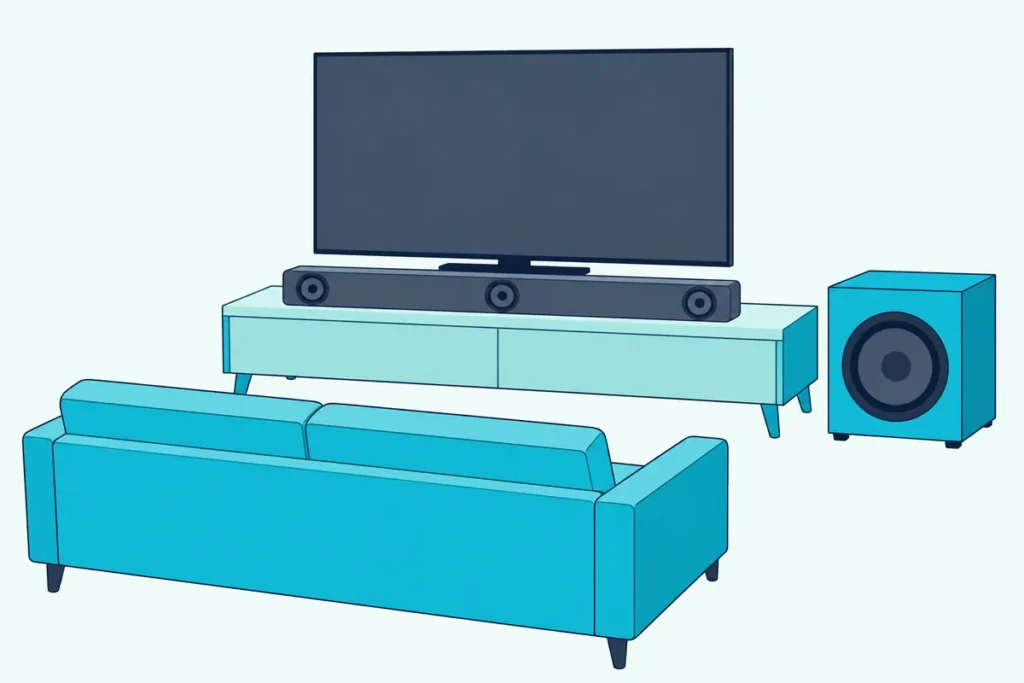
Choosing the best 3.1 soundbar comes down to one speaker most shoppers never look at: the one in the middle.
A plain stereo bar mixes voices into its left and right speakers, so dialogue can sink under music and explosions until you’re riding the remote all night.
A real center channel gives voices their own driver aimed straight at the couch, and a subwoofer channel takes the heavy bass work off the bar.
Below are eight bars from Polk, LG, Samsung, Sony, Amazon, Denon and Klipsch, each checked on Amazon on 22 October 2026 and described from its maker’s own documents.
The quick answer and a comparison table come first, then the eight soundbars, then the questions about center speakers, height channels, subwoofers and TV connections that decide which one fits your room.
What Is the Best 3.1 Soundbar for Most TVs?
The center speaker is the whole point, and for most living rooms the Sony BRAVIA Theater Bar 5 is the best 3.1 soundbar in this guide’s view. Sony’s help guide lists two front speakers and a separate center speaker in the bar, a wireless subwoofer with a 6 3/8-inch cone, and an HDMI eARC/ARC connection to the TV (Sony).
If you want height effects on top of the center channel, the Denon DHT-S517 is a 3.1.2 system with up-firing drivers and an HDMI input. If your TV is small, the Polk MagniFi Mini AX fits left, center and right drivers into a bar 14.4 inches wide.
| Pick | Maker’s layout | Center speaker | Subwoofer | TV connection | Best for |
|---|---|---|---|---|---|
| Sony BRAVIA Theater Bar 5 | 3.1 (listing) | 1 center cone | Wireless, 6 3/8 in | HDMI eARC/ARC, optical | Best overall |
| Samsung HW-B630F | 3.1 | Yes, per Samsung | Wireless | HDMI ARC plus HDMI in, optical | HDMI input on a 3.1 bar |
| LG S60T | 3.1 (listing) | Not named in manual | Wireless | HDMI ARC, optical | LG TV owners |
| Polk MagniFi Mini AX | Not stated | Center 2 in mid | Wireless, 5 x 7 in | HDMI eARC, optical, 3.5 mm | Small TVs, Wi-Fi music |
| Amazon Fire TV Soundbar Plus | 3.1 | Dedicated center channel | Built in | HDMI to the TV’s eARC/ARC | One-box setup |
| Denon DHT-S517 | 3.1.2 | 1 in center driver | Wireless, 5.9 in | HDMI eARC plus HDMI in, optical | Height speakers |
| Polk Signa S4 | 3.1.2 | 1 in center driver | Wireless, 5.9 in | HDMI eARC, optical, 3.5 mm | Height with simple setup |
| Klipsch Flexus Core 200 | 3.1.2 | Horn tweeter | Two 4 in woofers built in | HDMI eARC, optical, USB-C | No sub box, add one later |
Every pick had at least 4.0 stars from 50 or more Amazon reviews and stock on hand when checked on 22 October 2026. Prices, ratings and review counts change daily, so they aren’t printed here, and several picks were down to their last few units.
None of these bars was played or measured for this guide, so each description rests on its maker’s spec sheet, product page, help guide or listing. If you’re still deciding whether a center speaker is worth it at all, Burton’s guide to how a 2.1 and a 3.1 soundbar differ walks through that choice first.
| Product | Size | Link |
|---|---|---|
Best Overall 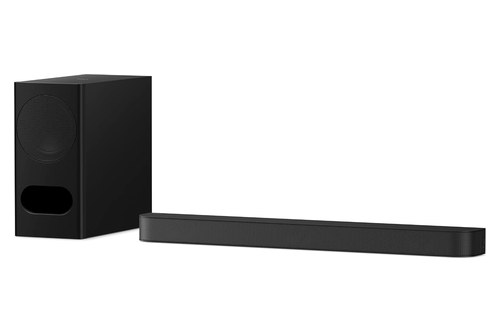 | 8 inch | See ratings |
HDMI Input on a 3.1 Bar 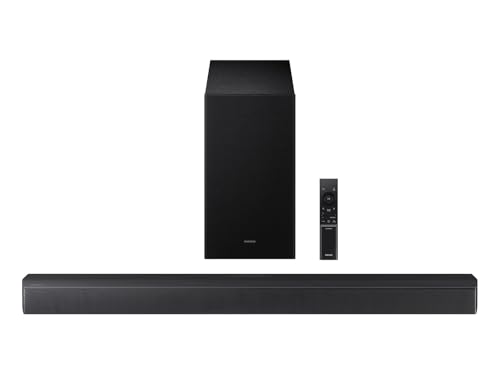 | 33.9 inch | See ratings |
LG TV Owners 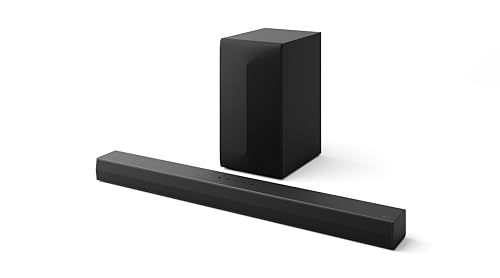 | — | See ratings |
Small TVs and Wi-Fi Music 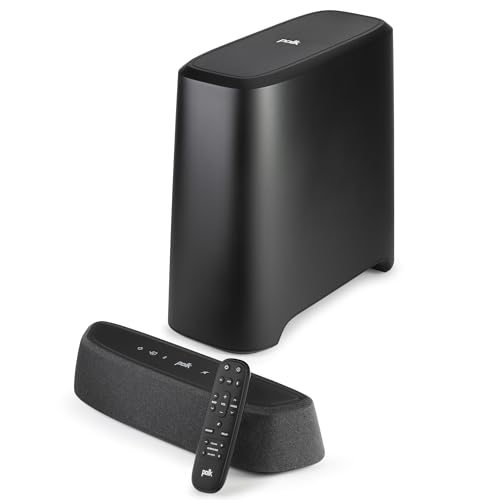 | 2 inch | See ratings |
One-Box Setup 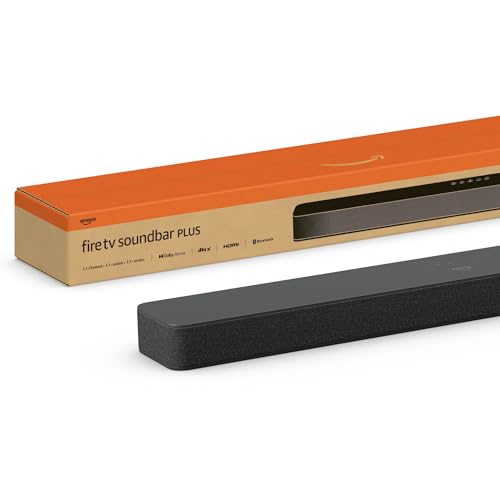 | — | See ratings |
Best With Height Speakers 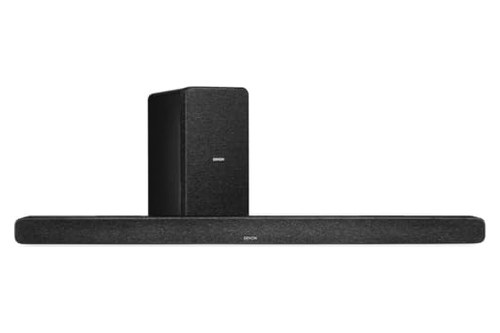 | 5.9 inch | See ratings |
Height With Simple Setup 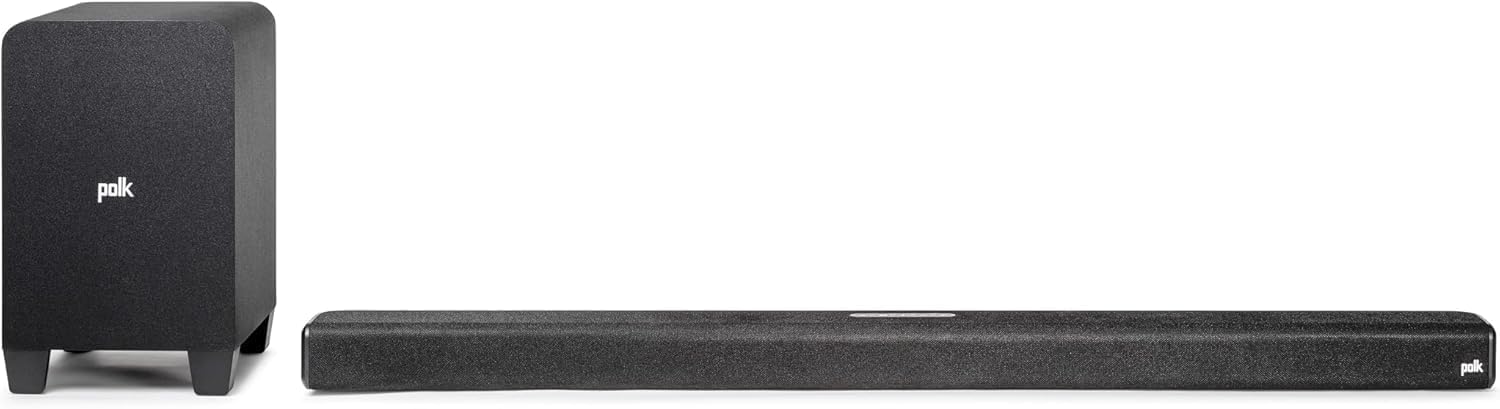 | 5.9 inch | See ratings |
No Sub Box, Add One Later 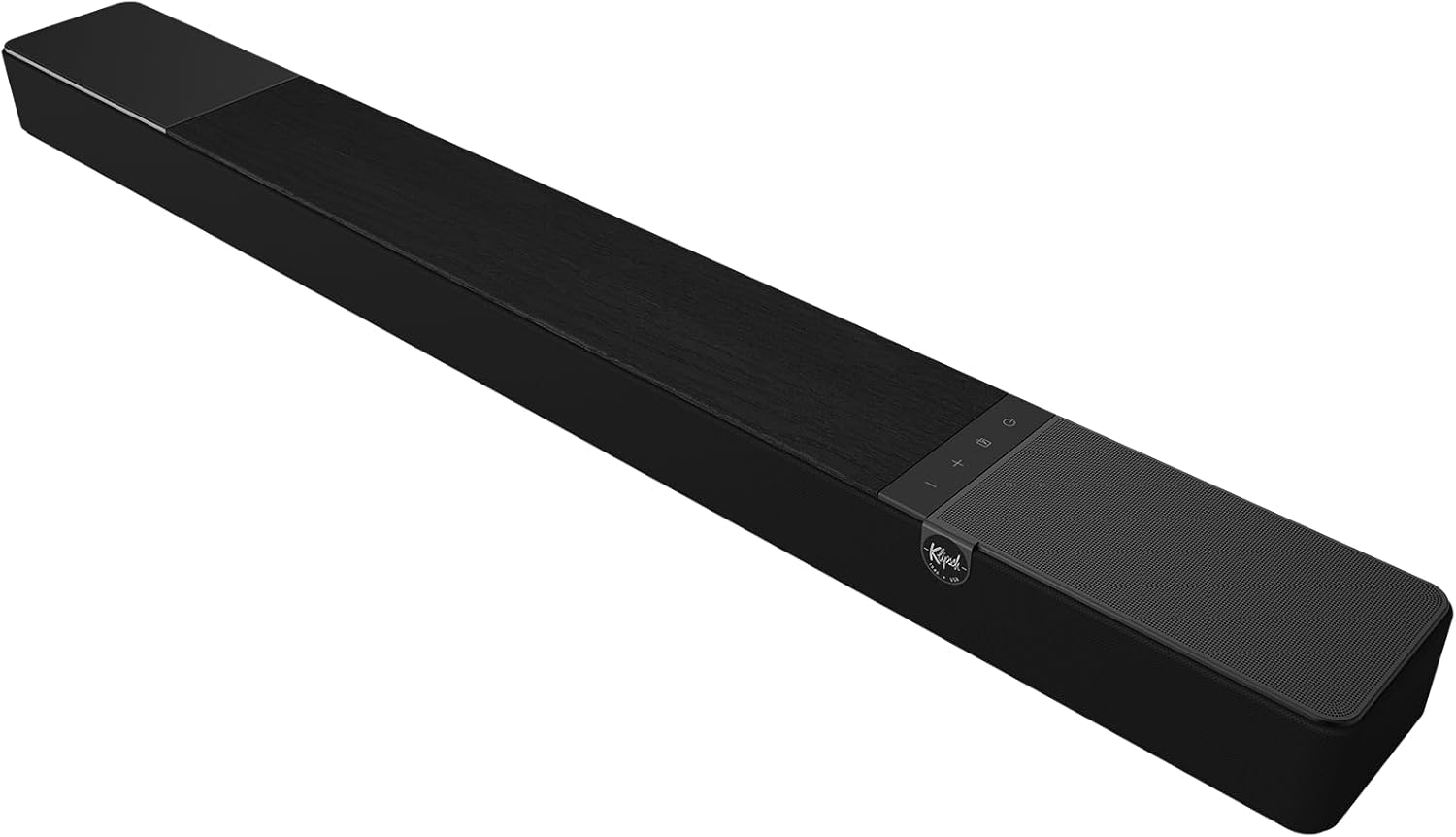 | 4 inch | See ratings |
Which 3.1 Soundbars Are Worth Buying Right Now?
That table splits the field into two groups: five bars with a plain 3.1 layout, and three that add two height channels as a 3.1.2. The plain 3.1 bars come first, ordered from the most complete system to the most specialized, then the three 3.1.2 systems.
Sony BRAVIA Theater Bar 5
For most living rooms, the Sony BRAVIA Theater Bar 5 is the pick.
the Sony BRAVIA Theater Bar 5
Sony’s specifications split the bar into a front speaker section with two 45 by 82 mm cones and a center speaker section with one more cone of the same size. That third cone is the “3” in its 3.1 name, and the subwoofer’s single 6 3/8-inch cone is the “.1”.
The guide says the bar supports object-based formats such as Dolby Atmos and DTS:X. It lists no up-firing speakers, so any height effect comes from processing rather than sound bounced off your ceiling.
The connections are simple: one HDMI OUT (TV (eARC/ARC)) jack and one optical TV input. Sony notes that eARC can carry object-based audio and multichannel PCM that plain ARC can’t, and that the bar’s eARC setting is on by default.
Voice mode, Night mode and a sound field setting sit on the remote, and Sony says Voice Zoom takes over from Voice mode when the TV input is selected. Sony’s guide runs the first setup through its BRAVIA Connect app on your phone.
The bar is about 35 1/2 inches wide, 2 5/8 inches tall and 6 pounds 10 ounces. The subwoofer is about 7 5/8 by 15 3/8 by 15 3/4 inches and 16 pounds 2 ounces, so plan a floor spot beside the couch or the TV stand.
Samsung HW-B630F
For an HDMI input on a plain 3.1 bar, the Samsung HW-B630F is the pick.
the Samsung HW-B630F
Samsung’s spec table answers the 3.1 question directly: “Number of Channel 3.1”, “Center Speaker Yes” and “Wireless Subwoofer Included Yes”. It lists four speakers in total and no rear speakers in the box.
The connection list has one HDMI input, one HDMI output with ARC and CEC, an optical input, Bluetooth 4.2 and USB music playback. The same table says “4K Video Pass: No” and “Wi-Fi: No”, so the HDMI input suits an older player or console rather than a 4K source.
Sound modes include DTS Virtual:X, Game, Adaptive Sound and Bass Boost, and Samsung lists a Voice Enhance mode and a Night mode. The same table reads “No” for Q-Symphony and for SpaceFit Sound Pro.
The bar measures 860 mm (about 33.9 inches) wide and 2.2 kg, and the sub is 184 by 343 by 295 mm and 5.0 kg. Samsung’s site refuses Burton’s scripts, so these figures come from Samsung Canada’s HW-B630F page as saved on 14 October 2026, and the Amazon card is the US model.
LG S60T
For LG TV owners, the LG S60T is the pick.
the LG S60T
LG’s Amazon listing calls the S60T a “3.1 ch.” soundbar, but the specifications page of LG’s own manual doesn’t list channels or drivers. That leaves the center speaker a listing claim rather than a manual one, so it sits here as LG’s word, not a measured fact.
The manual’s input list is short: one optical input and one HDMI TV (ARC) connection, with no HDMI input on the bar. Its external-device page tells you to plug a Blu-ray player or console into the TV instead.
The bar reads Dolby Digital, DTS Digital Surround and PCM, according to LG’s format list, which names no Dolby Atmos. With an LG TV, WOW Orchestra plays the soundbar and the TV’s own speakers together, and LG says it works only over HDMI.
The bar is about 33.4 by 2.5 by 3.4 inches, and the subwoofer about 7.9 by 14.8 by 11.2 inches. LG’s guide says a red light on the subwoofer means it isn’t linked, and it walks you through a pairing-button fix.
Burton’s LG soundbar guide compares the S60T with eight other LG bars, including the 3.1.1 S70TY. Read it if you want one of LG’s other layouts.
Polk MagniFi Mini AX
For a small TV or a Wi-Fi music setup, the Polk MagniFi Mini AX is the pick.
the Polk MagniFi Mini AX
Polk’s driver list shows how a short bar still gets a center: two 0.75-inch tweeters and three 2-inch midrange drivers labeled L/C/R. Polk calls this a “Dedicated Center Channel” paired with its VoiceAdjust dialogue control, though its page gives no channel count.
The bar is only 14.4 by 4.1 by 3.1 inches, the narrowest here by about 19 inches. The wireless subwoofer is the big piece at 7.2 by 15.6 by 14.6 inches, with a 5 by 7-inch driver that Polk says can sit up to nine meters from the bar.
The inputs cover HDMI eARC, optical, a 3.5 mm analog jack and USB-A for firmware. It’s the only plain 3.1 pick whose maker lists Wi-Fi, streaming through Google Chromecast, Apple AirPlay 2 and Spotify Connect, plus Bluetooth 5.0.
Polk lists Dolby Atmos and DTS:X with its SDA processing, and its driver list names no up-firing drivers. The box includes an HDMI cable, so you can connect it to the TV’s eARC or ARC port the day it arrives.
Amazon Fire TV Soundbar Plus
For a one-box setup with a Fire TV, the Amazon Fire TV Soundbar Plus is the pick.
the Amazon Fire TV Soundbar Plus
Amazon makes this bar, and its own listing calls it “an all-in-one 3.1 soundbar” with built-in bass and “a dedicated center dialogue channel”. The “.1” here lives inside the bar, so you don’t place a second box.
Setup, in the listing’s words, is to connect the included HDMI cable to your TV’s HDMI eARC/ARC port. Movie, Music, Sports and Night modes are listed, along with Bluetooth streaming and one-remote control with a Fire TV.
Amazon also lists Dolby Atmos and DTS:X, and the listing names no up-firing drivers. Amazon’s own site refuses Burton’s scripts, so this card rests on the listing text read through Amazon’s product data on 22 October.
That listing leaves real gaps: no width, no driver count, no optical input and no word on whether the bar’s own port is eARC or ARC. Measure your TV stand and check your TV’s audio outputs before you order.
Amazon sells a version with a separate subwoofer under its own listing, with the same 3.1 and center-channel wording. It passed this guide’s checks on the day too, but the card links the all-in-one bar because that’s the role it fills here.
Denon DHT-S517
For height speakers on top of a center channel, the Denon DHT-S517 is the pick.
the Denon DHT-S517
Denon’s spec table lists the acoustic system as “3.1.2 (7 drivers)”: two 1-inch tweeters, two 4.7 by 1.6-inch racetrack midrange drivers, a 1-inch center full-range driver and up-firing full-range drivers. The wireless subwoofer carries one 5.9-inch driver.
Its connections are the widest here, with one HDMI input, one HDMI eARC output, an optical input, a 3.5 mm analog input and Bluetooth. Denon says the HDMI input passes 4K Ultra HD video through, so a console or streaming box can plug into the bar.
Denon shows Dolby Digital decoding but answers “No” for DTS. If a disc or game offers only a DTS track, set the player to send PCM or Dolby instead.
The Denon Dialog Enhancer, a Night listening mode and Movie and Music sound modes are in the table, plus a TV remote learning function and keyhole wall-mount slots. The bar is 41.3 inches wide and 5.5 pounds, and the sub is 6.7 by 14.5 by 11.4 inches and 9.5 pounds.
Denon labels its bar size 41.3 by 2.3 by 3.8 inches under “W x D x H”, which would make it 3.8 inches tall. Measure the gap under your TV before you buy.
Polk Signa S4
For height channels with the simplest connection, the Polk Signa S4 is the pick.
the Polk Signa S4
Polk’s info sheet calls it a “Dolby Atmos Certified 3.1.2 Sound Bar System” and pairs its “dedicated center channel” with VoiceAdjust. The driver list matches the Denon’s line for line: two 1-inch tweeters, two 4.7 by 1.6-inch mids, a 1-inch center full-range driver and two 2.6-inch elevation drivers, with a 5.9-inch subwoofer driver.
So the two bars split on connections, not speakers. The Signa S4 has one HDMI eARC output, an optical input, a 3.5 mm analog input, Bluetooth and a USB-A port for firmware, and no HDMI input.
Polk notes that its Atmos height channels need an HDMI eARC connection. Bass Adjust, Night mode and Movie and Music presets are listed, and the sheet says the bar is pre-programmed to work with most TV remotes.
The bar is 41.2 by 3.7 by 2.4 inches, 1.4 inches lower than Denon’s stated height. The subwoofer is 7.9 by 12.9 by 11 inches.
Klipsch Flexus Core 200
For a center channel without a subwoofer box, the Klipsch Flexus Core 200 is the pick.
the Klipsch Flexus Core 200
Klipsch’s spec sheet calls it a 3.1.2-channel sound bar and names a 0.75-inch horn-loaded tweeter “as your dedicated center channel”. Four 2.25-inch aluminum drivers face forward, and the sheet promises “dual 4″ built-in subwoofers” with “no subwoofer required”.
The sheet lists two 4-inch woofers and two 2.25-inch full-range drivers under “upfiring drivers”, while its own text calls the height speakers two 2.25-inch elevation speakers. That wording doesn’t settle which drivers aim up, so the card says only what both lines agree on: two height channels.
Inputs are HDMI eARC, Bluetooth, USB-C and digital optical, and the output is an RCA subwoofer jack. Klipsch says its Transport technology lets you add Flexus surrounds and one or two Flexus subwoofers later.
The bar is 44 inches wide, 3 1/16 inches tall, 4 15/16 inches deep and 18.7 pounds, the widest and heaviest bar here. The box includes an HDMI cable and L-shaped wall brackets.
Get Studio Tips Weekly
Join 5,000+ creators getting acoustic treatment advice every week.
No spam. Unsubscribe anytime.What Does the “3” in a 3.1 Soundbar Mean?
Those eight cards all hang on one number, and Dolby’s own speaker guide spells it out. The first number counts the standard ear-level speakers, including left, right and center, and the number after the dot counts subwoofers (Dolby).
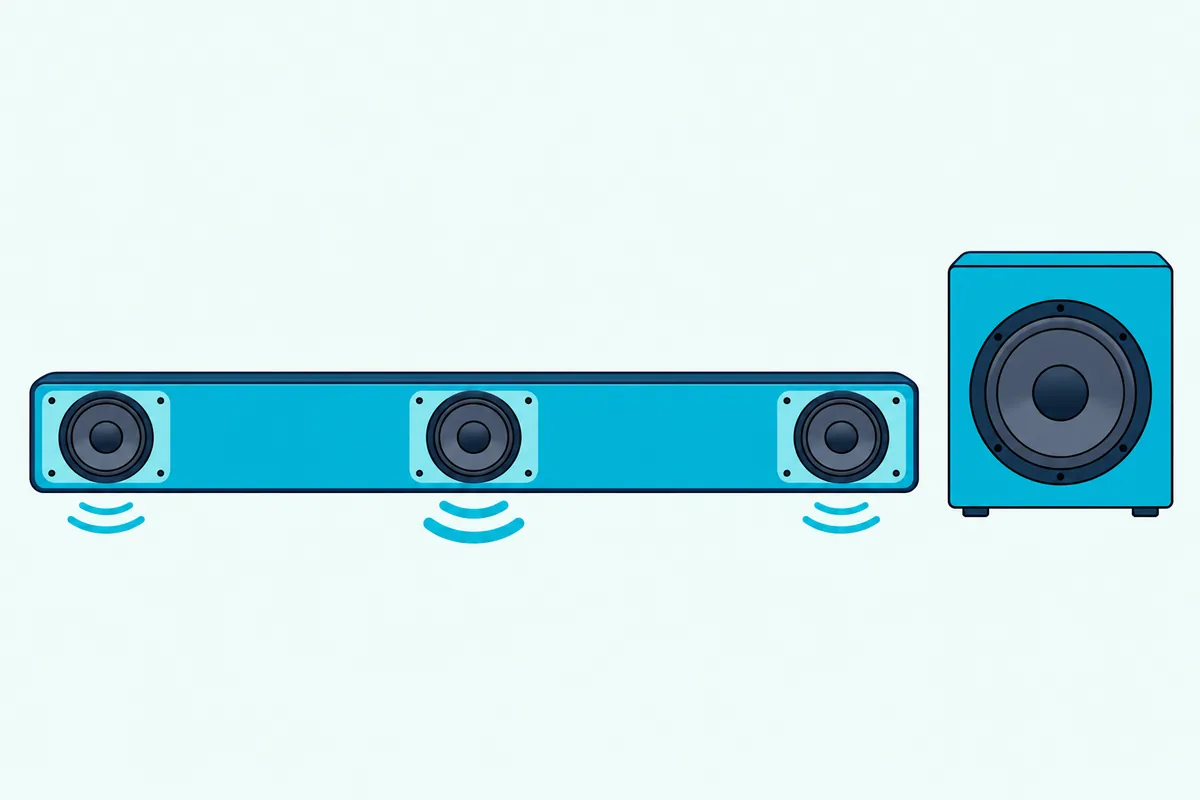
So a 3.1 bar has left, center and right channels plus one bass channel. A 2.1 bar drops the center, and Dolby’s list of common layouts skips 3.1, going from 2.1 straight to 5.1.
Think of the three front channels as three microphones on a stage instead of two. With only left and right, a voice in the middle is a blend of both; with a center, it has its own speaker.
The labels on the boxes don’t always tell you this. Of the eight picks, Samsung, Denon, Polk’s Signa S4, Klipsch and Amazon print the channel count in their own documents, Sony and LG print it only in their Amazon listing titles, and Polk’s MagniFi Mini AX page names a center driver but no count.
Try this before you shop: play a news program on your current TV speakers and walk two steps left of center. If the anchor’s voice follows the nearer speaker, a center channel is the fix you’re paying for.
Why Does a Center Channel Help With Dialogue?
That walk-off test points to the reason. Dolby says center speakers are “primarily used to deliver dialog,” best placed just above or below the TV “so that the sound is coming directly at you.”
A soundbar’s center driver sits right there by design, below the screen and aimed at the couch. On a stereo bar, the same voice has to come from two speakers off to the sides.
The makers back it with dialogue modes too. Polk has VoiceAdjust on both of its picks, Denon has the Dialog Enhancer, Sony has Voice mode and Voice Zoom, and Samsung lists Voice Enhance.
A center channel won’t fix a mix that buries voices under music. It gives the bar a dedicated place to put them, and the dialogue controls let you raise that one channel without raising everything else.
If you’ve ever turned on subtitles for a show in your own language, that’s the scenario this layout targets. The center driver sizes differ, from Denon’s and Polk’s 1-inch drivers to Sony’s 45 by 82 mm cone, and every pick but the LG lists or names one.
Does a 3.1.2 Soundbar Still Count as a 3.1?
Those center drivers are the reason the answer is yes. Dolby’s numbering keeps the first two numbers for ear-level speakers and subwoofers, so a 3.1.2 is a 3.1 with two height channels added on top.
The Denon, the Signa S4 and the Klipsch all keep the left, center and right channels and the subwoofer channel. The “.2” is extra, not a replacement, which is why they belong in a 3.1 guide.
Dolby says its height speakers are either in the ceiling or “upward-firing speakers that bounce sound off the ceiling.” That’s what the up-firing drivers on these three bars are for.
Sony, Polk’s MagniFi Mini AX and Amazon list Dolby Atmos without up-firing drivers. On those bars, Atmos is decoded and processed, and the sound still leaves the front of the bar.
So pick a 3.1.2 if you want overhead effects from a flat ceiling, and a plain 3.1 if dialogue and bass are the goal. The live guide to the 3.1 vs 5.1 soundbar choice covers the next step up, when you want surround speakers behind you as well.
Is a Built-In Subwoofer as Good as a Separate One?
The “.1” in every one of these layouts can live in two places. Six picks put it in a separate wireless box, while the Fire TV Soundbar Plus and the Klipsch Flexus Core 200 build it into the bar.
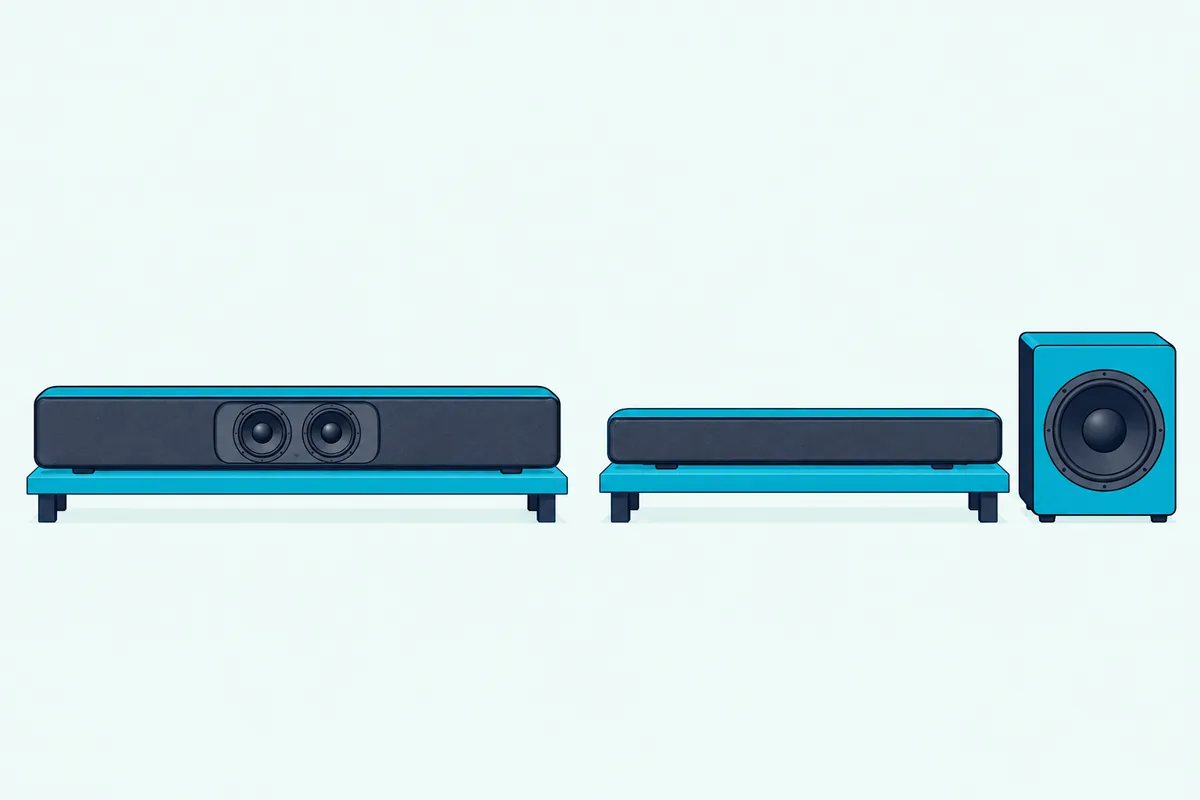
The separate subs here are big, solid boxes. Sony’s is about 15 3/8 inches tall and 16 pounds 2 ounces, and Polk’s MagniFi Mini AX sub stands about 14.6 inches tall next to a bar barely over 3 inches high.
Dolby says bass sounds “are not directional,” so a subwoofer can sit “almost anywhere in a room.” That’s the advantage of a separate box: you can try it in a corner, beside the couch or under a side table until the bass sounds even.
A built-in woofer can’t move away from the TV, but it saves a floor spot and a power outlet. Klipsch’s sheet puts two 4-inch woofers inside its 18.7-pound bar, and Amazon’s listing gives no woofer size for the Fire TV bar.
The Klipsch is the only pick that does both. Its RCA subwoofer output and Transport link mean you can start with the bar alone and add a sub later, as Klipsch describes.
Try this with a separate sub: put it where your seat would be, play a bass-heavy scene, and crawl around the room. The spot where the bass sounds fullest is roughly where the sub should go.
Do You Need HDMI eARC on a 3.1 Soundbar?
That bass and the center channel both arrive through the same cable from your TV, and HDMI’s licensing body explains why the cable type matters. HDMI LA says eARC carries the latest high-bitrate formats, including uncompressed 5.1 and 7.1 and Dolby Atmos and DTS:X, from the TV to a sound bar through a single HDMI cable (HDMI LA).
On a plain 3.1 bar, eARC matters less than on an Atmos bar. LG’s S60T and Samsung’s HW-B630F list ARC only, and neither lists Atmos among its formats, so plain ARC carries what they can play.
The eARC picks are the Sony, the MagniFi Mini AX, the Denon, the Signa S4 and the Klipsch. Polk says the Signa S4’s Atmos height channels need eARC, so on that bar the port type decides whether the “.2” works.
Only two picks list an HDMI input: Denon’s, which passes 4K video, and Samsung’s, which doesn’t. On the other six, plan to plug consoles and streaming sticks into the TV, which sends their audio back down the HDMI cable.
Optical still works as a backup on seven picks, and Sony describes an optical route for TVs without ARC. Amazon’s Fire TV listing names only the HDMI connection, so check for an optical jack if your TV is old.
Burton’s comparison of HDMI and optical connections for a soundbar goes into the cable choice in more depth. Look at the labels on your TV’s HDMI ports first: the one marked eARC or ARC is the one the bar needs.
Which 3.1 Soundbar Fits Under Your TV?
That HDMI cable has to reach a bar that fits the stand, and the widths here run from 14.4 to 44 inches. The makers’ published sizes, smallest first:

| Pick | Bar width | Bar height | Subwoofer |
|---|---|---|---|
| Polk MagniFi Mini AX | 14.4 in | 3.1 in | Separate, 14.6 in tall |
| LG S60T | 33.4 in | 2.5 in | Separate, 14.8 in tall |
| Samsung HW-B630F | 33.9 in | 2.3 in | Separate, 343 mm tall |
| Sony BRAVIA Theater Bar 5 | 35 1/2 in | 2 5/8 in | Separate, 15 3/8 in tall |
| Polk Signa S4 | 41.2 in | 2.4 in | Separate, 11 in tall |
| Denon DHT-S517 | 41.3 in | 3.8 in (as labeled) | Separate, 11.4 in tall |
| Klipsch Flexus Core 200 | 44 in | 3 1/16 in | Built in |
| Amazon Fire TV Soundbar Plus | Not listed | Not listed | Built in |
The Samsung height comes from its 59.4 mm figure, rounded, and the subwoofer column gives each maker’s height figure. For the Denon, the 3.8 inches follows Denon’s own label, which may swap depth and height.
Height matters as much as width. A bar sitting in front of the TV’s feet can block the bottom of the picture or the TV’s remote sensor, and the Denon’s stated 3.8 inches is the tallest figure in the table.
Width is about looks and spread. A 33-inch bar under a 65-inch TV leaves the screen hanging over both ends, while the 44-inch Klipsch matches a larger set more closely.
Try this: measure the gap from your stand to the bottom of the screen, then the width of the TV’s feet. If the feet sit closer together than the bar is wide, the bar has to go in front of them, and the gap is your height limit.
Can You Add Rear Speakers to a 3.1 Soundbar Later?
The table above settles where the bar goes; the next question is whether it can grow. Of the eight, only Klipsch’s spec sheet describes an upgrade path, saying Flexus surrounds and one or two Flexus subwoofers can join the Core 200 over its Transport link.
The other makers’ documents read for this guide don’t describe adding rear speakers. Samsung’s table says rear speakers aren’t included, which is a box list, not a compatibility statement.
That’s a gap, not a “no.” If rears matter to you, check the maker’s accessory list for your exact model before you buy, and keep the receipt.
A 3.1 system that becomes a 5.1 later is still a 3.1 on the day you buy it. If you want rear speakers from the start, Burton’s list of 5.1 soundbars with surround channels starts from the other end.
What Other 3.1 Soundbars Were Left Out?
That expansion question narrowed the field, and so did the rating and stock rules. These bars came up in the 3.1 searches on 22 October 2026 and didn’t make the list.
The Hisense AX3120Q, a 3.1.2 bar with a wireless sub, passed on Amazon, but its own documents disagree: Hisense Canada’s page title mentions rear speakers while the body describes a 3.1.2 system with none. It’s a pick in Burton’s guide to soundbars under $300, and this page leaves it out until Hisense’s documents agree.
The TCL S60K and the TCL x Bang & Olufsen A65K fell short of the 50-review rule on the day. Hisense’s AX3100Q, a 380-watt Hisense 3.1 bar and Yamaha’s True X Bar 50A, which came up in the same searches, fell below this guide’s 4.0-star rule.
The Klipsch Cinema 600 and Sony’s HT-A3000 listings showed no rating. TCL’s Q6310 passed on Amazon, but TCL’s site refuses Burton’s scripts, so no TCL document could be read.
Samsung’s HW-B650F and HW-B620F listings had too few reviews. The HW-Q600F and HW-S800D, both 3.1.2, passed on Amazon, but Samsung’s site refuses Burton’s scripts and only UK editions of their manuals were on file, so the HW-B630F stays as the Samsung pick.
LG’s S70TY is a 3.1.1 bar, and it’s in Burton’s LG guide. The Polk Signa S4 and Denon DHT-S517 list identical drivers, and both stay because they split on HDMI input.
How Were These Soundbars Chosen?
Those exclusions follow the same rules as the picks. Each bar was a 3.1 or 3.1.2 system by its maker’s documents or listing, rated 4.0 stars or higher from 50 or more Amazon reviews, and in stock when checked on 22 October 2026.
No bar was played, measured or compared by ear for this guide. Where a maker’s documents leave a gap or disagree with themselves, the text says so, as with LG’s channel count, Klipsch’s up-firing list, Denon’s height and Amazon’s missing size.
Samsung’s and Amazon’s sites refuse Burton’s scripts. Samsung’s figures come from its Canada page as saved on 14 October 2026, and Amazon’s from its own listing text read through Amazon’s product data on the day.
Several picks were down to one or a few units when checked. Stock moves fast, so the card is the place to check before you buy.
What Should You Check Before You Buy a 3.1 Soundbar?
Those rules picked the eight; four checks pick yours. Each one comes from a spec covered above.
- Look for the center speaker in the maker’s own driver list, not only in the product title.
- Check your TV’s HDMI port label: eARC suits the Atmos bars, and ARC is enough for the LG and Samsung.
- Decide where the bass box goes, or pick the Klipsch or Fire TV bar if there’s no room for one.
- Measure the width and height under your TV against the size table.
If you plan to play DTS discs, skip the Denon or set the player to PCM, since Denon lists no DTS decoding. If you stream music over Wi-Fi, the MagniFi Mini AX is the only plain 3.1 pick whose maker lists it.
The Bottom Line
The best 3.1 soundbar is the one whose center speaker you can find in its maker’s own documents, and the Sony BRAVIA Theater Bar 5 is the pick in this guide’s view. It lists a separate center speaker, a 6 3/8-inch wireless sub and eARC, with no extras to set up.
Choose the Samsung HW-B630F for an HDMI input on a plain 3.1 bar, the LG S60T for an LG TV, the Polk MagniFi Mini AX for a small TV and Wi-Fi music, or the Fire TV Soundbar Plus for one box. Choose the Denon DHT-S517 or the Polk Signa S4 for height channels, and the Klipsch Flexus Core 200 to skip the sub now and add one later.
If your budget tops out at $500, Burton’s list of soundbars under $500 with height speakers compares the Denon, the Signa S4 and the Klipsch against bars without a center channel.
Frequently Asked Questions
What is a 3.1 soundbar?
A 3.1 soundbar has three front channels, left, center and right, plus one subwoofer channel for bass, the way Dolby numbers speaker layouts. The center channel carries most dialogue, so voices come from the middle of the bar instead of a blend of left and right. The “.1” may be a separate wireless box, as on the Sony BRAVIA Theater Bar 5 and Samsung HW-B630F, or built in, as on the Amazon Fire TV Soundbar Plus and Klipsch Flexus Core 200.
Is a 3.1 soundbar better than a 2.1?
For dialogue, a 3.1 bar has a clear advantage on paper, because it gives voices their own center speaker. A 2.1 bar has left and right channels and a subwoofer, so a voice in the middle of the screen is shared between two speakers. Dolby says center speakers are mainly there to deliver dialog. In this guide’s view, a good 2.1 bar can be enough if you mostly play music; for TV and movies with quiet voices, a center channel is the upgrade.
Is a 3.1.2 soundbar better than a 3.1?
A 3.1.2 soundbar keeps the same left, center, right and subwoofer channels and adds two height channels for Dolby Atmos, usually from up-firing drivers that bounce sound off the ceiling. The Denon DHT-S517, Polk Signa S4 and Klipsch Flexus Core 200 work that way. It’s better only if you want overhead effects and have a flat ceiling above the bar for the sound to bounce off; for dialogue and bass alone, a plain 3.1 such as the Sony BRAVIA Theater Bar 5 does the same core job.
Does a 3.1 soundbar need a subwoofer?
A 3.1 soundbar already has its subwoofer channel, the “.1”, either in a separate box or inside the bar. Six of the eight picks here ship with a wireless subwoofer. The Fire TV Soundbar Plus and the Klipsch Flexus Core 200 build their bass drivers into the bar, and the Klipsch adds an RCA subwoofer output and Klipsch’s Transport link if you want a separate sub later.
Can you add rear speakers to a 3.1 soundbar?
Some 3.1 soundbars can grow, but it depends on the maker’s accessory list for that model. Of the eight picks, only Klipsch’s spec sheet describes adding surrounds, for the Flexus Core 200. The other makers’ documents read for this guide don’t mention rear speakers, which is a gap rather than a “no,” so check the exact model’s accessories before you buy if rears are part of the plan.