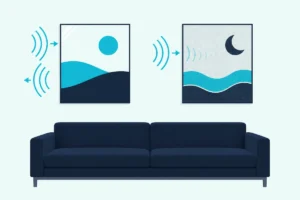
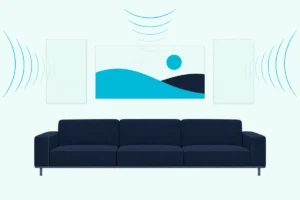
Acoustic panels are sound-absorbing devices that improve how a room sounds by reducing echo, reverb, and flutter.
What are acoustic panels, and why do recording studios, podcasters, and home theater enthusiasts treat them like essential equipment?
These fabric-wrapped rectangles might look simple, but they solve one of the most frustrating problems in audio: rooms that make everything sound hollow, echoey, or muddy.
If you’ve ever recorded a voice memo that sounded like you were in a bathroom, or struggled to understand dialogue during a movie, acoustic panels are the fix.
One critical fact needs stating up front: acoustic panels are not soundproofing.
Mixing up absorption and soundproofing means buying panels to block noise from neighbors, a job they cannot do. Understanding what panels do (and don’t do) shows which of the two a room needs.
The sections below cover what acoustic panels are, how they work, and what you’ll want to look for when buying.
First up: what panels actually do inside a room.They make audio clearer for recording, video calls, and listening — but they cannot block sound from entering or leaving a room.
That requires soundproofing, which is a completely different approach involving mass and construction changes.
What Are Acoustic Panels?
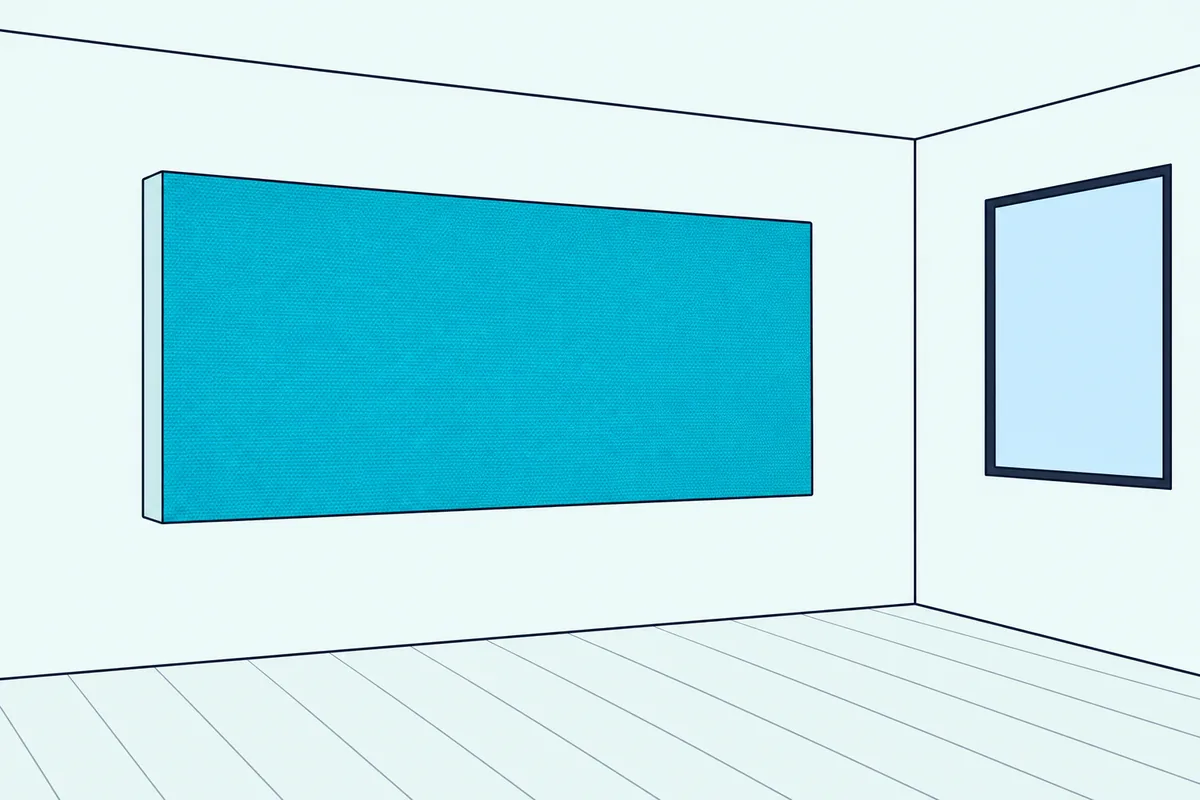
Acoustic panels are specialized devices designed to absorb sound waves and control how audio behaves inside a room. Think of them as sponges for sound — instead of letting audio bounce off your walls and create chaos, panels capture that energy before it can reflect back.
Two questions come up immediately: what do they actually do to the sound, and how are they different from soundproofing?
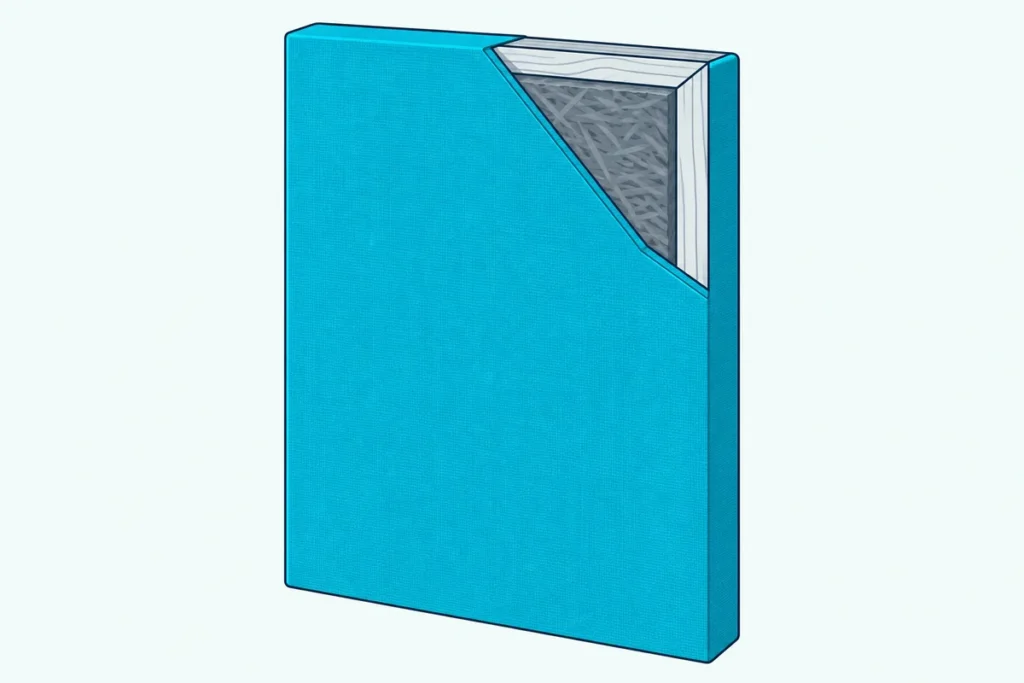
The typical acoustic panel is a rigid rectangle, usually 2 to 4 inches thick, covered in fabric. Inside is a dense, porous material (usually fiberglass or mineral wool) that traps sound waves.
When sound enters the panel, it bounces around inside the fibers. It loses energy with each collision until it disappears as tiny amounts of heat.
Every room has acoustic problems.
Hard surfaces like drywall, glass, and hardwood floors reflect sound waves back into the space. These reflections arrive at your ears milliseconds after the original sound.
The result is echo (distinct repeats), reverb (blurred, overlapping sound), and flutter (rapid repeating echoes between parallel walls). Acoustic panels interrupt this cycle by absorbing those reflections before they can bounce around.What Do Acoustic Panels Do?
The primary job of acoustic panels is reducing reflection. When you speak or play music in an untreated room, only a fraction of the sound goes directly to your ears.
The rest bounces off every surface first, and each reflection adds mud and confusion to what you hear.
Panels strategically placed at reflection points absorb those bouncing sound waves. The result is cleaner, clearer audio where you hear more of the direct sound and less of the room’s interference.
The improvement is measurable. Acousticians use RT60 (reverberation time) to quantify how long sound takes to decay by 60 decibels.
In an untreated room, sound lingers and overlaps, and panels shorten that decay. For listening rooms used to assess sound programme material, the EBU’s Tech 3276 puts the nominal reverberation time between 0.2 and 0.4 seconds.
How Are They Different from Soundproofing?
Absorption and soundproofing are two different things, and getting them confused leads to the wrong fix.
Acoustic panels absorb sound inside a room. They reduce echo and reverb by capturing reflections.
The result is cleaner, more controlled sound within your space.
Soundproofing blocks sound from traveling between spaces. It prevents noise from entering or leaving a room by adding mass, creating air gaps, and sealing every possible sound path.
These are completely different problems requiring completely different solutions. Acoustic panels are lightweight fabric-wrapped absorbers.
Soundproofing involves heavy materials like mass loaded vinyl, double-layer drywall, isolated wall assemblies, and sealed doors and windows.
A quick test: if your problem is “I can hear my neighbor’s TV” or “my drumming bothers the apartment below,” panels will do nothing: that takes soundproofing.
If your problem is “my recordings sound echoey” or “I can’t understand movie dialogue in my living room,” panels are exactly what you need.
Panels affect sound quality inside your room. Soundproofing affects sound transmission between rooms.
What Are Acoustic Panels Made Of?
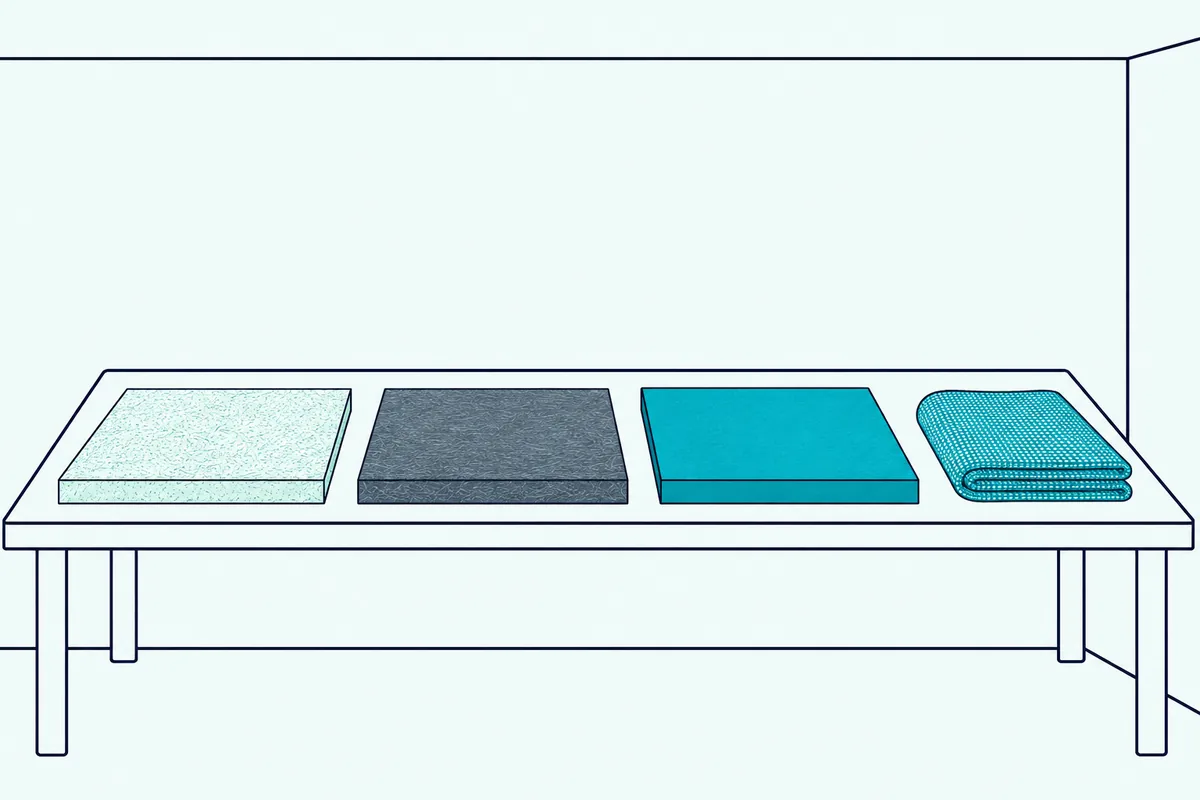
What’s Inside an Acoustic Panel?
The core is where sound absorption happens. Professional panels use one of three main materials:
Fiberglass (like Owens Corning 703) has been the industry standard for decades. It’s made from extremely fine glass fibers pressed into rigid boards.
The millions of tiny air pockets between fibers create friction that converts sound energy into heat. Fiberglass offers excellent broadband absorption, meaning it works across low, mid, and high frequencies.
It’s also widely available. Among ready-made panels, the ATS Acoustics Panel lists NRC 1.0 for its mineral wool core.
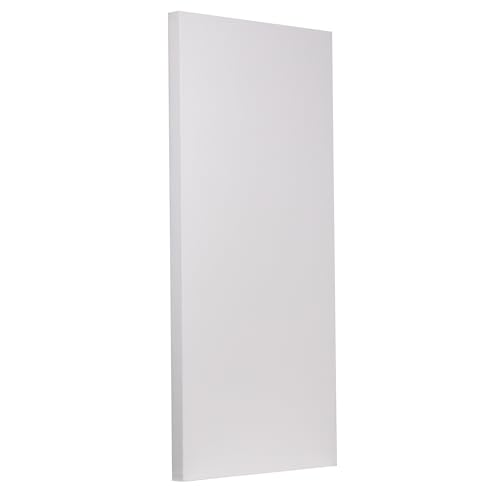
ATS Acoustics Panel
Mineral wool (often called rockwool or stone wool) performs similarly to fiberglass but is made from volcanic rock or slag spun into fibers.
Mineral wool is also naturally fire-resistant and easier to cut and handle than fiberglass — no itchy fibers flying everywhere. Many DIYers prefer it for building their own panels.
Polyester fiber (PET) panels have gained popularity recently. They’re made from recycled plastic bottles pressed into dense boards.
PET is completely safe to handle with bare hands, comes in various colors, and can be left uncovered as a design element. The tradeoff is slightly lower absorption performance compared to fiberglass or mineral wool, especially at lower frequencies.
The thickness of the core directly affects which frequencies get absorbed. Owens Corning’s own coefficients for its 703 board show it: at 1 inch, 0.05 at 125 Hz and 0.63 at 500 Hz; at 2 inches, 0.15 and 1.14.
At 4 inches, the same board lists 0.56 at 125 Hz. For low-frequency control, thick bass traps typically go in the corners.What’s the Difference Between Fiberglass and Rockwool?
Both materials achieve similar acoustic performance. At 2 inches, Owens Corning lists 703 fiberglass board at an NRC of 1.00 and ROCKWOOL lists its AFB stone wool batt at 0.95.
The practical differences are handling and availability. Fiberglass (Owens Corning 703, 705) requires careful handling — the tiny glass fibers can irritate skin and lungs.
Wear gloves, long sleeves, and a mask when cutting it. Rockwool (Rockwool Safe’n’Sound, AFB) is less irritating and easier to cut cleanly with a bread knife or insulation knife.
At 125 Hz, ROCKWOOL lists 2-inch AFB at 0.22 and Owens Corning lists 2-inch 703 at 0.15, though ROCKWOOL’s sheet says density is not a performance criterion.
If you’re building bass traps, those 125 Hz figures are the ones to compare. For standard wall panels, either material works.
Availability varies by region, so check what your local building supply stores stock.What Is the Fabric Covering?
The fabric serves two purposes: containing loose fibers from the core material, and making the panel look professional enough to hang in living spaces.
The critical requirement is acoustic transparency — the fabric must let sound pass through easily. If sound can’t penetrate the fabric, it bounces off before reaching the absorptive core, defeating the entire purpose.
Test acoustic transparency with the “blow test”: hold the fabric to your mouth and blow. If air passes through easily, sound will too.
Dense, tightly-woven fabrics fail this test. Acoustically transparent fabrics feel almost like wearing a thin t-shirt.
The ATS Acoustics Panel’s listing says its Sona fabric is made for ATS by Guilford of Maine. The acoustic panel fabric guide compares fabrics by the makers’ lab and fire tests.
Avoid vinyl, leather, plastic-coated fabrics, or anything with a rubbery backing.What Are Acoustic Panels Used For?
What Problems Do They Solve?
The core problems are echo, reverb, and flutter — all symptoms of sound bouncing off hard surfaces.
Echo is a distinct repeat of sound, like shouting in a canyon. You hear the original sound, then a delayed copy.
Hard, parallel walls in rectangular rooms create flutter echo — rapid repeating echoes that sound like a “sproing” or ringing when you clap.
Reverb is the blurred combination of thousands of reflections arriving at slightly different times. A little reverb sounds natural and pleasant (concert halls are designed for it).
Too much reverb turns speech into mush and makes recordings sound amateur and distant.
Comb filtering happens when direct sound and reflected sound arrive at your ears nearly simultaneously but slightly out of phase. Certain frequencies cancel out while others reinforce, creating an uneven, hollow tone.
This particularly affects recording quality.
Acoustic panels reduce all these problems by absorbing reflections before they can interfere with the direct sound you want to hear.What Rooms Benefit from Acoustic Panels?
Recording spaces benefit because a microphone picks up the room’s reflections along with the voice, including ones you might not consciously notice when listening.
A properly treated recording room produces vocals that sound professional and present, not distant and boxy. Products like the UMIACOUSTICS 4-Pack with Brackets provide everything needed to treat first reflection points.
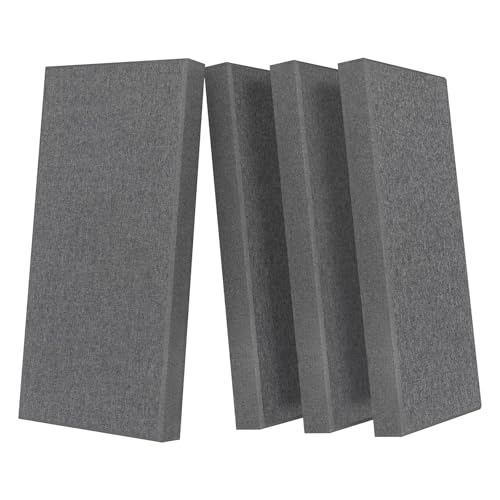
UMIACOUSTICS 4-Pack with Brackets
If you’re recording podcasts, voiceovers, music, or even just video calls, treatment works on the reflections your microphone picks up. The best panels for recording studios guide covers which options work for different recording setups.
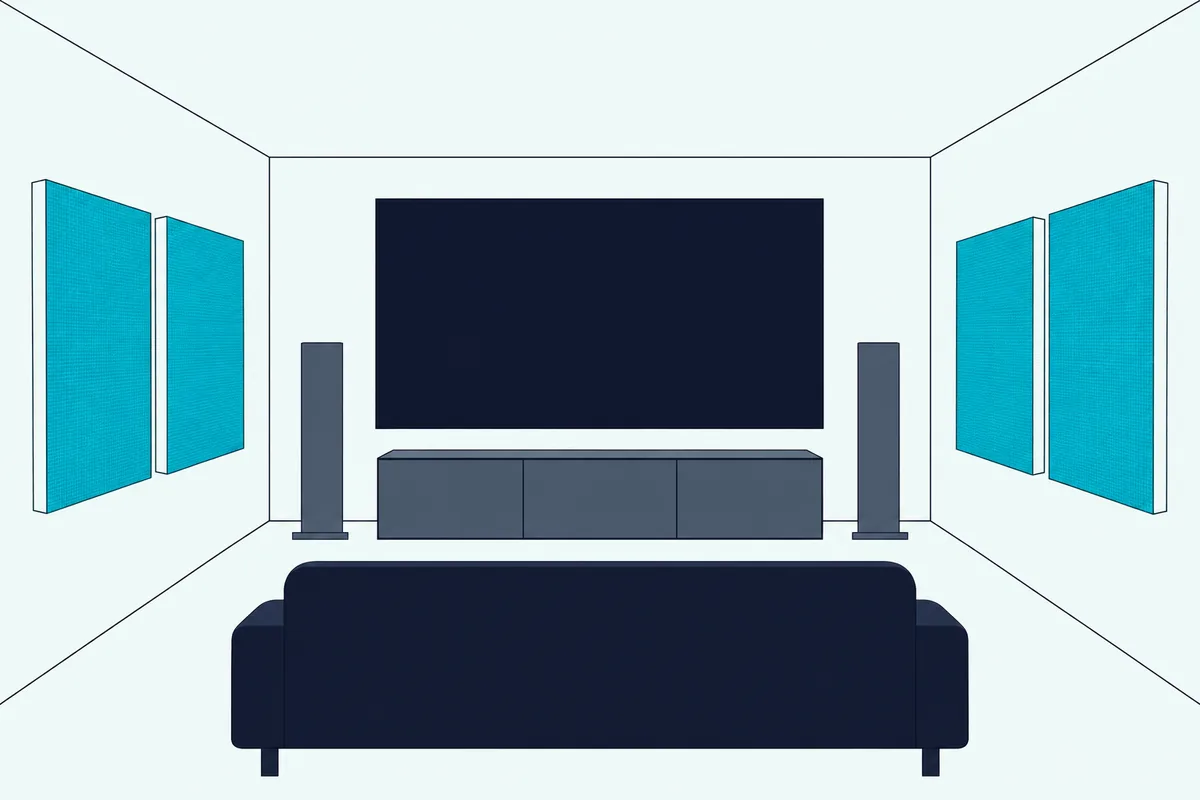
Home theaters and listening rooms benefit from controlled reflections. When early reflections from side walls interfere with the direct sound from your speakers, stereo imaging collapses and dialogue becomes muddy.
Strategic panel placement tightens the soundstage and improves clarity.
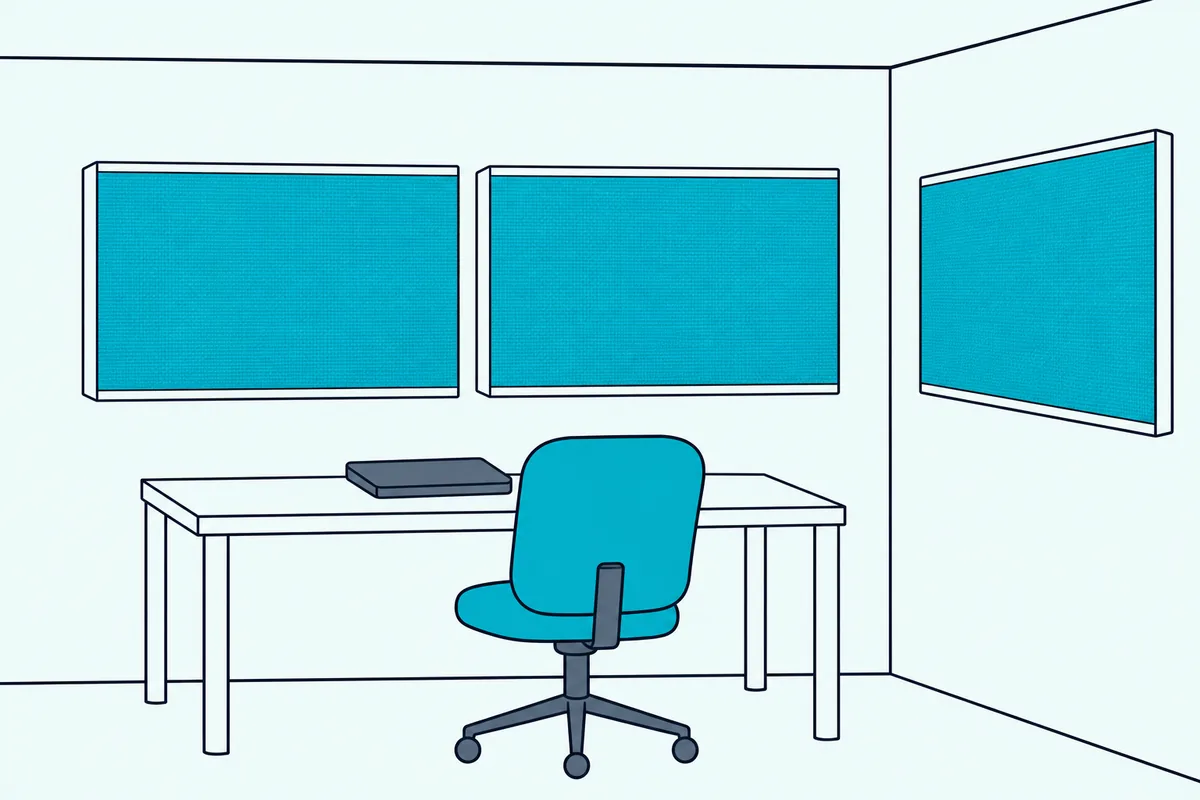
Home offices have become critical since remote work went mainstream. Video calls in untreated rooms sound echoey and unprofessional.
Even a few panels behind your desk and on the wall facing you clean up your audio noticeably. Renters wondering about acoustic panels for home offices have damage-free mounting options that work great.
Open-plan offices and restaurants use acoustic panels to reduce the buildup of noise. When dozens of conversations reflect off hard ceilings and walls, the cumulative noise level climbs until everyone is shouting.
Ceiling panels and strategic wall treatment bring noise levels down to manageable ranges.What Is the Purpose of Acoustic Panels?
Why Do People Use Acoustic Panels?
Different users have different goals, but they all come back to controlling reflections:
Content creators need clean audio. When your microphone captures room reflections along with your voice, the recording sounds amateur no matter how good your equipment is.
Panels let your mic hear mostly direct sound, producing professional results.
Musicians and producers need accurate monitoring. If your room colors the sound with excessive bass buildup in corners or flutter between walls, you can’t trust what you hear.
You’ll make mixing decisions based on room problems, not actual audio issues. Treatment creates a neutral environment where you hear the truth.
Home theater enthusiasts want immersive sound. When the center channel bounces off a glass coffee table before reaching you, dialogue suffers.
When side reflections arrive at the wrong times, surround effects lose their spatial impact. Panels optimize the acoustics for cinematic experiences.
Anyone working from home needs clear communication. Video calls in echoey rooms sound unprofessional and cause listener fatigue.
Panels in a home office improve both how you sound to others and how clearly you hear them.What’s Sound Absorption vs Sound Blocking?
Sound absorption reduces sound energy within a space. Absorptive materials (porous, fibrous, soft) convert acoustic energy into heat through friction.
The sound doesn’t go anywhere — it dissipates and disappears.
Sound blocking prevents sound from passing through a barrier. Blocking requires mass, completeness, and often decoupling.
Heavy, dense materials reflect sound back rather than letting it transmit through. Sealing every gap matters because sound finds the weakest path.
Acoustic panels are absorbers. They reduce reflections inside your room but do not block sound transmission.
A panel hanging on your wall won’t stop your neighbor from hearing you, and won’t stop you from hearing them.Can Acoustic Panels Block Noise?
No. This deserves emphasis because the misconception is so widespread.
Acoustic panels are lightweight and porous. Sound passes through them easily — that’s how they absorb it.
They have near-zero mass and create no barrier to sound transmission.
Blocking noise requires heavy, solid materials: multiple layers of drywall, mass loaded vinyl, solid core doors, sealed windows. It requires construction-level changes, not hanging fabric rectangles on walls.
If you need both — better sound inside AND less sound transmission — you need two separate solutions. Panels for internal acoustics, construction for isolation.
Do acoustic panels work for their intended purpose? They do, and that purpose is absorption, not blocking.What Are the Different Types of Acoustic Panels?
What Are Fabric-Wrapped Panels?
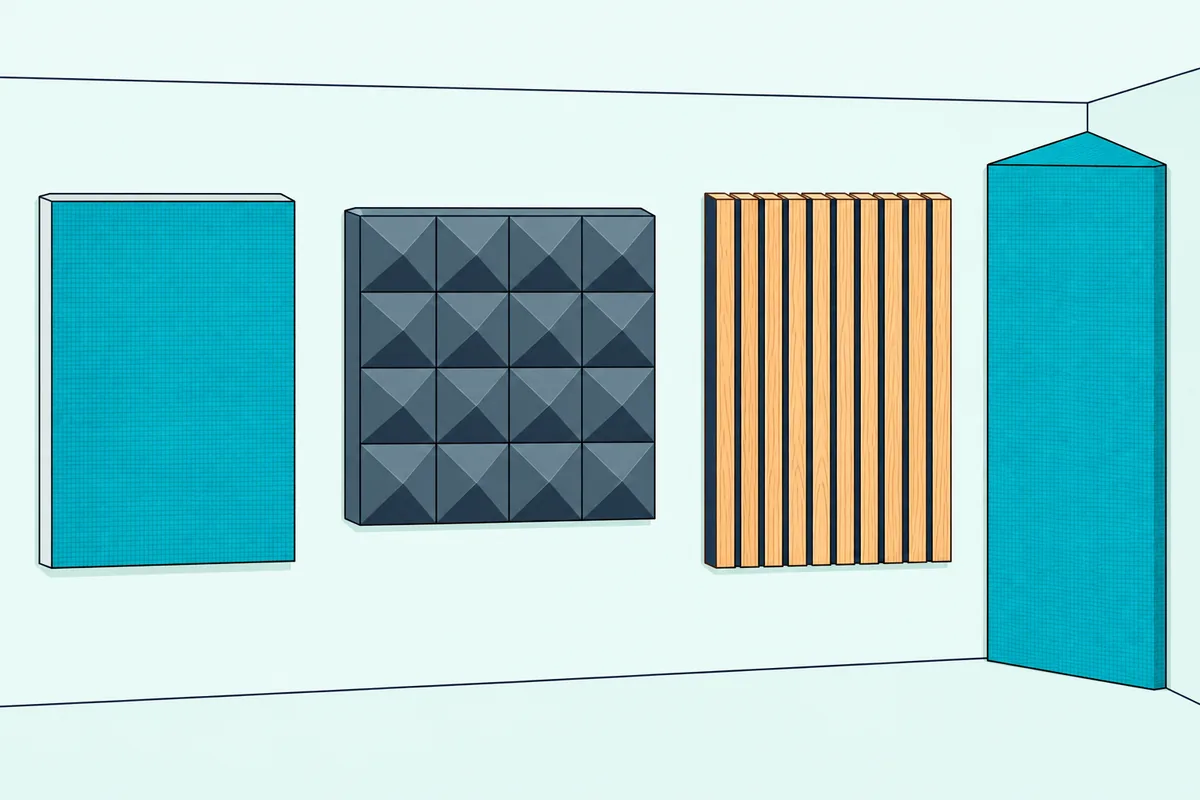
These use a rigid fiberglass or mineral wool core wrapped in acoustically transparent fabric, usually mounted in a wood or metal frame.
Fabric-wrapped panels with a fiberglass or mineral wool core absorb across a broad band: Owens Corning lists its 2-inch 703 fiberglass board at 0.71 at 250 Hz, 1.14 at 500 Hz and an NRC of 1.00. The fabric wrap decides their color and look.
You can also build fabric-wrapped panels yourself from batts, simple frames and acoustic fabric.What Are Acoustic Foam Panels?
Foam panels are the simplest kind, made from polyurethane or melamine foam and often shaped into wedges, pyramids, or egg-crate patterns.
Foam is lightweight and easy to install, often just peel-and-stick.
The limitation is performance. Foam primarily absorbs high frequencies.
For the lower frequencies, Auralex notes that thicker acoustic foam is better at absorbing low frequency sounds. Comparing foam to correct panels starts with thickness: 1-inch against 2-inch panels, and how low each reaches.
What Are Wood Acoustic Panels?
Wood slat panels and perforated wood panels combine absorption with diffusion. The acoustic slat panel guide covers how these work in detail.
Behind the decorative wood surface is an absorptive backing (usually felt or foam).
Sound enters through the gaps, gets absorbed by the backing, while the wood surface scatters some reflections.
These panels suit spaces where aesthetics matter as much as acoustics — modern offices, restaurants, living rooms.
The tradeoff is reduced absorption compared to full fabric-wrapped panels. Wood panels are a design element that happens to help acoustics, rather than acoustics-first solutions.What Are Bass Traps?
Bass traps are thick panels designed specifically for low-frequency absorption. At 125 Hz, Owens Corning lists its 703 board at 0.15 at 2 inches and 0.56 at 4 inches.
Bass energy accumulates in room corners where walls meet walls and walls meet ceilings. Placing thick bass traps in these corners addresses the boomy, muddy low-end that plagues small rooms.
Auralex’s home-studio guide makes bass traps in all of the corners the first step in any small room.How Do Acoustic Panels Work?
What Is the Science Behind Sound Absorption?
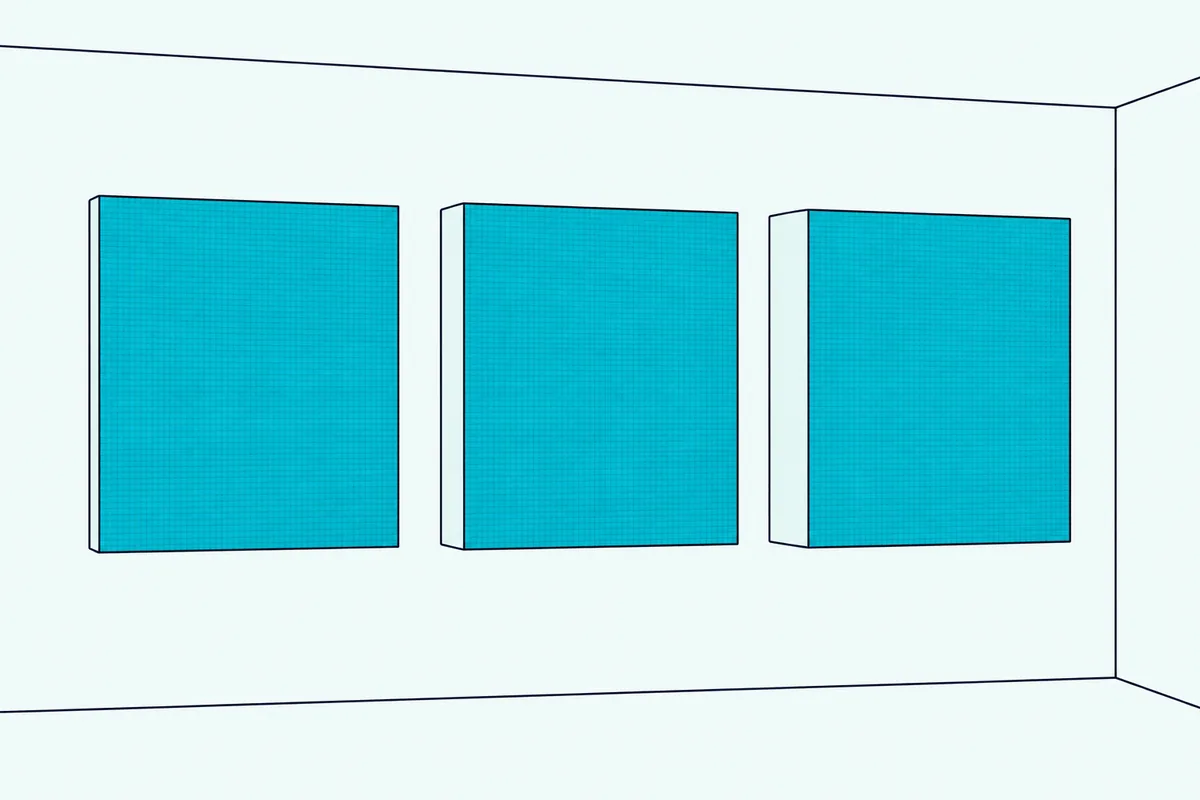
Sound is pressure waves traveling through air. When these waves hit a porous material like fiberglass or mineral wool, they enter the maze of fibers and air pockets inside.
As sound waves navigate through the material, air molecules vibrate against the fibers. This vibration creates friction.
Friction converts kinetic energy (movement) into thermal energy (heat). The sound wave loses energy with each fiber collision until it dissipates entirely.
The heat generated is negligible — you won’t feel your panels warming up. But the acoustic energy genuinely disappears rather than reflecting back into the room.
Thicker panels absorb lower frequencies because bass wavelengths are longer — the guide to panel density covers which board densities suit walls and which suit corner bass traps. At the 1,130 feet per second Auralex gives for sound, a 100 Hz wave is about 11 feet long (1,130 ÷ 100 = 11.3).
To effectively absorb it, you need a large material thickness and often an air gap behind the panel. High frequencies (short wavelengths) absorb easily in thin materials; low frequencies require thick, strategically-placed treatment.What Is NRC Rating and Why Does It Matter?
NRC (Noise Reduction Coefficient) measures how much sound a material absorbs, averaged across four frequencies (250, 500, 1000, and 2000 Hz).
In Auralex’s words, the higher the number, the better the absorption.
Auralex adds that NRCs are not percentages: an NRC of 1.10 simply means more sound is absorbed, on average, than an NRC of 0.50.
For context, Auralex lists ½-inch gypsum board on studs at an NRC of 0.05, and Owens Corning lists 703 fiberglass board at 0.70 at 1 inch and 1.15 at 4 inches.
When comparing products, NRC gives you an objective performance metric. Higher is better for absorption, but remember NRC is averaged across frequencies — it doesn’t tell you specifically about bass absorption, which requires looking at individual frequency measurements.Where Should You Put Acoustic Panels?
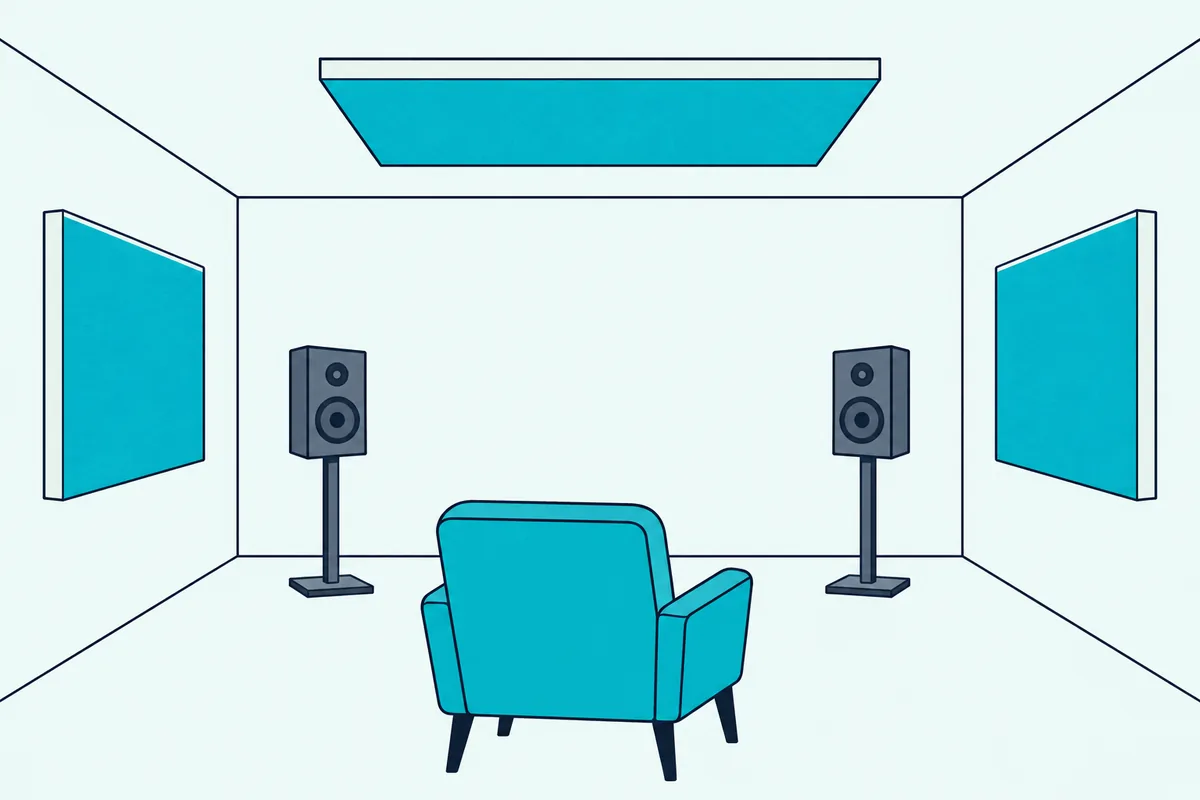
Placement matters as much as panel quality, so start with the reflection points rather than covering whole walls at random.
The priority targets are first reflection points — the spots on walls and ceiling where sound bounces directly from your speakers or sound source to your listening position. These early reflections cause the most damage to clarity and imaging.
To find first reflection points, sit in your listening position and have someone slide a mirror along the side walls. Where you can see your speakers (or your recording position) in the mirror, that’s a first reflection point.
Panels go there.
For recording, treat the wall behind your microphone position and the ceiling above. These reflections arrive quickly and muddy your recordings.
For room-specific guidance, the panel placement guide covers studios, home offices, and home theaters with specific recommendations.
Not sure about quantity? Figure out how many panels you need from your total wall surface area.
More isn’t always better — over-treatment creates an unnaturally dead sound.
Once you know where panels go, the installation guide ensures they stay secure and look professional. For lighter panels, the hanging guide covers command strips, french cleats, and other methods.What Does Each Kind of Acoustic Panel Involve?
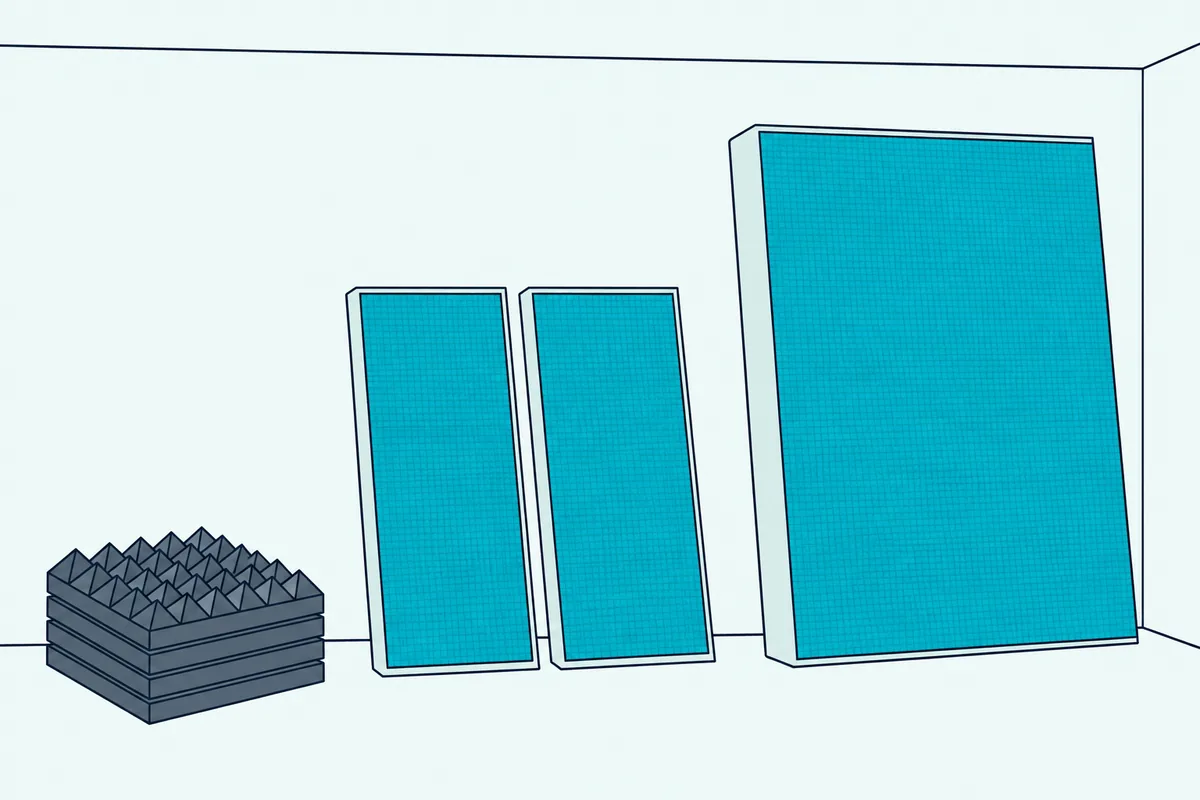
Panels differ in size, core material and finish, and in whether you buy them made or build your own.
Foam panels come as small tiles: a pack of twelve 12×12” foam wedges covers 12 square feet.
Performance is limited mostly to high frequencies; Auralex notes that thicker acoustic foam is better at absorbing low frequency sounds.
Small fabric panels work for testing whether treatment helps your specific situation before you treat the whole room.
Full-size fabric-wrapped panels in the 2×4 foot size put a fiberglass or mineral wool core behind acoustically transparent fabric.
Ready-made panels from acoustic brands state their ratings: the ATS Acoustics Panel above lists NRC 1.0 and a Class A fire rating per ASTM E84.
The best fiberglass panels guide compares four picks, from boards to ready-made kits.
Large-format panels in the 47×24-inch range cover about 7.8 square feet each, the area of nearly eight 12×12-inch foam tiles.
DIY panels are built from fiberglass or rockwool batts, simple wood frames, and acoustic fabric.
What Should You Do Next?
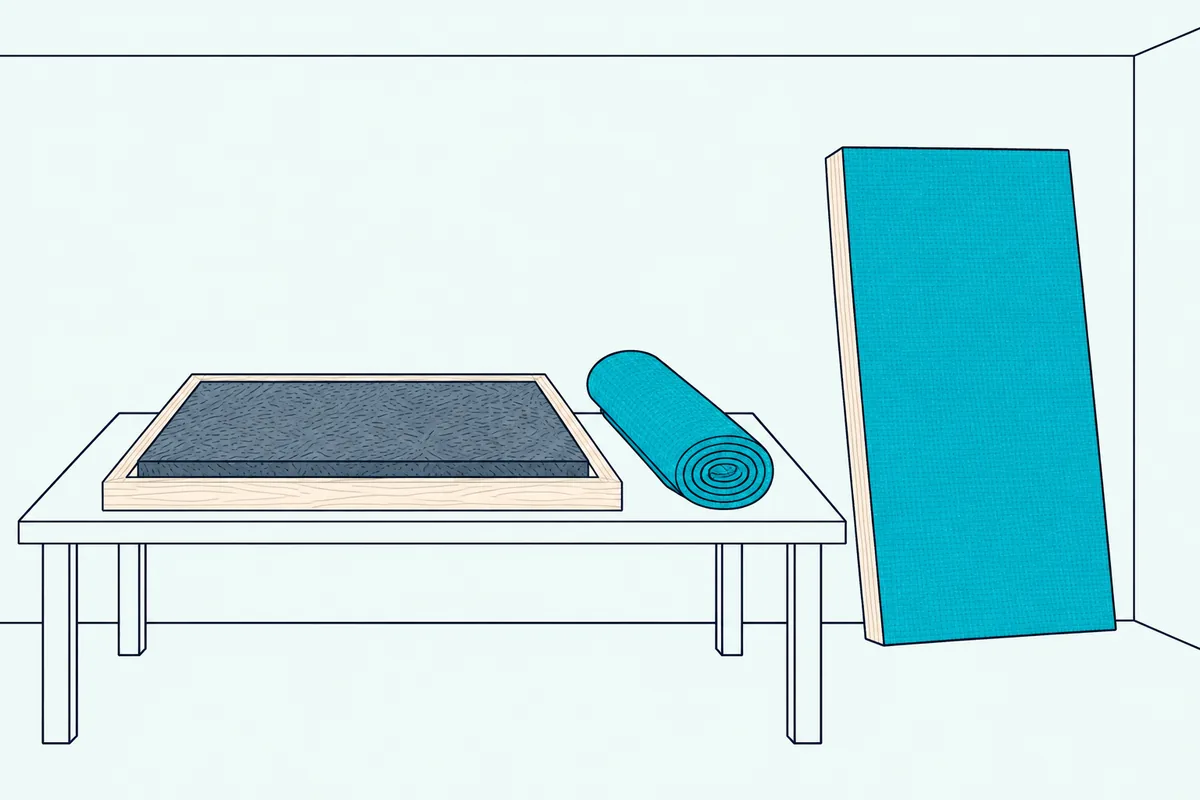
Acoustic panels make sense for a wide range of spaces. The next step depends on your situation.
If you’re ready to buy panels, the best acoustic panels guide sorts the picks by job, from panels that soak up echo to layers that block noise.
If you want to optimize placement, learn about first reflection points and strategic positioning. Where panels go matters as much as which panels you choose.
If you’re calculating coverage, use the acoustic panel calculator to figure out exactly how many you need. The formula is simpler than you’d expect, and over-treatment makes a room sound unnaturally dead.
If you’re considering DIY, the panel cutting guide covers construction and finishing.
For everything else, the acoustic panels hub collects all guides, comparisons, and recommendations in one place.Conclusion
Acoustic panels are sound-absorbing tools that control how audio behaves inside a room. They reduce echo, reverb, and flutter by capturing reflections before they can bounce around and muddy your sound.
The core construction is simple: porous materials like fiberglass or mineral wool wrapped in acoustically transparent fabric. Sound enters, bounces through the fiber matrix, and loses energy through friction until it disappears as negligible heat.
What panels do: improve sound quality inside your room for recording, calls, and listening.
What panels don’t do: block sound from traveling between spaces. That’s soundproofing — an entirely different discipline requiring mass, isolation, and construction.
Start with first reflection points. Even adding rugs alongside panels contributes to overall absorption.Frequently Asked Questions
Are Acoustic Panels the Same as Soundproofing?
No. The two do different jobs.
Acoustic panels absorb sound inside a room to reduce echo and reverb. They improve how your room sounds for recording and listening.
Soundproofing blocks sound from passing between spaces. It requires heavy materials, construction changes, and complete sealing.
If you need to stop sound from entering or leaving your room, panels won’t help. If you need to improve sound quality inside your room, panels are exactly right.Do Acoustic Panels Really Work?
Yes, for the job they do: acoustic panels absorb sound inside a room, which is not the same as soundproofing.
Properly placed panels measurably reduce reverb time (RT60) and improve clarity for recording and listening.
The key is correct placement and sufficient coverage. A single panel won’t transform a room.
Strategic coverage of first reflection points and corners will.Are Acoustic Panels Worth It?
Panels help wherever echo and reverb get in the way: recording audio, video calls, producing music and close listening.
They absorb the reflections that blur sound in an untreated room, but they don’t block noise between rooms; that takes soundproofing.
What’s Better: Panels or Foam?
The answer depends on which frequencies you need to absorb.
Foam primarily absorbs high frequencies. Panels absorb effectively across the full spectrum including midrange and upper bass.
For voice recording, music, and home theater, the frequencies foam misses are exactly where most problems live.
Foam has one advantage: simplicity. If you’re testing whether treatment helps your space, a small pack of foam is a quick experiment.
For permanent installation, the panel material guide compares fiberglass, rockwool, PET and foam.